

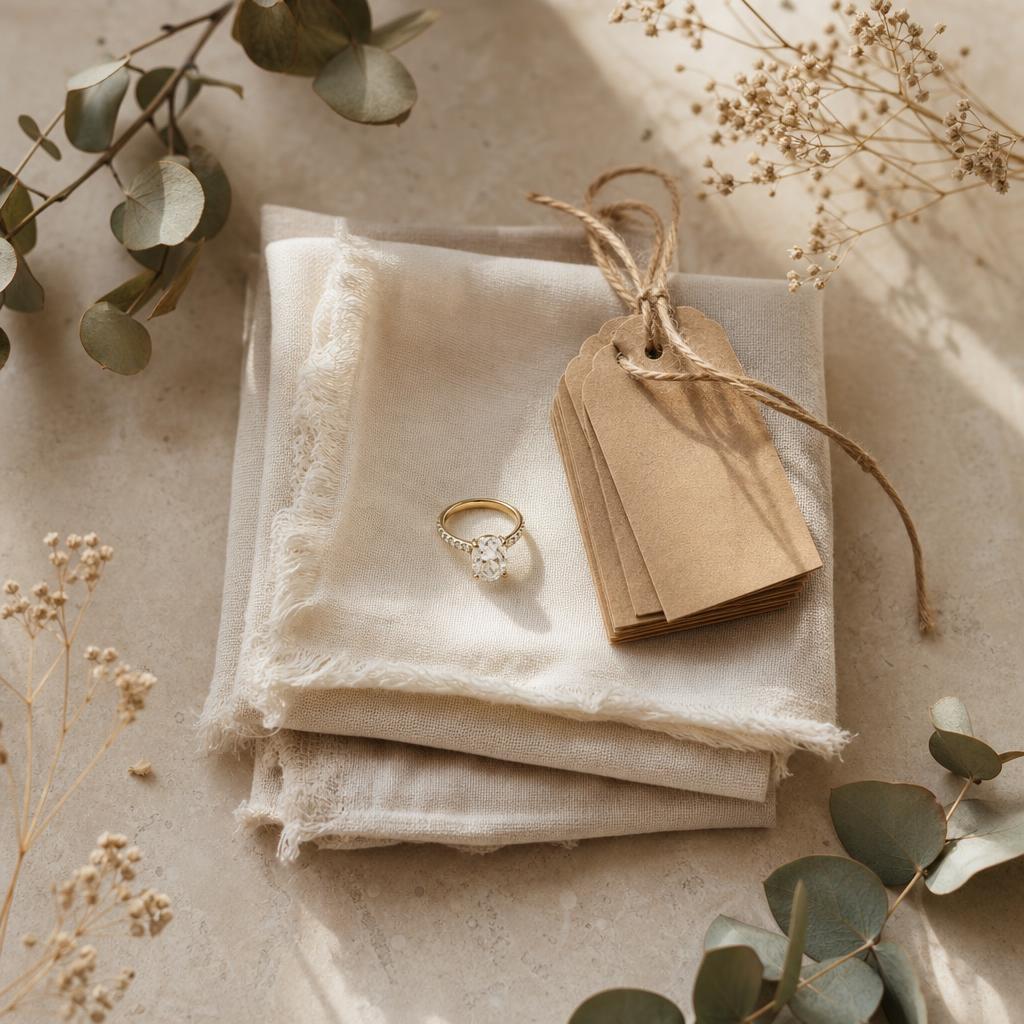
Post-Holiday Sales: Is January the Best Time to Buy an Engagement Ring?
Every January, the same promise shows up in your inbox: this is the best time to buy an engagement ring. Sitewide markdowns. Clearance banners. A countdown clock ticking down to a price that was never really the price. It's easy to assume the calendar holds a secret — that if you just wait for the right week, you'll outsmart the system. The truth is quieter, and honestly more useful: the system was built to be outsmarted, and the calendar has very little to do with it.
Before you spend January refreshing your inbox for the "right" discount code, it's worth understanding what's actually happening behind those sales — and what a smarter kind of ring shopping looks like when the price was never inflated to begin with.


Where the "Best Time to Buy" Advice Actually Comes From
Search for advice on when to buy an engagement ring and you'll get the same answer from a dozen different jewelers: wait for January. Stores are quiet after the holidays, foot traffic drops, and sales teams have room to negotiate. It's true advice — for the kind of store it was written for.
Here's what that advice doesn't say out loud: those January discounts exist because the November price was inflated in the first place. Traditional jewelers build markup into the sticker price specifically so they have room to "discount" it later. The 30% off banner in January isn't a gift. It's the store finally showing you something closer to what the piece was actually worth in October. You're not beating the system by waiting — you're just catching it on a day it forgot to overcharge you quite as much.
Worth knowing: A price that gets marked down 40% in January was a price built to be marked down. Nothing about the ring changed between November and January — only the number on the tag did.
That's the piece most "best time to buy" guides leave out. The discount isn't a reward for your patience. It's a pricing strategy with your patience built into the model.
The Real Answer for Budget Engagement Rings
So where does that leave budget engagement rings that were never marked up to begin with? Gemiros prices its 925 sterling silver, simulated diamond rings the same in November, January, and every month between. There's no clearance banner waiting to reveal the "true" price, because the price you see already is the true price. That's not a marketing angle — it's simply a different business model than the one the "wait for the sale" advice was written to describe.
Which means the calendar question — is January the best time to buy — doesn't really apply the way it does at a traditional jeweler. The better question is whether the ring you're looking at was priced fairly from the start. A solitaire that's been quietly excellent since the day it launched doesn't need a countdown clock to prove its worth.

The Stella Ring
A round-cut solitaire in a clean four-prong setting — the kind of ring that doesn't need a discount to justify itself, because it was never overpriced to start with.
Shop The Stella Ring →Even the Ophelia, the ring people most often assume costs $15,000 or higher when they see it in person, holds that same steady price all year. No markdown theater required — the oval hidden halo does the convincing on its own.
What "Cheapest" Actually Means When You're Ring Shopping
Every January, "cheapest wedding rings" becomes one of the most-searched phrases in jewelry — and most of what ranks for it is the same clearance inventory dressed up in new language. Cheapest isn't a stable idea. It shifts depending on what a retailer needs to move that week, which makes it a genuinely unreliable way to shop for something you're going to wear every day for years.
A more useful question is what you're actually getting for what you spend: the metal, the setting, the stone, and whether the piece was built to hold up past the first few months. A stacking band in 925 sterling silver with a full row of pavé stones can look every bit as considered as something several times its price — not because it's pretending to be something it isn't, but because the materials and craftsmanship were chosen honestly from the start.

The Beloved Ring
A full row of brilliant pavé stones set in 925 sterling silver — proof that an entry-price stacking piece doesn't have to look or feel like one.
Shop The Beloved Ring →This is really the same idea behind the real cost breakdown of a mined diamond ring vs a simulated one — once you see what actually drives the price of a traditional ring, "cheapest" stops feeling like a trick and starts feeling like a fair description of what you're paying for.
So, Is January the Best Time to Buy an Engagement Ring?
If you're shopping at a store that inflates prices to justify a future markdown, then yes — January, or any post-holiday window, genuinely is a better month than most to buy. You're simply catching the retailer at its most honest moment of the year.
But if fair pricing isn't something you have to wait for, the question changes. The best time to buy isn't a month. It's the moment you've done the research, found the ring that actually fits how you live, and decided you don't need anyone's permission — or a countdown timer — to have it. That's a decision that holds up whether it's made in January, June, or the middle of engagement season, when proposal rates quietly spike and everyone else is scrambling to shop under pressure.
There's also a case for buying outside the rush entirely. Skipping the frenzy of Black Friday ring shopping and the holiday gifting scramble means you get to think clearly, try on styles without a deadline breathing down your neck, and choose a ring because it's right — not because a banner told you the window was closing.
Quick Takeaways
- January discounts at traditional jewelers exist because prices were inflated earlier in the year — the markdown isn't a bonus, it's a correction.
- "Cheapest" is a moving target set by what a retailer needs to clear that week, not a reliable measure of value.
- Fairly priced pieces don't need a seasonal sale to justify their cost, so the calendar matters less than the pricing model behind the ring.
- The most useful version of "best time to buy" is simply: when you've done the research and you're ready — not when a countdown clock says so.
Frequently Asked Questions
What is the cheapest month to buy an engagement ring?
At traditional jewelers, January and early February tend to bring the deepest markdowns, since retailers are clearing holiday inventory and foot traffic is at its lowest point of the year. That pattern exists because the earlier price had room built in to be discounted. At a brand that prices fairly year-round, there isn't a "cheap" month or an expensive one — the price you see in June is the same one you'd see in January.
Are there ever genuine sales on engagement rings?
Sometimes, but it's worth asking what the sale is actually revealing. A markdown only means something if the original price was set honestly. Otherwise, a 40% off banner is just a store showing you the price it could have offered all along.
What time of year is best to buy an engagement ring?
If you're shopping somewhere that runs seasonal markdowns, post-holiday and late summer windows tend to bring the best pricing. If the ring is priced fairly year-round, timing becomes less about the calendar and more about your own readiness — when you've researched the style, settled on a setting, and don't need a sale to make the decision feel justified.
Is a simulated diamond ring worth buying?
Yes — a well-made simulated diamond ring is indistinguishable from a mined diamond to the naked eye and passes diamond testers, at a fraction of what a comparable natural stone would cost. The value isn't a compromise; it's the same visual impact without paying for scarcity and markup that have nothing to do with how the ring actually looks on your hand.
Is it smarter to wait for a sale or just buy when you're ready?
If the retailer's pricing depends on markdowns to feel fair, waiting can genuinely save you money. If the price was fair from the beginning, waiting only delays a decision you've already made. The smarter move is knowing which kind of store you're shopping at before you decide to wait at all.
The next time a "best time to buy" email lands in your inbox promising a countdown clock and a limited window, it's worth asking what the ring cost the month before. If the answer makes the sale look less impressive, that's not a coincidence — it's the whole business model. Buy when the ring is right, when the price has been honest the whole time, and when you're ready. That date rarely lines up with a retailer's calendar, and it was never supposed to.


