

Owning Less, Wearing More: How a Smaller Jewelry Collection Changes How You Dress
Somewhere between the jewelry box that won't close and the drawer of tangled chains you haven't worn since a birthday three years ago, most women reach the same quiet realization: more pieces didn't mean more style. It just meant more decisions every morning, more things to lose track of, and a collection that looked impressive in a photo but never quite felt like "you" on the hand or at the neck.
A smaller jewelry collection isn't a compromise — it's a different way of thinking about what you own. Instead of asking "do I love this?" for every impulse buy, you start asking "will I actually reach for this on a Tuesday?" The answer changes what ends up in rotation, and it changes how put-together you look without trying harder.


Why a Crowded Jewelry Box Doesn't Actually Serve You
Most jewelry collections grow by accident. A gift here, a vacation souvenir there, a ring bought on a hard day because it felt good to hold something new. None of that is wrong — but after a few years, the average jewelry box is a graveyard of good intentions. Pieces that don't match anything you currently wear. Earrings you bought for one wedding. A ring that felt exciting in the store and forgettable everywhere else.
The problem isn't the individual pieces. It's that a crowded collection has no logic. You can't build outfits around jewelry you can't find, can't remember you own, or don't actually like anymore. A smaller, more intentional collection solves this by making every piece answer to the same question: does this actually get worn?
Worth knowing: Stylists often talk about a "30% rule" for wardrobes — most people wear about 30% of what they own on a regular basis. Jewelry collections tend to skew even more lopsided than that, because a ring or necklace is easier to buy on impulse and easier to forget once it's in a drawer.
What "Owning Less" Actually Looks Like in Practice
Owning less doesn't mean owning one ring and nothing else. It means being deliberate about the roles each piece plays. A well-built jewelry capsule usually covers a handful of functions: something for every day that needs zero thought, something with a bit more presence for when you want to feel a little dressed up, a layering piece or two that lets you change the look without buying anything new, and maybe one statement piece you reach for on purpose rather than by default.
Once you think about your collection this way, gaps and overlaps become obvious fast. Maybe you have four things you'd all classify as "statement" and nothing simple for a Tuesday. Maybe you own plenty of studs but nothing that stacks. Identifying the actual gaps — rather than just buying whatever catches your eye — is what makes a smaller collection feel more complete than a large, undirected one ever did.
The Everyday Anchor
Every capsule needs at least one piece you'd wear with sweatpants and a blazer alike — something simple enough that it never fights with an outfit, but well-made enough that it doesn't read as an afterthought. A classic solitaire is the obvious choice here, precisely because it's the least trendy option in the store. It doesn't date, it doesn't compete with anything else you're wearing, and it works whether your hands are covered in flour or holding a coffee at a meeting.

The Belle Ring
A round-cut center stone framed in a halo of pavé — enough sparkle to feel special, restrained enough to wear without a second thought. A strong option if your capsule needs one ring that reads as "a little more" without tipping into statement territory.
Shop The Belle Ring →The Layering Piece
A capsule works harder when at least one piece can change its personality depending on what it's paired with. A slim stacking band worn alone looks minimal. Worn next to a solitaire, it suddenly reads as a considered, multi-piece look — without you having bought anything new that week. This is the real value of a layering piece: it multiplies the outfits your existing collection can produce, which is the entire point of owning less but wearing more.

The Everlasting Ring
A continuous line of pavé stones, slim enough to sit flush against another ring without competing for attention. Wear it alone for something quietly polished, or stack it to instantly change the look of a ring you already own.
Shop The Everlasting Ring →The Case for Buying Fewer, Better Pieces
There's a version of this conversation that's purely about tidiness — fewer things, less clutter, an easier decision each morning. That's real, but it's not the whole story. The deeper case for a smaller collection is that quality becomes visible when there's less competing for attention. A single well-chosen ring, worn consistently, starts to feel like part of your hand rather than an accessory sitting on top of it. That kind of familiarity doesn't happen with pieces you rotate in and out every few weeks.
There's also a financial logic that gets overlooked. Buying five inexpensive, forgettable pieces over a year usually costs more than buying two or three considered ones — and you end up wearing the considered ones far more often. Cost-per-wear is a boring metric, but it's the one that actually predicts whether something earns its place in your daily rotation.
Building Around What You Already Own
If you're trying to move toward a smaller collection, the instinct is often to start buying "capsule pieces" from scratch. A better first step is auditing what you already have. Lay everything out. Separate it into what you've worn in the last month, what you've worn in the last year, and what you haven't touched at all. The first pile is your real capsule — whether you intended it to be or not. The last pile is where the actual decluttering conversation needs to happen, and it's worth being honest about why those pieces never made it into rotation. Usually it's not that they're ugly. It's that they don't have a clear role.
✦ Pro tip: When auditing your collection, sort by occasion rather than by type. Instead of grouping "all rings" together, group "things I wear to work," "things I wear on weekends," and "things I've only worn once." It surfaces gaps and overlaps much faster than sorting by category alone.
Necklaces and Earrings Deserve the Same Logic
This kind of editing isn't just a rings conversation. Necklaces and earrings tend to accumulate even faster, because they're easier to buy without trying on and easier to forget you already own something similar. The same questions apply: does this pendant actually sit at a length you wear often? Do these earrings work with your day-to-day neckline, or only with one specific outfit you own?
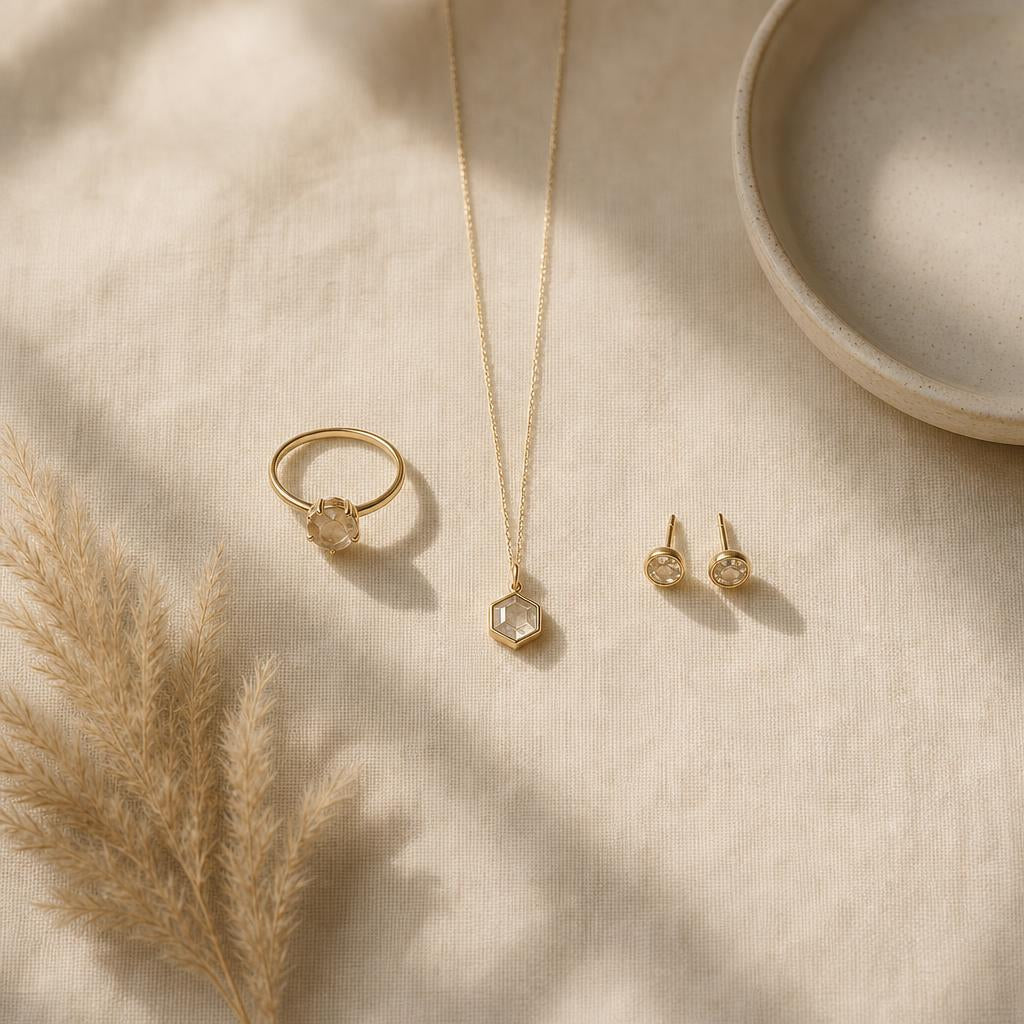
A single, versatile pendant necklace does more for a capsule than three trend-driven ones, for the same reason a solitaire does more work than four statement rings. It sits quietly at whatever depth you layer it, doesn't fight with a collar or a scarf, and looks intentional whether you're dressed up or not. Pair it with simple studs and you've covered most of what an "everyday jewelry" wardrobe actually needs to do.
What Changes When You Actually Do This
The most noticeable shift isn't visual — it's the mental load. Getting dressed stops involving a decision about jewelry at all, because the pieces in rotation already work with everything else you own. There's no morning spent digging through a drawer for the "right" earrings. There's no ring you avoid wearing because it doesn't sit well with your watch. Everything in the collection has already been vetted for exactly this kind of daily use.
The other shift is how the jewelry itself starts to look. Oddly, wearing less jewelry more consistently often reads as more put-together than wearing more jewelry inconsistently. A single ring worn every day looks deliberate. Five rings worn once each look like an accident. People notice consistency more than they notice quantity — which is exactly the opposite of what a crowded jewelry box assumes.
Quick Takeaways
- A smaller jewelry collection isn't about owning less for its own sake — it's about every piece having a clear, repeatable role.
- Start by auditing what you already own before buying anything new. Sort by how often it's actually worn, not by category.
- A strong capsule usually covers four roles: an everyday anchor, a bit-more-sparkle option, a layering piece, and one statement piece worn on purpose.
- Necklaces and earrings benefit from the same editing logic as rings — versatility beats volume.
- Consistency reads as more polished than quantity. Wearing one ring every day looks more intentional than five rings worn occasionally.
Frequently Asked Questions
How many pieces should a jewelry capsule actually have?
There's no fixed number, but most well-edited collections land somewhere between six and twelve pieces total across rings, earrings, and necklaces — enough to cover different occasions without duplicating roles. The goal isn't a specific count; it's making sure every piece earns its place.
What should I do with the pieces I'm not wearing anymore?
Separate sentimental pieces from ones you simply don't like anymore. Sentimental jewelry can be stored properly even if it's not in daily rotation — it doesn't need to justify its existence the way a forgotten trend purchase does. For everything else, selling, gifting, or donating clears space both physically and mentally.
Is it better to buy one expensive piece or several affordable ones?
It depends less on price and more on versatility. A simulated diamond piece under $200 that you wear daily will always outperform a pricier piece that only suits one outfit. Cost-per-wear, not sticker price, is the number worth paying attention to.
Can a smaller collection still feel special?
Often more so. When you're not choosing between a dozen similar options, the pieces you do wear get more attention — from you and from other people. Familiarity with a piece, worn consistently over time, tends to feel more meaningful than novelty ever does.
None of this requires giving up jewelry you love or forcing yourself into a minimalist mold that doesn't fit your taste. It's simply a shift from collecting to curating — choosing pieces that work together, wear well, and actually leave the drawer. Owning less, in the end, is really just a more honest way of owning more of what you'll actually use.


