

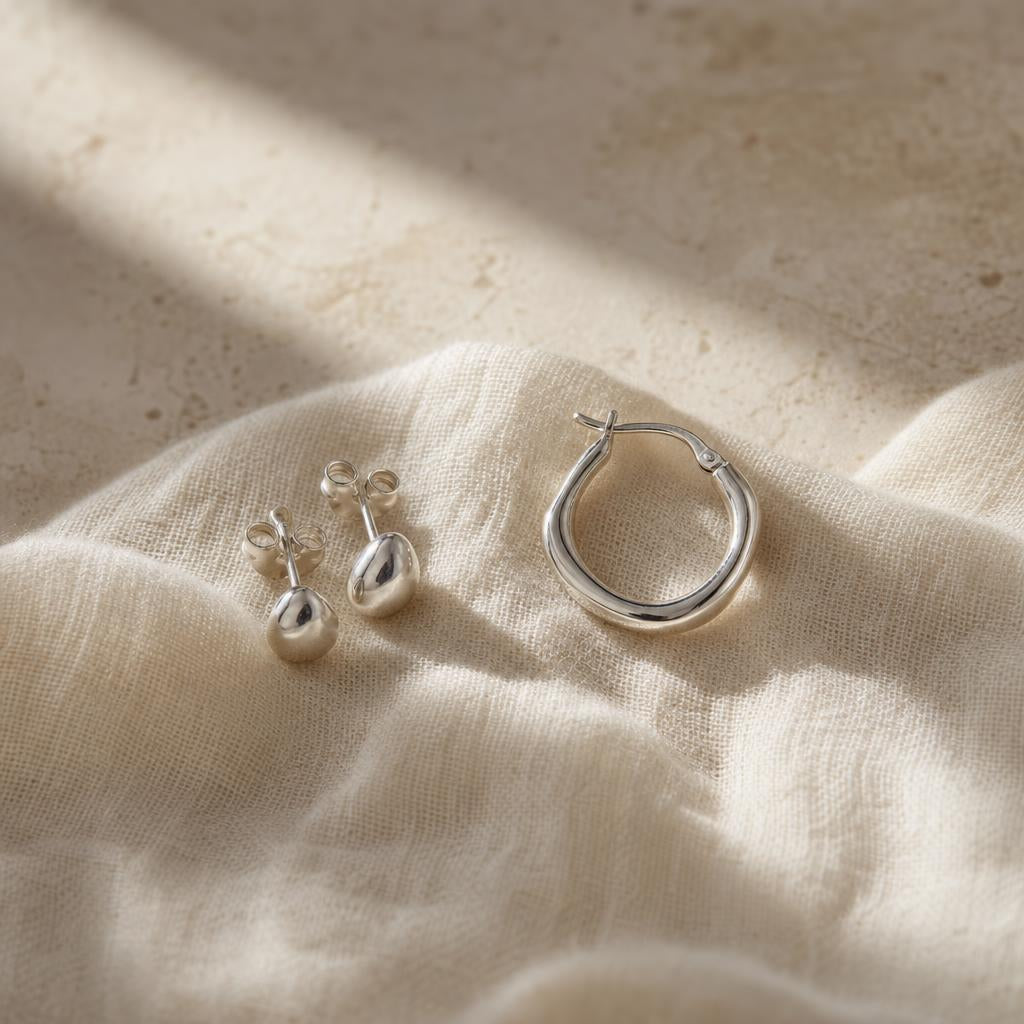
Hypoallergenic Earrings, Explained: What the Label Actually Means
The word "hypoallergenic" is printed on almost every earring listing you'll ever scroll past — and it means almost nothing. There's no regulatory body checking the claim, no required testing, no consequence for a brand that markets hypoallergenic earrings that will have your lobes red and itching by dinner. If your ears have ever taught you not to trust a label, you already know this.
So let's actually answer the question instead of repeating the marketing word. What makes an earring genuinely safe for sensitive ears comes down to a short list of metals, one troublemaker to avoid, and a couple of questions worth asking before you buy — the same questions worth asking of any pair claiming to be hypoallergenic, regardless of where you shop. Every pair below is built on 925 sterling silver — nickel-free by composition, not by claim.


What "Hypoallergenic" Actually Means (and Why It Isn't Regulated)
Here's the part most listings leave out: "hypoallergenic" is not a certified claim. The FDA doesn't define it for jewelry, no third party audits it, and any brand can print it on a pair of earrings made from whatever base metal was cheapest that quarter. It's a marketing word describing an intention, not a guarantee — which is exactly why your ears have probably reacted to something labeled hypoallergenic before.
Worth knowing: "Hypoallergenic" means "less likely to cause a reaction," not "impossible to react to." The word tells you almost nothing on its own — the metal underneath it tells you everything.
That's why the real question isn't whether a listing uses the word. It's what the earring is actually made of, and whether that metal touches your skin directly or is just plated over something reactive underneath.
The Metals That Actually Matter for Sensitive Ears
Nickel Is the Real Culprit
Nickel is the single most common cause of metal-related skin reactions, and it's often the hidden ingredient in earrings that never mention it at all. Cheap gold-plated and silver-plated pieces frequently use a nickel-heavy alloy underneath the plating — comfortable for the first few wears, then irritating the moment that thin surface layer wears through. The fix isn't a magic word on a listing. It's knowing the base metal never contains nickel in the first place, which is the entire premise behind genuinely nickel free earrings rather than earrings that simply avoid saying the word.
This is also where price gets misleading. A higher price tag doesn't guarantee a nickel-free build any more than a lower one guarantees a reaction — plenty of expensive fashion jewelry cuts the same corners as the cheapest pieces on the rack, just with better packaging. The only reliable signal is the metal itself, named plainly, not the number on the price tag or the word printed above it.
Is Sterling Silver Hypoallergenic?
For the vast majority of people, yes — 925 sterling silver is genuinely hypoallergenic. It's 92.5% pure silver alloyed with copper, not nickel, which means there's nothing in the metal itself to trigger the reaction most people are actually worried about. This is different from silver-plated jewelry, where a thin silver layer sits over a base metal that may or may not be nickel-free — a distinction that matters far more than most listings let on.

The Leighton Stud Earrings
Round-cut simulated diamonds in a halo setting, built in solid 925 sterling silver from the post to the backing — nothing plated, nothing to wear through.
Shop The Leighton Stud Earrings →Titanium, Surgical Steel, and Where Sterling Silver Fits
Implant-grade titanium and surgical steel are the two metals dermatologists point to most often for extremely reactive skin, and for good reason — they're essentially inert. But they're also a narrower category, usually sold as plain posts rather than the kind of everyday, dressed-up pieces most women actually want to wear. Sterling silver sits in the more practical middle: safe for the overwhelming majority of sensitive ears, and available in the halo settings, huggie hoops, and stone details that make an earring feel finished rather than clinical.
How to Tell If Earrings Are Actually Hypoallergenic — Not Just Labeled That Way
Skip the word on the listing and check three things instead. First, the stamp: genuine sterling silver is marked "925" or "S925" somewhere on the piece, usually on the post or the back of a stud. Second, the material description: it should name the actual metal, not just the word "hypoallergenic" on its own. Third, whether the piece is solid through or plated — a listing that specifies "925 sterling silver" throughout is telling you something a vague "hypoallergenic" never will.
This is the same checklist worth running through the next time you search for hypoallergenic earrings for sensitive ears and land on a wall of near-identical listings. The photos will all look similar. The material description is where the real differences show up — and it's worth reading before the price, not after.
✦ Pro tip: If a nickel-free earring listing for sensitive ears doesn't name its base metal anywhere in the description, that's the tell — not the absence of the word "hypoallergenic," but the absence of specifics.

The Vivara Moissanite Huggie Hoop Earrings
A pavé row of moissanite along a sleek huggie silhouette, set in solid sterling silver for all-day wear without the irritation of a mystery alloy.
Shop The Vivara Moissanite Huggie Hoop Earrings →Nickel-Free vs. Hypoallergenic: Are They the Same Thing?
Not quite, and the difference is worth knowing. "Nickel-free" is a specific, checkable claim — either the alloy contains nickel or it doesn't. "Hypoallergenic" is broader and softer, covering nickel along with a handful of other less common triggers like certain surface coatings or low-grade brass. In practice, for the vast majority of reactions, nickel-free is doing almost all of the work — which is exactly why naming the metal matters more than either word alone.
Caring for Sensitive Ears Once You've Found the Right Metal
Even genuinely hypoallergenic metal benefits from a little care. Keep earrings dry before you put them away, avoid sleeping in anything with a tight closure, and give freshly cleaned ears a few minutes to air out before changing pairs. None of this is about compensating for a lesser material — it's the same basic upkeep any well-made piece deserves, sterling silver included.
✦ Pro tip: A soft polishing cloth kept in your jewelry box does more for sterling silver than any cleaning product — a quick buff after wear keeps the shine even and the metal free of the residue that can sometimes irritate skin over time.
Quick Takeaways
- "Hypoallergenic" isn't a regulated or certified term — the base metal is what actually matters.
- Nickel is the most common trigger, and it often hides under plating rather than in solid metal.
- 925 sterling silver is genuinely hypoallergenic for most people because its alloy uses copper, not nickel.
- Look for a "925" stamp and a named metal in the description — not just the word "hypoallergenic."
- Solid sterling silver stays consistent over time; plated pieces change once the surface layer wears through.
Frequently Asked Questions
What earrings are hypoallergenic?
Earrings made from metals that don't contain nickel — genuine 925 sterling silver, implant-grade titanium, surgical steel, and high-karat gold are the most reliable choices. What matters is the metal itself, not whether the word "hypoallergenic" appears on the listing.
Is sterling silver good for sensitive skin?
Yes, for the vast majority of people. Genuine 925 sterling silver is alloyed with copper rather than nickel, so there's nothing in the metal itself to trigger the reaction most sensitive-ear complaints come down to.
What is hypoallergenic jewelry?
Jewelry made from metals unlikely to trigger a skin reaction — chiefly, metals that don't contain nickel. It's a description of the metal's composition, not a certification, which is why the base material always matters more than the label itself.
How can you tell if jewelry is actually hypoallergenic?
Check for a "925" or "S925" stamp on sterling silver pieces, and look for a listing that names the exact base metal rather than relying on the word "hypoallergenic" alone. A solid metal piece will also stay consistent over years of wear, while plated pieces tend to change once the surface layer thins.
What's better for sensitive ears, sterling silver or stainless steel?
Both are solid choices. Surgical-grade stainless steel is slightly more inert for the most reactive skin, while sterling silver offers a warmer, more finished look with the same nickel-free reliability for most wearers — the better pick usually comes down to style rather than safety.
Can I wear gold-plated earrings if I'm allergic to nickel?
It depends entirely on what's underneath the plating. If the base metal is nickel-free — sterling silver plated in 18k gold, for example — it's generally safe. If the base is an unspecified alloy, there's no way to know until the plating wears through, which is why solid metal is the safer bet for anyone with a known sensitivity.
The next time a listing tells you a pair of earrings is hypoallergenic, you'll know exactly what to check before you believe it. Sensitive ears don't need a softer promise — they need a metal that actually holds up, stamped and named plainly enough that you never have to guess. That's the whole difference between an earring that quietly protects your ears for years and one that just says the right word until you find out otherwise.
None of this means you need to overhaul your entire jewelry box overnight. If most of what you own has never caused a problem, there's no reason to second-guess it. But the next time you're choosing between two nearly identical listings — one naming its metal, one just repeating the word "hypoallergenic" — you now know which one is actually telling you something. That's the whole point of reading past the label in the first place.


