

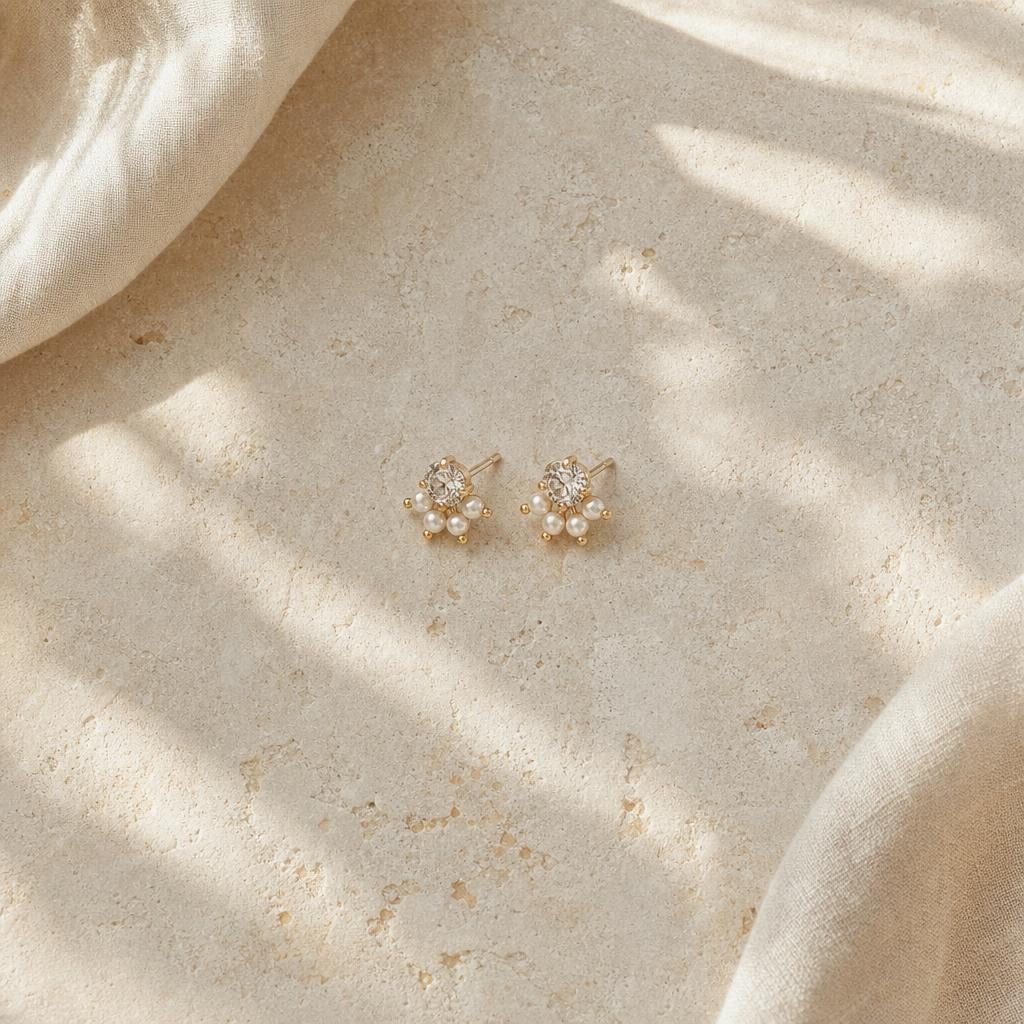
How to Tell If Earrings Are Actually Hypoallergenic
The first sign is never dramatic. It's a faint itch by the second wear, a ring of pink at the edge of the post, a pair of studs quietly retired to the back of a drawer because putting them on stopped feeling worth it. If that's ever happened to you — even with earrings that were labeled hypoallergenic — you already know the sticker on the packaging and the reality on your earlobe are two different things.
The good news: telling the difference isn't guesswork once you know what to actually check. Below is a spread of Gemiros studs and hoops built the way sensitive skin actually needs — 925 sterling silver, nickel-free by construction, not by marketing claim — and after that, the real checklist for reading any earring listing like someone who already knows the answer.


What "Hypoallergenic" Actually Means (and Why the Label Alone Isn't Enough)
"Hypoallergenic" isn't a regulated term. No agency checks a listing before a brand is allowed to use the word, which means it can describe anything from a genuinely nickel-free 925 sterling silver post to a base-metal pair with a thin coating that wears off in a month. The word tells you the brand's intention. It doesn't tell you what's actually touching your skin.
What does the checking is the metal itself, not the sticker. A post that's solid all the way through behaves completely differently from one that's plated over a reactive core — and the difference only shows up after the plating has had a chance to wear thin.
The Real Test: How to Tell If Earrings Are Actually Hypoallergenic
Skip the marketing copy and go straight to three questions instead:
- What's the base metal, specifically? Not "hypoallergenic alloy" — an actual name. 925 sterling silver, implant-grade titanium, and solid 14k+ gold are all specific, checkable materials. A listing that won't name one is telling you something.
- Is it solid or plated? Solid means the same metal all the way through the post. Plated means a thin outer layer over a different, often more reactive, base — fine on day one, less fine once that layer thins from cleaning, sweat, and everyday wear.
- Does the brand say "nickel-free," not just "hypoallergenic"? Nickel-free is a factual claim about composition. Hypoallergenic is a general impression. The first is worth trusting more than the second.
✦ Pro tip: If a listing's reviews mention visible gold or silver "wear-through" spots, that's plating, not a coincidence. A solid metal post has nothing underneath to wear through to.
This is where a lot of drawers full of retired earrings come from — not a manufacturing defect, just a plated post doing exactly what plated posts eventually do.
Reading the Metal: Sterling Silver vs. Stainless Steel vs. Everything Else
Is sterling silver hypoallergenic?
Genuine 925 sterling silver — 92.5% pure silver, the remainder typically copper — doesn't contain nickel, and copper is well tolerated by nearly everyone's skin. The exception is a cheaper piece using a nickel-based alloy in place of copper and still calling itself "sterling," which is exactly why checking for a "925" stamp matters more than the word silver on its own. Genuine sterling silver isn't a stand-in for something else — it's a specific, checkable material, and one of the more consistently well-tolerated bases available.
Is stainless steel hypoallergenic?
It depends heavily on the grade. Surgical-grade 316L steel locks its small nickel content inside a protective chromium layer that generally doesn't reach skin under normal wear, which is why it works for a lot of people. Lower grades don't have that same protective structure, and for someone with a confirmed nickel allergy, "generally fine" isn't the same guarantee that a genuinely nickel-free metal offers.
Neither of these is better or worse in the abstract — they're just different enough that the honest answer to whether a specific pair is safe depends on which one you're actually holding, not on the word printed above it.

Isabella Stud Earrings
A pear-cut center stone haloed in pavé, set in 925 sterling silver — the kind of detail that reads as fine jewelry without asking your ears to take the risk.
Shop Isabella Stud Earrings →The Signs You're Reacting to Nickel, Not Just "Sensitive Ears"
"Sensitive ears" is often used as a catch-all, but the actual mechanism is usually a nickel allergy — one of the most common metal sensitivities there is, and one that has nothing to do with how careful you are about cleaning or how long you leave earrings in. The signs are specific: itching that starts within a day or two of wearing a new pair, redness or a small rash localized right at the post or clasp, and skin that clears up within days once the earrings come out. That pattern — reaction, removal, recovery — is the clearest signal that the metal is the problem, not your skin.
None of this means avoiding earrings altogether. It means the fix is specific: a confirmed nickel-free metal, worn consistently, rather than a rotation of "hopefully fine" pairs from a drawer.

Vivara Moissanite Huggie Hoop Earrings
Pavé moissanite set along a sleek huggie silhouette, in solid 925 sterling silver — small enough to sleep in, secure enough to forget you're wearing.
Shop Vivara Huggie Hoops →What to Look For Before You Click "Buy"
Once you know the difference between solid and plated, you can read almost any earring listing in under a minute. Look for the specific metal named outright — not "hypoallergenic alloy," but "925 sterling silver" or "implant-grade titanium" stated plainly. Look for a nickel-free claim made as a fact, not tucked into a review response after someone already complained. And look for a warranty: a brand confident in its materials backs them, rather than quietly hoping you don't wear the earrings long enough to find out.
Every pair in the Gemiros earring collection is built to that same standard — solid 925 sterling silver, backed by a one-year warranty — which is a longer way of saying the metal was never the part you needed to worry about. The style, the stone, the setting: that's the part left for you to choose.
None of this replaces basic care. Rinsing off lotion, perfume, and hairspray residue before it builds up on the post, drying earrings before they go back in a dish or box, and giving a brand-new piercing time to heal all still matter. What changes is that you're no longer fighting the metal itself while you do it — the irritation that used to show up no matter how careful you were simply stops being part of the equation.
Building a Collection That Doesn't Fight Your Ears
Once the metal question is settled, the rest is just style. A bezel-set solitaire like the Aria sits close and low-profile for daily wear. A halo stud like the Belle or Isabella adds more visible sparkle without adding weight. A huggie hoop like the Vivara covers the days you want something besides a stud. None of it requires compromising on the metal to get the look — that's the actual point of building a collection in 925 sterling silver and moissanite from the start, rather than working around a reactive base after the fact.
Quick Takeaways
- "Hypoallergenic" is an unregulated marketing term — check the specific metal, not the label.
- Solid metal (all the way through) behaves differently than plated metal (a thin layer over a different base).
- Genuine 925 sterling silver and implant-grade titanium are both specific, checkable, well-tolerated materials.
- Itching, redness, or a rash right at the post — that clears once earrings come out — points to a reaction to the metal itself, not general sensitivity.
- "Nickel-free" is a factual claim worth trusting more than "hypoallergenic" alone.
Frequently Asked Questions
What is hypoallergenic jewelry, exactly?
It's jewelry made from metals unlikely to trigger an allergic skin reaction — most often meaning nickel-free. The term itself isn't regulated, so it describes an intention rather than a guarantee; the specific metal is what actually determines whether a piece is safe for sensitive skin.
What metal is most hypoallergenic?
Implant-grade titanium and genuine 925 sterling silver are both consistently well tolerated, since neither relies on nickel as part of the alloy. The right choice usually comes down to look and weight rather than safety — both hold up well for daily wear.
Is 925 sterling silver hypoallergenic?
Yes, for the vast majority of people. Genuine 925 sterling silver is 92.5% pure silver alloyed with copper, not nickel, and copper is well tolerated by most skin. Look for the "925" stamp to confirm what you're actually getting.
Do hypoallergenic earrings actually work?
When the metal is genuinely nickel-free — not just labeled that way — yes, consistently. The cases where "hypoallergenic" earrings still cause irritation almost always trace back to a plated post wearing through to a reactive base metal underneath, not a failure of the concept itself.
What are the signs of a nickel allergy from earrings?
Itching that starts within a day or two of wearing a new pair, redness or a small rash right at the post or clasp, and skin that clears up once the earrings come out. That reaction-then-recovery pattern is the clearest sign the metal — not your skin in general — is the issue.
How do I stop my earrings from irritating my ears?
Switch to a confirmed nickel-free metal — genuine 925 sterling silver or implant-grade titanium — rather than rotating through pairs and hoping. Cleaning posts regularly helps too, but it won't fix irritation caused by the base metal itself.
The earrings sitting in the back of your drawer probably weren't a bad purchase — they just never had the material to back up the label. Once you know what to actually check, it stops being a guessing game every time you shop.


