

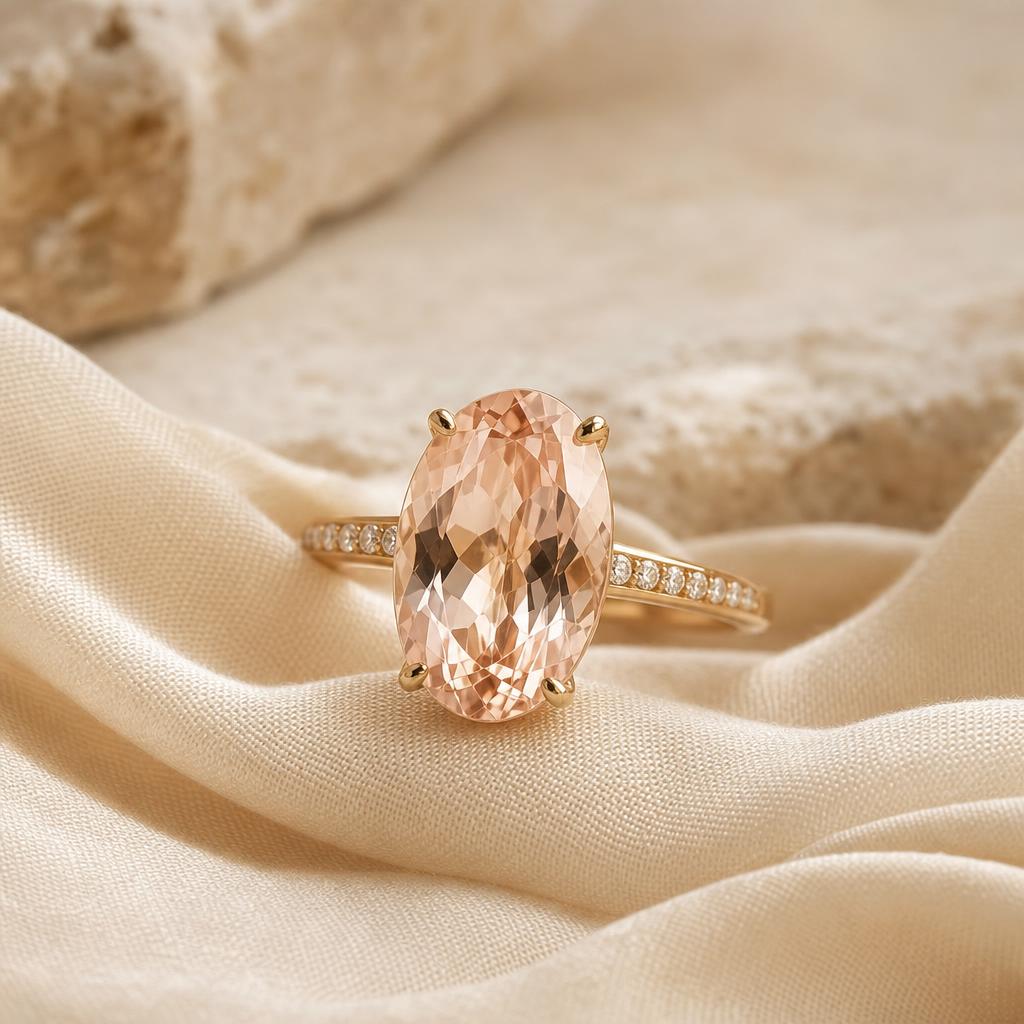
The Best Oval Moissanite Engagement Rings: Top Picks for Maximum Fire
Oval isn't just a shape. It's the one cut that manages to look both quietly classic and unmistakably modern at once — elongating the finger, catching light from more angles than a round stone ever could, and reading as effortless rather than engineered. Pair it with moissanite, a stone built to out-sparkle a diamond under the exact same light, and you get a ring that photographs like a far bigger investment than it actually was.
If you've been circling oval moissanite engagement rings for a while now — bookmarking a few, closing the tab, coming back to compare them again — you already know what you like. What's harder to pin down is which setting actually earns its place on your hand, which stone size reads as substantial without tipping into showy, and which details separate a ring you'll still love in ten years from one that starts looking tired in six months.

Why the Oval Cut Works So Well With Moissanite
An oval stone has more surface area facing up than a round stone of the same carat weight, which means it can look noticeably larger on the hand for the same size claim. Moissanite already has a higher refractive index than a diamond — it bends and returns light more aggressively, which is exactly why it produces that rainbow-flecked "fire" people notice from across a room. Put the two together and the effect compounds: a bigger-looking stone, cut in a shape built to catch light from more angles, set in a gem that's already engineered to sparkle harder than what it's compared against.
This isn't a workaround or a compromise dressed up in nicer language. A well-cut moissanite in an oval silhouette is indistinguishable from a mined diamond to the naked eye, and it passes standard diamond testers — the tool a jeweler would actually use to check. No one across the table is squinting at your hand wondering if something's off. They're just noticing the ring.
Solitaire, Hidden Halo, or Three-Stone: Which Oval Silhouette Actually Fits You
Every oval moissanite ring on this list solves a slightly different problem, and the right one depends less on trend and more on how you actually want the stone to read day to day.

The Aurore Moissanite Ring
A 3-carat oval-cut moissanite held in a secure four-claw setting, with a hidden halo tucked beneath the center stone to add width and brilliance without changing the profile from the top. From the front it reads as a clean oval solitaire; from the side, there's an entire extra layer of sparkle doing quiet work.
Shop the Aurore →The hidden halo is the setting to choose if you want the visual impact of a larger stone without actually paying for one — it's the same logic that makes halo settings the most requested style in the category right now, minus the visible ring of accent stones some people find busy.

The Luna Moissanite Ring
A larger 3.5-carat oval moissanite set in a plain four-claw mount with nothing else competing for attention — no pavé, no halo, just the stone and a polished band. If you want the ring to feel entirely about the gem itself, this is the quietest way to get there.
Shop the Luna →The Luna is also available with an 18k gold-plated finish rather than the rhodium-plated platinum look, if your existing jewelry runs warmer than cool.

The Rosalind Moissanite Ring
A 3-carat oval-cut center stone in a secure double-prong mount, flanked by two tapered baguette side stones. The three-stone shape gives the hand more visual length than a solitaire alone, and it's the one style on this list that reads distinctly as "designed," not just "set."
Shop the Rosalind →What Actually Matters When You're Comparing These Rings
Most buying guides for moissanite rings for sale spend all their time on carat weight and none on the details that actually determine how a ring wears. Here's what's worth checking before you commit to any of them, oval or otherwise.
| What to Check | Why It Matters |
|---|---|
| Base metal | 925 sterling silver with rhodium or 18k gold plating holds up better against tarnish and skin reactions than lower-grade alloys. |
| Prong count & style | Four-claw settings show more of the stone; six-prong and double-prong mounts trade a sliver of visibility for extra security. |
| Setting depth | A hidden halo or pavé shoulder adds perceived size without changing the headline carat weight. |
| Nickel content | Nickel-free settings matter if you've ever had a reaction to cheaper costume pieces. |
Every ring in this guide is set in a nickel-free sterling silver moissanite ring base — no plating shortcuts, no mystery alloys. That's the same tier of construction used across the wider moissanite category, and it's the detail that actually determines whether a ring still looks new after a year of daily wear, not the size of the stone sitting on top of it.
✦ Pro tip: Oval stones can rotate slightly in a four-claw setting over time. If you're an active wearer, a hidden-halo or pavé-shoulder style like the Aurore holds its orientation better day to day than a bare solitaire mount.
The Best Moissanite Engagement Rings Aren't the Ones That Try Hardest
There's a version of this category that leans into maximum sparkle at every turn — bigger halos, more pavé, stones cut for shine over shape. The strongest options usually do the opposite: they let one well-cut oval stone do the work, and they get the setting details right so nothing about the ring reads as an afterthought. That holds whether you're shopping for yourself or quietly comparing options before deciding, without needing a salesperson to walk you through it.
None of this requires apologizing for what the ring actually is. A moissanite oval solitaire isn't a lesser version of a diamond ring — it's 925 sterling silver and lab-created moissanite, cut and set with the same standards a diamond ring would be held to, at a fraction of what a comparable mined stone would run. If the Ophelia's oval halo design has ever made you do the mental math on what a similar mined-diamond ring would cost — $15,000 or higher for something in the same visual range — the answer to "is this too good to be true" is simply no. It's just math that finally works in your favor.
Worth knowing: Ring sizing across this collection runs in whole sizes only, so it's worth double-checking your size before ordering — Gemiros doesn't currently offer a resizing service, and third-party resizing can void the warranty on a setting like these.
Making It Yours
Once you've picked a silhouette, the smaller decisions are the ones that make a ring feel personal rather than off-the-shelf: metal tone against your skin, whether you plan to stack a band against it eventually, and how you actually wear rings day to day — desk job, gym, frequent travel. An oval stone in a low four-claw setting travels well precisely because there's less surface area to catch on things, which is worth knowing if you're the kind of person who takes rings on and off throughout the day rather than leaving them on permanently.
Whatever you land on, the through-line across every one of these oval moissanite rings is the same: a stone cut to look bigger than its carat weight, set with real craftsmanship, and priced like someone did the math instead of counting on you not to.
Quick Takeaways
- Oval stones read larger than round stones of the same carat weight — pair that with moissanite's higher fire and the size perception compounds.
- Hidden halo (Aurore) adds perceived size with no visible accent ring; plain solitaire (Luna) keeps all attention on the stone; three-stone (Rosalind) adds length and a more "designed" look.
- Every ring is nickel-free 925 sterling silver with rhodium or 18k gold plating — the construction, not the carat number, is what determines long-term wear.
- Sizing runs in whole sizes only with no resizing service offered, so confirm fit before you order.
Frequently Asked Questions
Is oval a good cut for moissanite?
Yes — the elongated shape shows off moissanite's fire from more angles than a round cut, and it reads larger than its carat weight because more of the stone's surface faces up. It's one of the most flattering cuts in the entire oval moissanite engagement rings category for exactly that reason.
Does moissanite look fake next to a diamond?
No. A well-cut moissanite is indistinguishable from a diamond to the naked eye and passes standard diamond testers — the actual tool a jeweler uses to check a stone, not just a visual guess. If anything, moissanite's higher refractive index means it can throw more visible sparkle than a comparable diamond under the same light.
What's the actual downside of moissanite?
The main technical difference from a diamond is how it handles color under certain lighting — moissanite can show a faint warmth or rainbow flash in direct sunlight that a diamond doesn't, which some buyers love and others simply don't notice day to day. It isn't a durability issue: moissanite ranks just below diamond on the hardness scale, well above sapphire or emerald, and holds up to daily wear.
How much should you expect to pay for a well-made oval moissanite ring?
Pricing varies widely by carat size, setting complexity, and metal, but well-constructed nickel-free 925 settings with lab-created moissanite in the 3–3.5 carat oval range typically land well under what a comparable mined-diamond ring would cost — often by a wide enough margin that the two aren't really in the same conversation.
Whichever silhouette you end up choosing, the goal is the same one every ring on this list was built around: a stone that looks like it commanded a serious budget, worn by someone who knew better than to spend one.


