

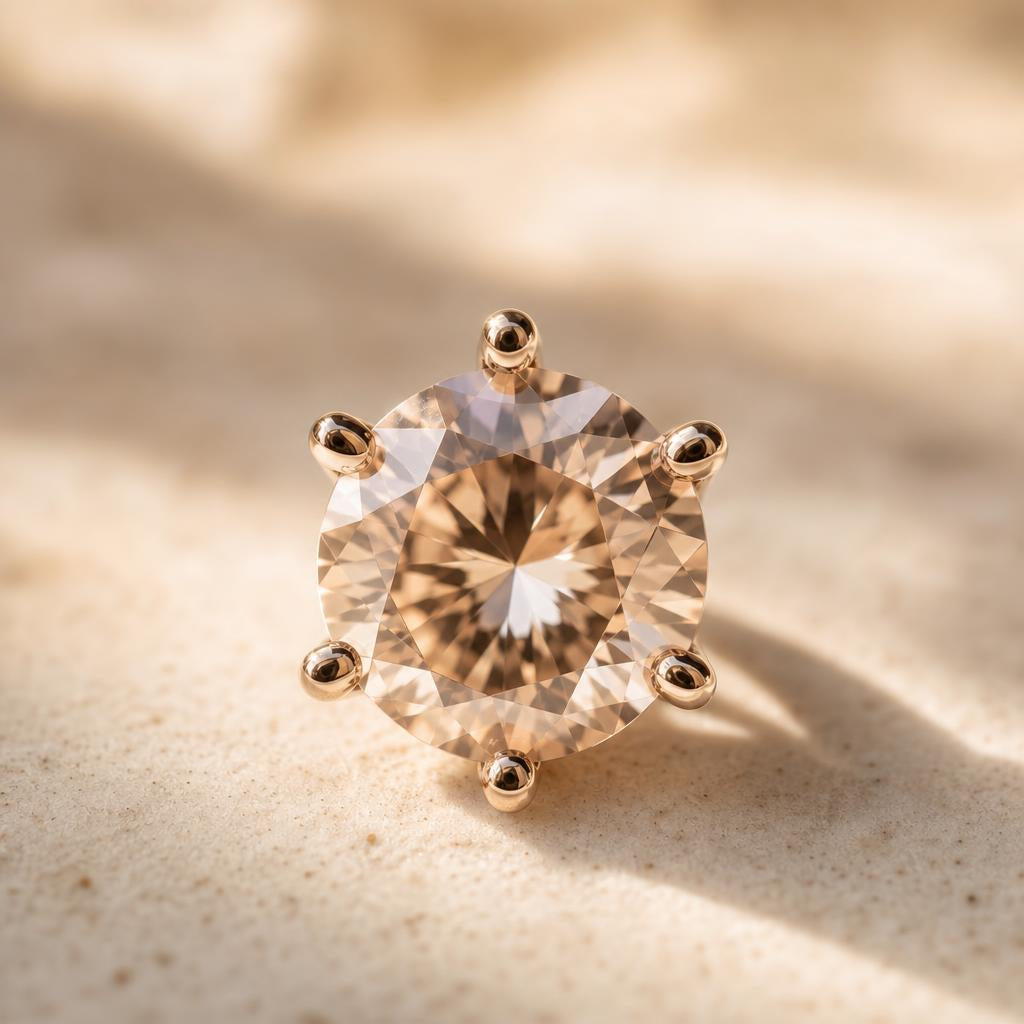
4-Prong vs 6-Prong Settings: Which Holds the Stone More Securely, and Which Looks Better
You're scrolling through ring listings, and you keep hitting the same two words tucked into the details: "4-prong" and "6-prong." Nobody explains what they actually mean for the ring you're about to buy — just that one apparently holds the stone "more securely" and the other looks "more classic." So which is true, and does the difference actually matter once the ring is on your hand?
It's a smaller decision than choosing a shape or a metal, but it changes how the stone sits, how much metal you see, and how the whole ring reads at a glance. Here's what each setting actually does, where they show up in the Gemiros collection, and how to decide which one is right for the ring you're about to choose.

What a Prong Setting Actually Does
A prong is one of the small metal claws that rise up from the ring's band and curve over the edge of the stone to hold it in place. It's the most common way to set a center stone because it does one thing extremely well: it lets the maximum amount of light into the stone from every angle. Unlike a bezel, which wraps a solid ring of metal around the stone's edge, prongs leave most of the stone exposed — which is exactly why solitaires and side-stone rings tend to sparkle the way they do.
The number of prongs is a trade-off between two things: how much of the stone you can see, and how firmly it's held. Fewer prongs means more visible stone and a lighter, more open look. More prongs means more contact points gripping the girdle — the widest part of the stone — which distributes pressure more evenly. Neither number is universally "correct." Each solves a slightly different problem, and the right one depends on the stone shape, the setting style, and how you actually wear your rings day to day.
The Classic 4-Prong Setting
Four prongs is the setting most people picture when they think "solitaire ring." Two prongs sit at the top and bottom of the stone, two sit at the sides, and the result is a setting that shows off as much of the stone's surface as possible. Less metal means less visual interruption — light enters and exits the stone almost unobstructed, which is part of why 4-prong solitaires photograph so cleanly and read as effortless rather than heavy.

The Stella Ring
A round brilliant solitaire set in a classic 4-prong mount — clean, open, and built to let the stone do all the talking. Available in silver and rose gold.
Shop The Stella Ring →The trade-off is that four contact points means the setting relies on precise placement — each prong has to be exactly where it should be, applying even tension, or the stone can sit slightly off-center. This isn't a flaw so much as a reason to buy from a source that sets stones consistently. On a well-made ring, a 4-prong setting is entirely secure for daily wear. It's simply less forgiving of a knock than a setting with more points of contact.
Worth knowing: 4-prong settings are the standard for round, princess, and oval solitaires because they show the most stone with the least metal. If your priority is maximum brilliance and a lighter-looking ring, four prongs is usually the more flattering choice.
The 6-Prong Setting
Add two more prongs and you get a mount with six contact points instead of four — typically arranged evenly around the stone's girdle rather than clustered at four compass points. The extra prongs distribute pressure across more of the stone's edge, which is why 6-prong settings are often described as the more secure option, particularly for larger center stones or rings worn during more active days.

The Soleil Ring
A round brilliant center stone held by six prongs, set on a pavé band for extra sparkle at the shoulders. A slightly more secure, slightly more detailed take on the solitaire.
Shop The Soleil Ring →Visually, six prongs cover slightly more of the stone's perimeter, which some buyers read as a fuller, more substantial-looking setting — especially on larger stones where the extra metal helps ground the piece rather than letting it look like it's floating. It's a subtle difference rather than a dramatic one, but if you've ever seen two similar solitaires side by side and felt like one looked slightly more "finished," the prong count is often why.
4-Prong vs 6-Prong: A Side-by-Side Look
| Factor | 4-Prong | 6-Prong |
|---|---|---|
| Visible stone | Maximum — least metal coverage | Slightly less — more metal at the edge |
| Overall look | Light, open, classic | Fuller, slightly more substantial |
| Security | Very secure; relies on precise, even tension | More contact points distribute pressure further |
| Best for | Round, princess, and oval solitaires; everyday minimal styles | Larger center stones; more active daily wear |
| Snag risk | Slightly lower profile per prong | Marginally more metal to catch on fabric or hair |
Which One Actually Looks Better?
This is the part with no universal answer, because it comes down to what you want the ring to communicate. A 4-prong setting tends to look quieter and more minimal — it's the choice if you want the stone itself to be the entire story, with almost no visual interruption from the metal. It also tends to suit smaller or more delicate stones particularly well, since fewer prongs keep the proportions light rather than letting the setting overwhelm the piece.
A 6-prong setting reads as slightly more considered and detailed, without tipping into ornate. It suits buyers who want a ring that feels a little more substantial on the hand, or who are choosing a larger center stone and want the setting to visually "hold" it rather than let it look precariously perched. Neither is more expensive or more premium than the other — it's a styling decision, not a quality tier.
✦ Pro tip: If you're between the two, look at the stone size relative to the band. Larger stones (roughly 2 carats and up in look) tend to benefit from the extra visual anchoring of six prongs. Smaller and mid-size stones usually look most balanced with four.
Does Stone Shape Change the Decision?
It does, and this is where prong count starts to interact with cut. Round and princess stones divide evenly into four or six points without disrupting their symmetry, which is why both prong counts show up so often on round solitaires. Oval, pear, and marquise stones are a slightly different story — their elongated shape means prong placement has to account for the pointed or curved ends, and four well-placed prongs are often enough to secure the stone without adding visual weight to a shape that's meant to look elongated and fluid.

The Odette Ring
An oval brilliant center stone in a clean solitaire mount — proof that prong placement matters as much as prong count once you move away from round stones.
Shop The Odette Ring →This is also where prong settings start to differ from other options entirely. If security and a lower profile matter more to you than maximizing sparkle, it's worth understanding how a bezel setting compares before you commit to prongs at all — a wraparound bezel trades a bit of brilliance for a completely snag-free edge. And if you're drawn to a fuller, more detailed look regardless of prong count, a pavé setting adds sparkle along the band itself rather than changing how the center stone is held.
Everyday Wear: What Actually Matters
For most day-to-day wear, both 4-prong and 6-prong settings are entirely secure when the ring is well made — prong count matters more at the margins than in typical use. Where the difference becomes more noticeable is in specific situations: if you work with your hands often, garden, go to the gym daily, or simply tend to knock your rings against things without noticing, the extra contact points on a 6-prong setting offer a small additional buffer. If your rings mostly see office days, dinners, and normal daily movement, a 4-prong setting will serve you just as well while giving you a slightly lighter, more open look.
It's also worth having your prongs checked periodically regardless of the count — this is true of any prong-set ring, not specific to one style. A quick visual check every few months (do the prongs still sit flush against the stone, with no visible gaps or bent tips) catches most issues long before they become a real problem.
Quick Takeaways
- 4-prong settings show the most stone and read as light, open, and classic — ideal for smaller to mid-size stones and minimal styles.
- 6-prong settings add extra contact points, which can offer marginally more security and a fuller look, especially on larger stones.
- Neither setting is inherently better — it's a styling and stone-size decision, not a quality difference.
- Oval, pear, and marquise stones are usually set with prong placement built around their shape rather than a strict four-vs-six count.
- Check any prong setting periodically, regardless of count, to make sure prongs sit flush and haven't shifted.
Frequently Asked Questions
Is a 6-prong setting actually more secure than a 4-prong setting?
In general, yes — more contact points distribute pressure across more of the stone's girdle. But a well-made 4-prong setting is still very secure for everyday wear. The difference matters most for larger stones or more active daily use, not for typical day-to-day handling.
Do 6-prong settings snag more on clothing or hair?
Slightly, since there's marginally more metal at the stone's edge. It's a small difference in practice — a low-profile setting matters far more for snag risk than prong count alone.
Can I have a ring reset from 4 prongs to 6, or vice versa?
This depends on the ring's construction and isn't something to assume is possible after purchase. It's much easier to choose the prong count you want at the time of buying than to change it later.
Which prong count is more popular for engagement rings?
Four prongs is the more common default for classic round and princess solitaires, largely because it maximizes visible stone. Six prongs shows up most often on larger center stones or designs meant to feel slightly more substantial.
The honest answer is that prong count is a smaller decision than it feels like when you're staring at a listing trying to choose. Both settings are secure, both are classic, and the "right" one comes down to how much stone you want to see and how the ring will actually spend its days. Once you know that, the rest of the decision tends to make itself.


