

What Necklace to Wear With What Neckline: A Length Guide That Actually Works
A necklace can do everything right — the right pendant, the right metal, the right stone — and still look wrong the second you put it on. Not because the piece is off, but because the length is. Necklace length isn't a style preference so much as a geometry problem: where the drop lands relative to your neckline decides whether it reads as intentional or accidental.
Once you know how to read a neckline, choosing the right length stops being guesswork and starts being obvious. Here's the actual logic behind it, plus a few pieces worth building a length-varied collection around.


The Neckline Rule Nobody Explains Properly
Most guides tell you what necklace to wear with what neckline by matching shapes — a V-neck gets a V-shaped pendant, a round neck gets a round pendant — and stop there. That's half the answer. Shape tells you the silhouette. Length tells you whether the piece actually lands somewhere flattering, or gets swallowed by fabric, or fights with a collarbone it was never going to clear.
The rule that actually holds up: a necklace should either sit entirely above the neckline, following its line, or hang clearly below it, in open space. Anything that lands right at the edge of the fabric — half tucked, half exposed — is the one placement that reads as a mistake instead of a choice.
How to Measure Necklace Length in Under a Minute
Before any of the neckline logic below makes sense, you need your own number. Wrap a soft tape measure — or a piece of string you'll measure afterward against a ruler — around your neck at the point where you want the necklace to sit, then note the total. Add two to four inches if you want it sitting a little looser than snug, since chain length is measured end to end, clasp included, not just the visible drop.
✦ Pro tip: Do this measurement wearing the actual top or dress you're planning to pair the necklace with. Two inches of extra fabric at the collar changes where a 16" chain versus an 18" chain actually lands.
The Necklace Length Guide, By the Numbers
Every necklace length guide worth using starts with the same handful of standard sizes. Here's where each one actually sits on the body:
| Length | Name | Where It Sits |
|---|---|---|
| 14–16" | Choker | Base of the neck, above the collarbone |
| 17–19" | Princess | Right at the collarbone |
| 20–24" | Matinee | A few inches below the collarbone |
| 28–36" | Opera | Mid-chest, can be doubled for a layered look |
| 36"+ | Rope / Lariat | Past the sternum, worn long or wrapped |
The 18" princess length is the one most women reach for first, and for good reason — it clears nearly every neckline without needing much thought. But "most versatile" isn't the same as "correct for every outfit," which is where neckline actually earns its say.
Matching Necklace Length to Your Neckline
This is the part of choosing a necklace for neckline shapes that actually changes outfit by outfit. A few of the most common ones, broken down:
Crew Neck and Round Neck
These necklines sit close to the throat, so a short choker fights for the same real estate the fabric is already occupying. Drop to a princess or matinee length pendant instead — something with enough room to hang freely below the neckline rather than crowding it.
V-Neck
The easiest pairing there is. A pendant that echoes the V — a solitaire or a simple drop — sitting at princess length continues the line the fabric already started, drawing the eye straight down instead of interrupting it.
Scoop Neck
Scoop necklines expose the most open space of any cut, which means they can carry more necklace, not less. A shorter pendant risks disappearing into the gap. Matinee length, or even a layered pair of chains at different lengths, fills the space the way the neckline is inviting you to.
Sweetheart and Strapless
A necklace for sweetheart neckline dressing has one job: stay clear of the curve. Anything that lands right on the fabric edge competes with a neckline that's already doing the visual work. A short pendant or fitted choker that sits a couple of inches above the dress line reads as considered instead of crowded.
Square Neckline
Straight lines call for a pendant with some geometry of its own — a princess or emerald-cut solitaire rather than something round and soft. Keep the length short enough to sit within the frame the square neckline creates, rather than dropping past it.
Turtleneck and High Neck
The only neckline where longer is unambiguously better. A choker gets lost under the fabric entirely, while an opera length or longer sits on top of the turtleneck as its own visible layer, doing the job the neckline can't.
What Actually Changes the Average Necklace Length for You
The average necklace length for a woman — roughly 18 inches — is a starting point, not a rule. Your actual best length shifts with a few things that have nothing to do with fashion trends:
- Frame size. A petite frame can be visually overwhelmed by anything past matinee length; a taller frame often needs the extra length just to sit where a shorter chain would on someone smaller.
- Neck length and width. A longer neck can carry a choker without it looking severe. A shorter neck usually looks more balanced with something that drops slightly lower.
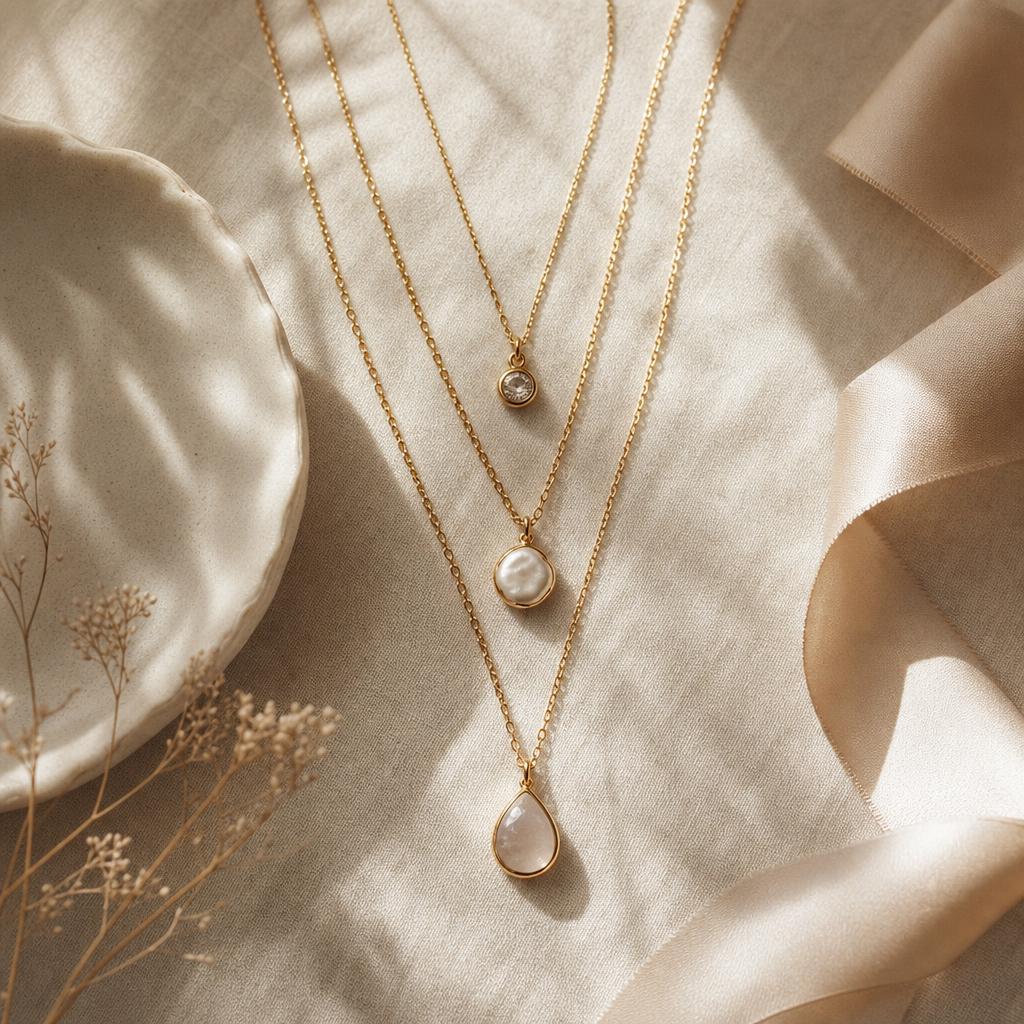
- What else you're wearing. A necklace worn alone can sit shorter than one you're planning to layer, since a stack needs a couple of inches of separation between each piece to avoid tangling.
Worth knowing: There's no wrong length once you understand what it's doing structurally — a choker on a longer neck and an opera-length chain on a petite frame can both look intentional. What reads as a mistake is a length chosen without knowing where it lands.

The Sweetheart Necklace
A heart-cut pendant on a fine silver chain, set at a length that clears a sweetheart or scoop neckline without a second thought. 925 sterling silver, indistinguishable from a diamond at a glance.
Shop The Sweetheart Necklace →Building a Necklace Wardrobe Instead of Buying One More Necklace
The smartest approach isn't finding the one perfect length — it's owning a couple of different ones so the necklace matches the outfit instead of the outfit working around the necklace. A princess-length solitaire for the necklines that call for something simple, something shorter for the days a turtleneck isn't in the rotation, and one piece with enough presence to wear alone.
A celestial or solitaire pendant earns its place here precisely because it isn't tied to one specific neckline. Worn at princess length, it clears almost everything; shortened slightly, it becomes the piece you reach for under a crew neck without rethinking the whole outfit.

The North Star Moissanite Necklace
A celestial pendant set with a moissanite stone that catches light the way a diamond does — passes diamond testers, no hedging required. Versatile enough to sit above a crew neck or drop below a scoop.
Shop The North Star Moissanite Necklace →Quick Takeaways
- A necklace should sit fully above the neckline or hang clearly below it — never right at the edge.
- Measure with a tape or string at the exact spot you want the piece to sit, adding 2–4 inches for a looser fit.
- High and close necklines (crew, turtleneck) want more length; open necklines (scoop, square) can carry more necklace, not less.
- The 18" princess length is the most versatile starting point, but frame size and neck length shift what looks best on you specifically.
Frequently Asked Questions
What is the most flattering necklace length?
There isn't one universal answer — it depends on your frame, your neck length, and your neckline. That said, the 17–19" princess length flatters the widest range of body types and outfits, which is why it's the default most women build a collection around first.
How do I know what necklace to wear with what neckline?
Follow the neckline's own logic: closed, high necklines (crew, turtleneck) want longer pieces that sit as their own layer, while open necklines (scoop, V-neck, square) can carry shorter pendants that fill the space the fabric leaves exposed. The one placement to avoid is anything landing right at the fabric's edge.
What is the 2:1:1 rule in jewelry?
It's a layering guideline: space each necklace in a stack about two inches apart in length — for example, a 16", 18", and 20" chain together — so each piece is visible on its own instead of bunching into one indistinct cluster at the same spot on your chest.
Is an 18-inch or 20-inch necklace better?
Neither is objectively better — an 18" sits at the collarbone and works with most necklines, while a 20" drops a few inches lower and suits open or higher necklines that need a bit more length to look intentional. Try both against the actual outfit before deciding.
How long should a necklace be for a petite frame?
Choker to princess length (14–18") is usually the most balanced choice on a smaller frame — long enough to sit naturally, short enough that it doesn't visually overwhelm. Matinee and opera lengths can still work, but they read as more of a statement on a petite frame than on a taller one.
None of this is complicated once the logic clicks — it's geometry, not taste. Measure once, learn where your own necklines actually sit, and every necklace after that becomes an easy decision instead of a guess.


