

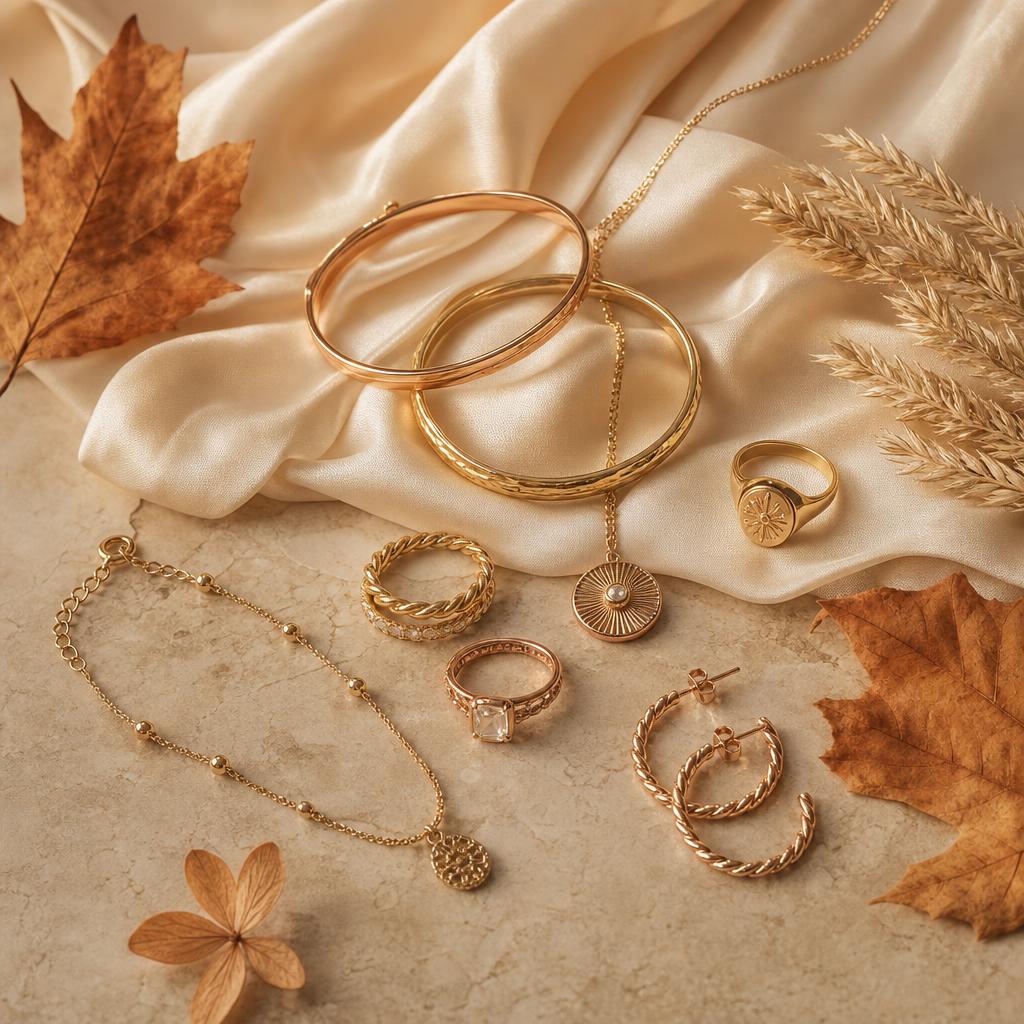
Wedding Guest Jewelry Etiquette: Warm Tones for a Fall Wedding
There's a particular kind of relief in already knowing what you're going to wear to a wedding — right down to what's on your hands. Fall weddings especially reward a little forethought: the light is warmer, the palette shifts toward amber and bronze, and the jewelry that looked right in June can suddenly feel slightly off against candlelight and changing leaves.
If you've been quietly wondering what jewelry to wear to a wedding as a guest this season, the short answer is this: warmer metal tones, and settings with a little more presence than your everyday stack. Here's how to actually get there.


Wedding Guest Jewelry Etiquette: The Short Version
Wedding guest jewelry etiquette really comes down to one idea: you're there to celebrate someone else's day, not to compete with it. That doesn't mean playing it small — it means being deliberate. Skip anything that reads as bridal (all-white stones set in a way that could be mistaken for the bride's own jewelry), and build your look around one clear focal point rather than several competing ones.
The rest of the etiquette is really just good styling. A dress code tells you the room's formality; your jewelry should match that energy without trying to outshine it. A daytime backyard wedding and a black-tie ballroom reception call for genuinely different amounts of sparkle, and reading that correctly is most of what people mean when they ask what jewelry is appropriate for a wedding guest.
Why Fall Calls for Warmer Metal Tones
Cool white metals photograph beautifully in bright summer light, but fall shifts the entire visual register — string lights instead of sun, deeper florals, more candlelight on the table. Gold and rose gold sit into that palette instead of cutting against it. They pick up warm light instead of competing with it, which is why a rose gold or gold ring tends to look intentional at an autumn wedding in a way a stark white-metal piece sometimes doesn't.
This isn't about buying an entirely new jewelry wardrobe every season. It's about noticing that the ring you reach for in July might not be the one that reads best in a room lit by candles and string lights in October. A rose gold setting with pavé detailing, worn on its own or lightly stacked, does the job without asking for attention it hasn't earned.
If you're deciding between gold and rose gold, the honest answer is that both work — the choice comes down to what already lives in your jewelry box. Rose gold tends to read slightly softer and pairs naturally with the blush, terracotta, and deep berry tones common in fall wedding palettes. Gold leans a touch more classic and photographs well against the browns and burgundies of an autumn reception. Neither is more "correct" than the other; the mistake to avoid is showing up in a stark, cool white metal that visually fights everything else in the room instead of sitting into it.

The Maxima Ring
A 3.5-carat cushion-cut center wrapped in a double halo, set in rose gold — the kind of piece built for a room with candlelight in it. It isn't a dupe or a substitute for anything; it's 925 sterling silver and a Gemiros® Signature Simulated Diamond, indistinguishable from a mined stone to the eye and to a diamond tester.
Shop The Maxima Ring →Richer Settings: Halo, Pavé, and Vintage Detail
"Richer" for fall doesn't have to mean a bigger stone — it can just mean a setting with more going on around the center. A halo adds a visible ring of light around the main stone. Pavé along the band catches light from more angles than a plain shank. Milgrain edging, the tiny beaded detail found on vintage-inspired settings, reads as more considered under warm light than a smooth, minimal band. All three do more visual work in a room where the lighting itself is doing less.
This is also where it helps to shop with a specific gap in mind rather than defaulting to whatever you already own. If your everyday rings are all clean solitaires, a halo or vintage-pavé piece will actually read as new for the occasion — not just another ring pulled from the same drawer.

The Aura Ring
A radiant-cut center with a hidden halo underneath — the sparkle shows the moment it catches light, without announcing itself before then. Set in gold, it's built for exactly this kind of room: warm, a little dim, full of candles.
Shop The Aura Ring →How Much Jewelry Is Too Much as a Guest?
A useful rule: pick one focal point and let everything else support it. If your ring is doing the talking — a halo, a vintage-pavé band, something with real presence — keep your ears and neck quieter. If you'd rather lead with a statement necklace or drop earrings, let your rings stay simple that night. Wearing several "loud" pieces at once doesn't read as more polished; it just competes with itself.
✦ Pro tip: Try the whole look on under the kind of light you'll actually be in — a warm lamp, not an overhead bathroom light. Fall weddings are lit differently than a phone camera flash will show you.
What to Skip: The Pieces That Read Wrong at Someone Else's Wedding
A few things are worth leaving at home regardless of season. Anything that could be mistaken for bridal jewelry — a single strand of pearls worn high on the neck, an all-white stone choker — sits too close to the bride's own look. Anything overtly costume-grade, with visible glue settings or a finish that dulls after one wear, tends to look exactly as disposable as it is, which isn't the impression most people want to leave at a wedding. And anything that will visibly tarnish or discolor your skin partway through a long reception is a bigger risk than it's worth.
None of this means playing it safe to the point of forgettable. It means choosing pieces built to actually hold up under a full evening of dancing, hugging, and photographs — which is a durability question as much as a style one. A ring that discolors after a few hours near hand sanitizer and dance-floor sweat isn't just an aesthetic letdown; it's the kind of thing you notice in every photo afterward.
Nickel-free settings matter here too, especially for anyone with even mildly sensitive skin. A long reception means hours of handshakes, hugs, and hands clasped for photos — not the moment to discover a piece irritates your skin partway through the night.
Matching Your Jewelry to the Dress Code
A daytime, semi-formal fall wedding — think a barn, a vineyard, an early-afternoon ceremony — pairs well with a single warm-toned ring with texture (pavé, milgrain, a small halo) and understated earrings. A cocktail-attire evening reception can handle a bit more: a stacked pair of rings, or one statement ring paired with drop earrings, since the room's own formality is already doing some of the visual work for you. Save the boldest piece in your jewelry box for true black-tie, where a cushion-cut halo or a radiant-cut hidden halo in gold or rose gold has room to actually be seen against long gowns and dimmer lighting.
The dress code is really just shorthand for how much the room expects from you — match your jewelry's presence to that expectation rather than guessing. When the invitation doesn't specify, it's almost always safer to slightly underdress your jewelry than to overshoot it; a simple ring that photographs beautifully will never look out of place, while an oversized statement piece at a casual afternoon wedding is harder to walk back once you're there.
Quick Takeaways
- Warm metals — gold, rose gold — sit better in fall's candlelight and amber tones than cool white metals
- "Richer" doesn't require a bigger stone: a halo, pavé, or milgrain setting does the same visual work
- Pick one focal point (ring, necklace, or earrings) and keep the rest of your jewelry quiet
- Skip anything that reads as bridal, visibly costume-grade, or prone to tarnishing mid-reception
- Match your jewelry's presence to the dress code — daytime semi-formal calls for less than black-tie evening
Frequently Asked Questions
What jewelry is appropriate to wear as a wedding guest?
Anything that matches the dress code without competing with the bride's own jewelry. For fall specifically, warm-toned metals and settings with some texture — halo, pavé, milgrain — tend to read best. Avoid all-white pieces styled in a way that could be mistaken for bridal jewelry.
How much jewelry is too much for a wedding guest?
A simple guide: choose one focal point — a statement ring, a necklace, or earrings — and let the rest of your jewelry stay minimal. Wearing several bold pieces at once tends to compete rather than complement.
What jewelry should you avoid wearing to someone else's wedding?
Skip anything that could be mistaken for bridal jewelry, especially all-white pieces worn high on the neck. Also worth avoiding: visibly costume-grade pieces that dull or discolor over a long evening — a full reception of dancing and photographs is a real durability test.
Does wedding guest jewelry etiquette change for a fall wedding specifically?
The core etiquette stays the same — don't outshine the bride, match the dress code — but fall's warmer light and richer color palette make gold and rose gold settings a more natural fit than cool white metals, which can look slightly out of place against candlelight and autumn florals.
What's the best jewelry style for a fall wedding as a guest?
A single warm-toned ring with a halo, pavé, or vintage-inspired setting is one of the easiest ways to look put-together without overdoing it. It reads as intentional in candlelight and pairs easily with whatever else you're already wearing.
The best wedding guest jewelry ideas for fall aren't complicated — they're just seasonally honest. Warmer metal, a setting with a little more presence, one clear focal point. Get those three things right and the rest of the outfit takes care of itself.


