

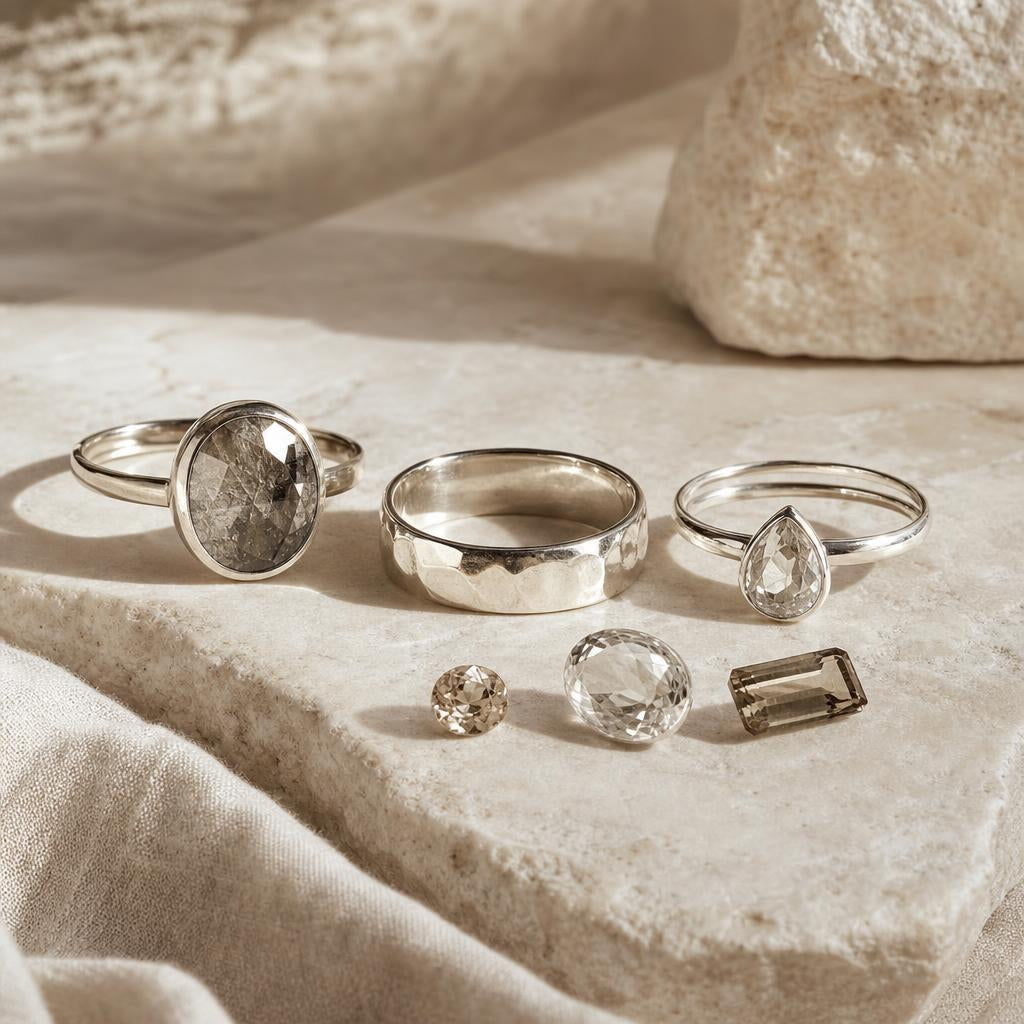
Sterling Silver vs. Silver-Plated: What the Difference Means for Your Ring
Somewhere between the product photo and the checkout button, two words start doing a lot of quiet work: "sterling silver" and "silver-plated." They look almost interchangeable in a listing. They are not. One is a solid metal that will still be there in twenty years. The other is a thin coating over something else entirely — and knowing which one you're looking at changes everything about how a ring wears, ages, and holds up to daily life.
Every Gemiros ring starts from the same foundation before a single finish is chosen — solid 925 sterling silver, worn by over 50,000 women who never had to guess what was underneath.


What Is Sterling Silver, Actually?
Sterling silver is not a marketing term — it's a metallurgical standard. It refers to an alloy made of 92.5% pure silver and 7.5% other metal, almost always copper. Pure silver on its own is too soft to hold a ring's shape through normal wear; it scratches, bends, and dents far too easily. The added copper is what gives sterling silver the structure to survive being knocked against a desk, a steering wheel, or a car door a hundred times a week without losing its form.
This is the standard the entire fine-jewelry world builds on, and it's the standard every Gemiros ring starts from — not a lighter-weight substitute, not a "close enough" alloy. Solid, all the way through, center to surface.
What Is 925 Sterling Silver?
If you've ever turned a ring over looking for tiny numbers stamped on the inside of the band, that's the tell. "925" is shorthand for 92.5% pure silver — the same ratio described above, just written as a purity mark rather than spelled out. A genuine sterling silver piece carries that stamp because it has nothing to hide: the metal is what it claims to be, all the way through the band, not just on the surface where a jeweler's loupe might miss it.
Worth knowing: A 925 stamp is not decoration — it's a declaration. It only belongs on metal that's genuinely 92.5% silver by weight, which is exactly why it matters when you're comparing listings that all use the word "silver" a little too loosely.
Sterling Silver vs. Silver-Plated: The Difference That Actually Matters
Here's where the two terms stop sounding similar and start meaning very different things. Silver-plated jewelry is a base metal — usually brass, copper, or nickel — with a microscopically thin layer of silver bonded to the outside. That layer can be a fraction of a micron thick. Wear it daily, and that coating rubs away within months, exposing the duller, often discolored metal underneath. There's no polishing your way back from that; once the plating is gone, it's gone.
Solid sterling silver has no such expiration date, because there's nothing to wear through. The 92.5% silver content runs from the outer surface to the very core of the metal. Scratches can be buffed out. The finish can dull and be restored. What you bought on day one is still, structurally, what you're wearing on day one thousand.

The Beatrice Ring
A round-cut solitaire on a vintage-inspired pavé band, built on solid sterling silver with a rhodium finish for a bright, cool-white shine.
Shop The Beatrice Ring →This is also where a Gemiros ring's finish gets misunderstood. Rhodium, 18k gold, and rose gold plating are not the same phenomenon as "silver-plated" jewelry — they're a thin layer of a different precious metal applied on top of an already-solid sterling silver base, purely for color and shine. The silver structure underneath isn't a stand-in for something more real; it's the ring, from the first millimeter to the last.
Does Sterling Silver Tarnish? Here's What Actually Happens
Yes — and that's not a defect, it's chemistry. The copper in the alloy reacts slowly with oxygen, humidity, and sulfur in the air, which is what produces that faint golden-to-gray shift jewelers call tarnish. It's the same reaction that happens to every sterling silver piece on earth, including the ones sitting in a Tiffany display case. Tarnish is proof of genuine silver content, not a sign that a ring is falling apart.
The upside: tarnish sits entirely on the surface, and it comes off. A soft polishing cloth restores the shine in under a minute. Wearing a piece often actually slows the process, since the gentle daily friction against skin and fabric keeps buildup from settling in. What speeds tarnish up is the opposite of wear — chlorine, perfume applied directly onto metal, and long stretches in a humid jewelry box with no airflow.
✦ Pro tip: Store rings in a dry, airtight pouch when you're not wearing them, and put on perfume, lotion, and hairspray before you put on your jewelry — not after. Both habits cut tarnish speed dramatically with zero extra effort.
Rhodium, 18k Gold, and Rose Gold: What the Finish Actually Adds
Once you know the base is always solid sterling silver, the finish becomes a question of color and character, not durability. Rhodium is a platinum-family metal plated over the silver to create that bright, ultra-white, almost mirror-like shine — it's also what most white gold jewelry is finished in, for the same reason. On its own, rhodium doesn't tarnish; it's an inert, non-reactive metal. What eventually happens with any plating, rhodium included, is gradual thinning from daily friction, at which point the sterling silver underneath can start to show through at high-contact points like the underside of the band.
18k gold and rose gold plating work the same way structurally — a fine layer of gold laid over the sterling silver base to shift the tone warmer. With regular daily wear, most people notice a plated finish holding strong for a year or more before it's worth considering a re-plate, and pieces worn only occasionally can go considerably longer. None of this touches the ring's integrity underneath; a faded finish is a cosmetic refresh, not a structural failure, because the sterling silver structure was never going anywhere.

The Everlasting Ring
A continuous line of round brilliant stones set in solid sterling silver with a rhodium finish, built for daily stacking without losing its shine.
Shop The Everlasting Ring →None of this is a workaround or a compromise dressed up as a feature. It's simply how precious-metal finishing has always worked, on pieces that cost considerably more than a ring ever needs to. The stone is indistinguishable from a diamond and passes diamond testers; the metal underneath is genuine 925 sterling silver, hypoallergenic and nickel-free, whether the surface reads bright silver, warm gold, or rose gold on any given day.
Quick Takeaways
- Sterling silver = 92.5% pure silver, solid from surface to core — not a coating.
- Silver-plated = a thin silver layer over a base metal like brass or nickel, which wears through.
- A 925 stamp only belongs on the real, solid alloy.
- Tarnish on sterling silver is normal chemistry, not damage — and it polishes right off.
- Rhodium, gold, and rose gold are finishes applied over the same solid sterling silver base, not separate materials.
Frequently Asked Questions
Is sterling silver a good material for a ring you wear every day?
Yes. Sterling silver is the industry standard for daily-wear jewelry precisely because the added copper gives it the strength pure silver lacks. It holds its shape, resists dents better than softer metals, and any surface tarnish buffs out with a soft cloth in seconds.
How can you tell if something is sterling silver or just silver-plated?
Look for a "925" stamp, usually on the inside of the band — genuine sterling silver carries it, plated pieces typically don't. Wear is the other tell: plated jewelry develops dull or discolored patches where the thin coating has rubbed away, while solid sterling silver stays the same metal all the way through, even after years of wear.
Can you shower or swim while wearing sterling silver?
Occasional splashes won't hurt it, but chlorine and prolonged water exposure speed up tarnish and can dull a plated finish faster than normal wear. The safer habit is simple: rings come off before the pool, the ocean, or a long soak, and go back on once you're dry.
Does gold-plated sterling silver tarnish?
The gold layer itself won't tarnish, but once it thins from daily wear, the sterling silver underneath can be exposed and tarnish the way any sterling silver piece does. It's a cosmetic, fully reversible change — a re-plate restores the original tone, and the ring's structure is unaffected either way.
How long does a rhodium finish actually last?
With regular daily wear, most people get a year or more out of a rhodium finish before considering a refresh, and pieces worn occasionally can last significantly longer. Chlorine, harsh cleaning products, and constant friction against other jewelry are what shorten that timeline fastest.
Is it worth buying silver-plated jewelry instead of solid sterling silver?
For anything you plan to wear often or keep long-term, solid sterling silver is the better foundation — it doesn't have a coating to wear through, so there's no point where the ring's core material changes. Silver-plated pieces can suit the rare occasion-only accessory, but they aren't built for the kind of everyday wear a real jewelry rotation demands.
The next time a listing says "silver" without saying which kind, you now know exactly what to check. A stamp, a weight, an honest description of what's underneath the shine — that's the whole difference between a ring that lasts and one that quietly stops being what you paid for. Solid sterling silver was never the compromise. It was always the standard.


