

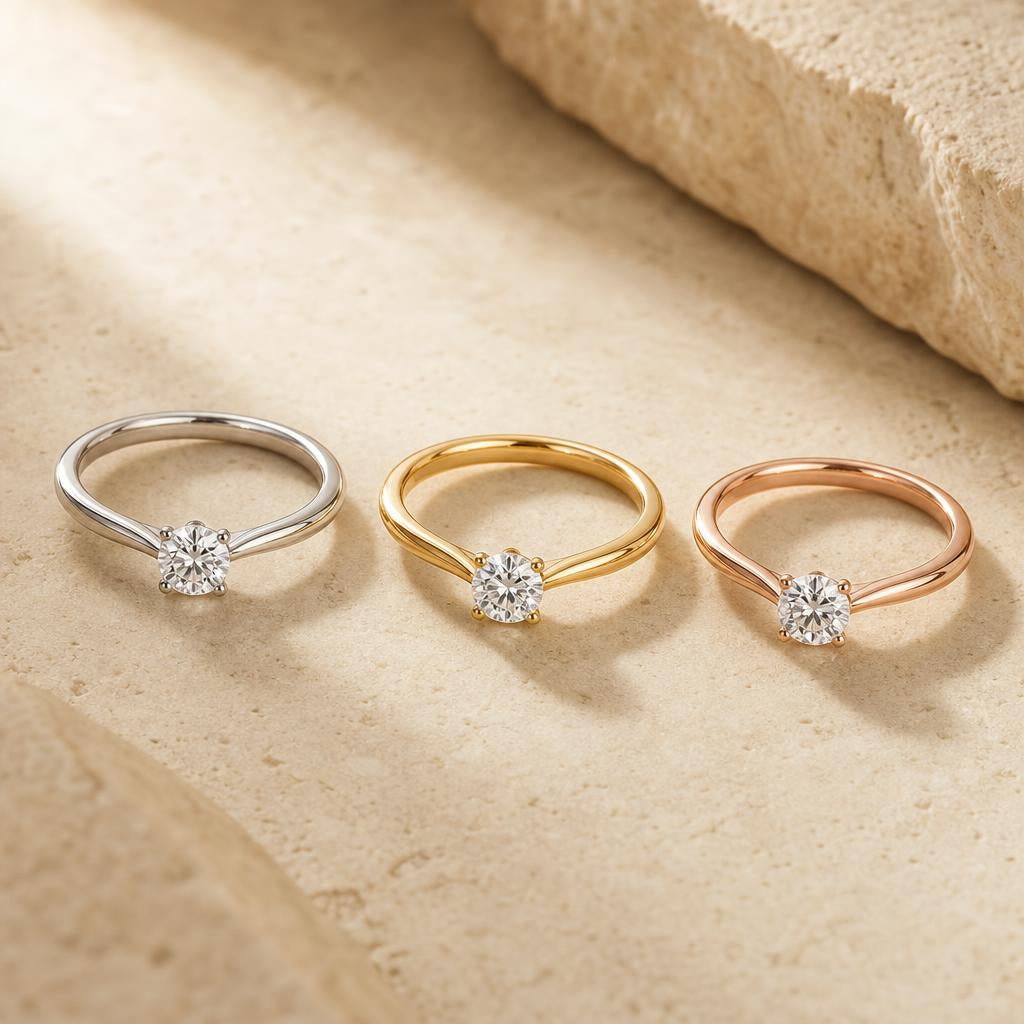
Mixed Metal Ring Stacking: Does Combining Gold Tones Actually Work, or Does It Just Look Messy?
The rule about not mixing metals died quietly sometime around 2018, and honestly, it deserved to go. Today, some of the most considered, polished ring stacks you'll see combine silver, gold, and rose gold — not by accident, but with a clear logic behind which tones sit next to each other and why. The trick isn't avoiding the mix. It's understanding when it looks deliberate.
If you've been wearing one metal exclusively because you weren't sure how to make more than one tone work together, this guide is for you. We'll walk through the actual principles — which metals work together, how to build the stack, and which Gemiros rings lend themselves to mixing — so you can wear whatever you own and have it look intentional.


Why the "one metal only" rule no longer applies
For a long time, the prevailing advice in jewellery styling was strict: choose a metal and commit. Your engagement ring is white gold, so your wedding band is white gold, so your eternity ring is white gold. The stack is a matching set. The logic was coherent — it's harder to make matching tones look bad — but it was also limiting in a way that no longer reflects how most women actually dress their hands.
Mixed metal jewellery has been a presence in high-end editorial styling for well over a decade, and what was once a fashion-forward choice is now simply how a thoughtful stack works. Jewellery designers have leaned into it too — it's not uncommon to see a single ring that incorporates both yellow gold and white gold in its setting intentionally. The fashion world understood before the style rules caught up that contrast, when handled with a sense of proportion, reads as sophisticated rather than careless.
The key word there is proportion. What makes a mixed metal stack look intentional is the same thing that makes any good outfit work: there's a dominant element, and the contrasting elements are supporting it, not competing with it. A stack with too many metals fighting for equal prominence tends to read as "I put on every ring I own." A stack where one metal leads and one or two others accent it reads as considered.
Worth knowing: The dominant-metal principle doesn't mean you can only mix two metals. It means one tone should appear in more pieces than the others. A silver anchor ring, one yellow gold band, and one rose gold band still works — silver is dominant by count, and the two warm tones echo each other without competing with the cooler centrepiece.
Which metal combinations actually work
Not all pairings are equally easy. Here's an honest assessment of the combinations you're most likely to encounter and how each one performs in practice.
Yellow gold + rose gold
This is the easiest combination to pull off and the one that requires the least structural thinking. Yellow gold and rose gold are both warm tones — they sit on the same side of the colour spectrum, which means they don't jar against each other. The contrast between them is subtle: rose gold reads softer and more pink, yellow gold brighter and more saturated. Together, they create a layered warmth that works especially well against olive or deeper skin tones, where warm metals already tend to read beautifully.
For this pairing, you have a lot of flexibility. The dominant metal can be either tone. A yellow gold anchor ring with one rose gold companion looks collected. A rose gold centrepiece with slim yellow gold bands on either side reads equally intentional. The two tones are close enough that you don't need to think hard about which leads.
Silver + yellow gold
This is the boldest contrast in ring stacking — a cool, bright silver sitting next to a warm, saturated yellow gold. It absolutely can work, but it requires more attention to how the two tones relate. The best version of this combination tends to use a clear visual anchor in one metal with a lighter touch of the contrasting tone. One silver statement ring with a slim yellow gold band works better than one silver ring and one equally-sized yellow gold ring sitting directly against each other.
Skin tone matters here more than with warm pairings. On very fair skin, a strong silver-and-yellow-gold contrast can read slightly harsh; adding a rose gold piece as a visual bridge between the two actually softens the composition considerably. On medium and deeper skin tones, the same high-contrast combination often reads as richer and more striking. Neither is a rule — it's a starting observation.
Silver + rose gold
The most wearable of the contrasting combinations. Silver's cool neutrality makes an excellent foil for rose gold's warmth without the stark contrast you get from yellow gold. The visual effect is softer — it reads as layered and feminine without announcing itself. This pairing works particularly well for building a quieter, more refined stack where the focus is on texture and profile rather than tone drama.
All three metals together
The most ambitious option — and, handled well, often the most interesting result. The key is to make the arrangement clearly intentional by ensuring the metals are not randomly alternating. Grouping the warm tones (yellow and rose gold) together and flanking them with silver, or anchoring the entire stack with a prominent silver piece and treating yellow and rose gold as accents, both read far better than simply alternating cool-warm-cool-warm up the finger.
✦ Pro tip: When mixing all three metals, keep the stone sizes and band widths consistent across the stack. When the silhouette is unified, the eye reads the metal variation as a deliberate choice rather than a discrepancy.
The Beatrice: the same ring in two metals
One of the most elegant ways to start building a mixed metal stack is to find the same design offered in two different metal tones and layer them. It removes the question of whether the styles are compatible — because they're identical — and lets the metal contrast do all the work without any guesswork about proportion or profile matching.
The Beatrice Ring is a round simulated diamond set on a vintage pavé band with subtle milgrain detailing. It's available in both silver and 18k gold plating, and the two versions sit flush against each other because the band profiles match exactly. Wearing the silver Beatrice as your anchor and adding the gold Beatrice as a companion ring gives you a clean, considered mixed metal result without any of the usual styling uncertainty. It looks effortless because structurally, it is.

The Beatrice Ring
A round simulated diamond on a vintage pavé band with milgrain detailing — set in 925 sterling silver with rhodium plating for a bright white finish. The silver version that anchors the mixed metal pair.
Shop The Beatrice Ring →
The Beatrice Ring — Gold
The same vintage pavé design as the silver version, in 18k gold plating. The identical band profile means the two versions sit flush against each other — pair them for an instant mixed metal stack with no additional styling effort required.
Shop The Beatrice Ring — Gold →Adding rose gold to the stack
Once you have a silver-and-gold foundation, rose gold can do one of two things: serve as a bridge between the cooler and warmer pieces (particularly effective in a three-metal stack), or become the dominant anchor if you prefer the warm end of the spectrum to lead.
The Maxima Ring in rose gold is a strong choice for the anchor role. It's a 3.5-carat cushion-cut simulated diamond in a double halo setting — substantial, with real presence — and in rose gold plating it has a richness that reads distinctly warmer than yellow gold without clashing with it. Stack a slim yellow gold companion ring on one side and a slim silver band on the other, and you have a three-metal arrangement where each tone appears once and the rose gold anchor keeps the whole composition warm and considered.

The Maxima Ring — Rose Gold
A 3.5-carat cushion-cut simulated diamond in a double halo setting, plated in 18k rose gold. The substantial silhouette makes it a confident anchor for a mixed metal stack, while the warm rose tone bridges yellow gold and silver companions naturally.
Shop The Maxima Ring →Five principles for a mixed metal stack that looks intentional
These aren't rules to follow rigidly — they're observations about what separates a stack that reads as considered from one that reads as random. Use them as starting points, then trust your eye.
- Pick a dominant metal. The tone that appears in the most rings sets the palette. If you're unsure which metal to lead with, start with whatever your anchor or most-worn ring is and build around it.
- Keep contrasting metals lighter. If your dominant metal is silver, the yellow gold companion ring can be slightly narrower or have a slightly smaller stone. This lets the dominant tone take visual precedence without you having to think hard about why the stack looks better.
- Group warm tones together. If you're wearing yellow gold and rose gold in the same stack, position them adjacent to each other rather than separated by a silver ring. The warm tones reinforce each other, and the contrast with the cooler piece reads as more intentional.
- Unify through silhouette. Matching band widths across different metal tones is one of the most effective ways to make a mixed stack read as coherent. When the rings all have a similar profile, the metal variation is clearly the intended design choice rather than a mismatched collection.
- Less is more on the first attempt. A two-metal stack is easier to calibrate than a three-metal one. Start with one anchor ring and one contrasting companion, live with it for a week, then decide whether to add a third tone or a second ring in the same metal as the companion.
Quick Takeaways
- Mixed metal stacking works when one metal leads and others accent — not when all tones compete equally
- Yellow gold + rose gold is the easiest pairing; silver + yellow gold is the boldest contrast
- The same design in two metal tones (like the Beatrice Ring) is a zero-guesswork starting point
- Group warm tones (yellow + rose gold) together rather than alternating with cool metals
- Matching band widths across different metals unifies the stack even when tones vary
- Start with two metals, add a third once you're confident the first pairing works for your hand
Frequently asked questions
Does mixing silver and gold look cheap?
Not if the mixing is intentional. What reads as "cheap" is usually a mismatch of quality — a very fine piece sitting next to a very casual one — rather than a mismatch of metal tone. Well-made rings in different tones sit well together. The key is that the stack should look like a decision, not an accumulation.
Can I mix metals if my engagement ring is white gold?
Yes. White gold and silver-toned rings make excellent anchors for mixed metal stacks because their cool neutrality provides contrast for both warm tones. A slim yellow gold or rose gold band either side of a white gold engagement ring looks classic and considered — it's one of the most common mixed metal combinations you'll see on rings people have been wearing for years.
Does mixing metals work on every skin tone?
Yes, though the best-performing combinations vary. On very fair skin, softer contrasts — rose gold + silver, or yellow gold + rose gold — tend to look more elegant than starkly contrasting silver and yellow gold. On medium and deeper skin tones, higher contrast combinations often read as richer and more striking. Neither is a rule; it's a starting observation, and the best approach is always to try it and see how it looks on your specific hand.
How many rings is too many for a mixed metal stack?
There's no universal limit, but most mixed metal stacks read best with three to five rings on a single finger. Beyond that, the visual complexity increases and the metal mixing can start to read as noise rather than intention. If you want to wear more rings, distributing them across multiple fingers tends to work better than concentrating them all in one stack.
Mixed metal stacking is less about following rules and more about understanding the logic behind what makes a stack look finished. Once you have the dominant-metal principle in place, the rest comes down to proportion, position, and giving each tone a clear role in the composition. Start with one deliberate contrast — a silver anchor and a gold companion, or a rose gold centrepiece with silver on either side — and let the stack evolve from there. The worst outcome is a combination you try once and don't love. The best is a stack that looks like it was always meant to be that way.


