

Minimalist Necklace Style: How to Choose One Pendant and Build a Signature Look
Somewhere between "too plain" and "trying too hard" is the necklace you actually reach for every single morning — and most women never find it, because they never stop to ask what a minimalist necklace is actually supposed to do for them.
A signature look isn't about owning fewer necklaces. It's about knowing which one is yours — so getting dressed stops being a negotiation and starts being automatic.


What a minimalist necklace is actually for
It isn't the absence of a statement. It's a different kind of statement — one that says you've already decided what you like, and you're not interested in reconsidering it every time you get dressed. That's a subtly different proposition from "simple jewelry," and it's worth understanding the difference before you buy one.
The instinct most women have is to build a jewelry box the way they build a wardrobe: one of everything, ready for any occasion. It sounds practical. In practice, it means standing in front of a drawer of necklaces every morning, unsure which one goes with what, defaulting to nothing at all. A signature piece — one pendant style, worn consistently — removes that decision entirely. It becomes part of how you look, not an accessory you remember to add.
The case for choosing one pendant style
This isn't a rule about owning only one necklace. It's a rule about having one you reach for by default — the one that's already on before you've decided what else you're wearing. Everything else in your collection becomes optional. That piece becomes non-negotiable.
Committing to a signature style also does something for how a piece reads on you over time. A necklace worn once a month never quite looks like it belongs to you. A necklace worn daily starts to. People stop noticing the jewelry and start noticing you — which, if you think about it, is the entire point of wearing something beautiful in the first place.

The Lume Moissanite Necklace
A single moissanite stone set to look like it's floating on the chain — the quietest possible way to wear real sparkle every day.
Shop The Lume Moissanite Necklace →Solitaire, halo, or dainty — three starting philosophies
Before you can commit to one pendant style, it helps to know what each one is actually communicating.
The solitaire pendant
One stone, centered, with nothing competing for attention. A solitaire pendant necklace like The Stella Necklace or The Ophelia Necklace reads as confident rather than quiet — the jewelry equivalent of a well-cut blazer. It works with everything precisely because it isn't trying to match anything. If your instinct is toward clean lines and you'd rather not think about your necklace once it's on, this is usually where you land.
The halo pendant
A halo setting takes that same single stone and gives it a little more presence — a ring of smaller stones surrounding the center, catching light from more angles without adding a second focal point. The Belle Necklace and The Leighton Necklace both use this setting well. It's still one pendant, one story — but it photographs with slightly more drama, which matters if your daily piece also needs to hold its own in a video call or a dinner photo.
The dainty, shaped pendant
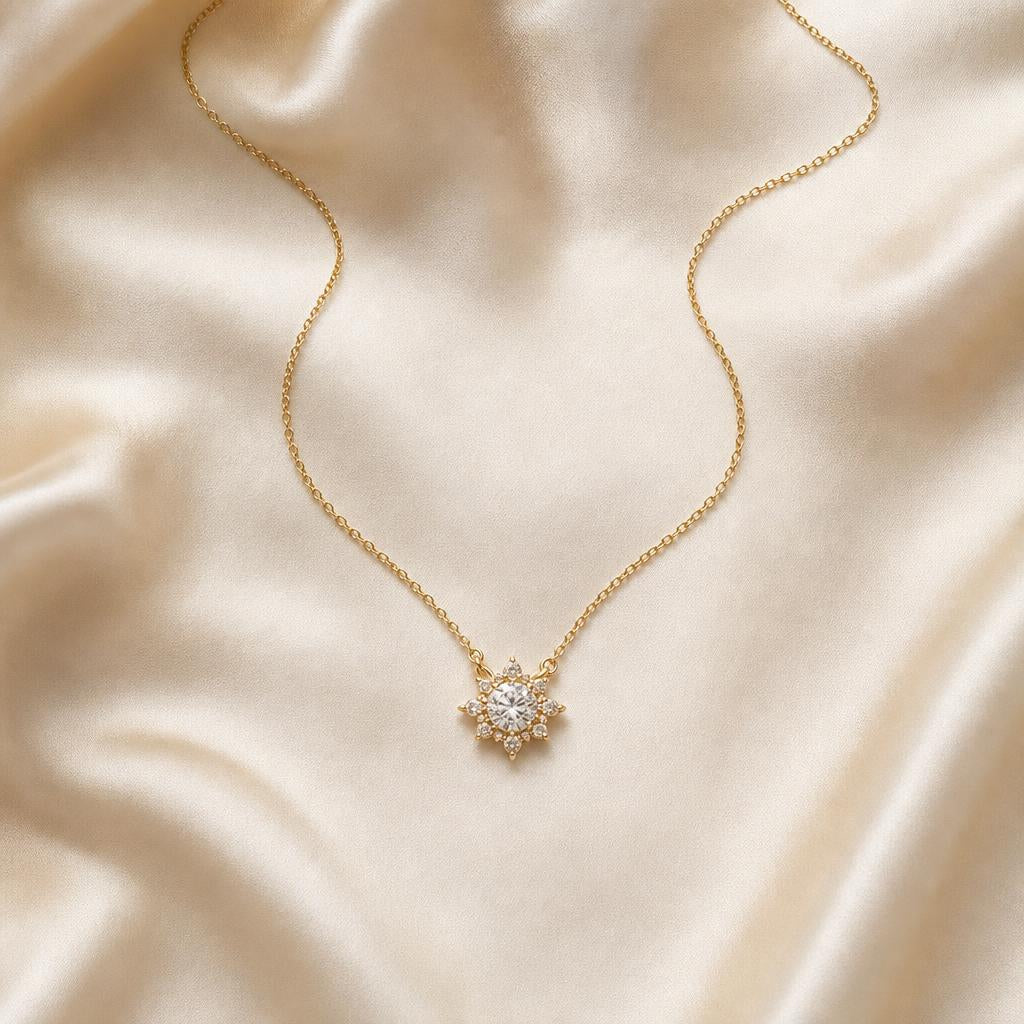
Clovers, stars, hearts — a shaped pendant like The Clover Moissanite Necklace or The North Star Moissanite Necklace trades the classic round stone for something with a little more personality, without losing the restraint that makes it wearable daily. This is often the entry point for women who assumed "minimalist" meant "boring" and were pleasantly surprised to find it doesn't have to.
Worth knowing: A moissanite or Gemiros Signature Simulated Diamond pendant isn't a smaller version of the real thing — it's indistinguishable from a diamond to the eye and passes diamond testers. The stone is doing exactly what it looks like it's doing.
How to actually choose yours
Start with what you already wear on repeat, not what looks best on a stand. If your closet is full of crewnecks and button-downs, a solitaire pendant necklace sits cleanly at almost any neckline without fighting the collar. If you gravitate toward deeper necklines and want the necklace to actually register from across a room, a halo or a slightly larger shaped pendant earns its place.
Metal tone matters more than most people expect. A warm, sterling silver base with rhodium plating reads cooler and more modern; 18k gold plating reads warmer and slightly more traditional. Neither is more "minimalist" than the other — the point isn't the metal, it's the consistency of wearing the same one every day until it becomes part of how people picture you.
Chain length is the detail that separates a necklace that looks considered from one that looks accidental. A pendant that sits at the collarbone reads as everyday and unfussy; one that drops lower reads as slightly more evening. If you're building toward one signature piece, choose the length that works with the necklines you actually own — not the one that photographed best on a model with a different frame than yours.

The Ophelia Necklace
An oval-cut solitaire with the same quiet confidence as its namesake ring — a single stone that does all the talking.
Shop The Ophelia Necklace →Why "dainty" doesn't mean "delicate"
There's a quiet worry underneath a lot of dainty pendant necklace shopping: will something this small actually hold up to daily wear? It's a fair question, and it deserves a direct answer rather than a reassurance. A necklace set in 925 sterling silver with a securely bezel- or prong-set moissanite or simulated diamond isn't fragile — it's built for exactly the kind of daily wear a signature piece requires. Nickel-free and hypoallergenic, it's designed to be worn and largely forgotten about, not babied.
The stone size is a style choice, not a durability trade-off. A smaller center stone will catch just as much light as a larger one — it simply does it more quietly, which is precisely the effect a minimalist pendant necklace is going for.
✦ Pro tip: If you're building toward one everyday necklace and one for going out, choose two pieces with the same metal tone. They'll photograph as a coherent collection rather than two unrelated purchases — even if you only ever wear one at a time.
Building a look you won't want to change
The women who wear the same necklace for years, not months, usually made the choice for reasons that had nothing to do with a trend. They picked a shape that matched how they actually get dressed, a metal tone that matched what they already owned, and a stone they didn't have to think twice about. That's the entire formula. Chasing whatever's trending on a given month works against the exact thing a signature piece is supposed to deliver: consistency.
It's also worth saying plainly — buying one necklace and wearing it constantly isn't a compromise on variety. It's a decision that you'd rather be known for something specific than own a drawer of things you rarely reach for. That's not a smaller ambition. It's a more deliberate one.
Quick Takeaways
- Choose it as a signature piece, not one of many — pick a pendant style and wear it consistently.
- Solitaire pendants read clean and versatile; halo settings add presence; shaped pendants (clover, star) add personality without losing restraint.
- Metal tone consistency matters more than which metal you choose — pick one and build around it.
- 925 sterling silver with a securely set moissanite or simulated diamond stone is built for genuine daily wear, not just special occasions.
- Chain length should match the necklines you actually wear, not the one that photographed best on someone else.
Frequently Asked Questions
What is a minimalist necklace, exactly?
It's a single, understated pendant piece — typically one stone or one simple shape on a fine chain — designed to be worn daily without competing with the rest of an outfit. The restraint is in the design, not necessarily the size of the stone.
What's a good everyday necklace to wear every day?
The best everyday necklace is one you can wear in the shower-adjacent chaos of a normal week without worrying about it — securely set, nickel-free, and simple enough to pair with everything you already own. A solitaire or small halo pendant in sterling silver is usually the easiest starting point.
Is a solitaire pendant more minimalist than a halo pendant?
Both count as minimalist in spirit — the defining feature is one pendant, one focal point, not the specific setting. A solitaire reads slightly cleaner and quieter; a halo adds a bit more sparkle and presence without introducing a second design element.
How many necklaces should I actually own for an everyday rotation?
Fewer than most people assume. One signature piece worn daily, plus one slightly dressier option for evenings, covers the vast majority of a real week. Building an entire capsule can come later — the daily piece is the one worth getting right first.
What should I actually look for in a simple gold necklace?
Look at the setting before the size of the stone — a securely bezel- or prong-set stone will outlast a larger, loosely set one. Check the plating (18k gold plating over 925 sterling silver holds up better than thin gold-tone finishes) and confirm it's nickel-free if you have sensitive skin.
Whichever pendant style you land on, the goal isn't to find the most necklace. It's to find the one you'll still be reaching for a year from now, without thinking twice about it.


