

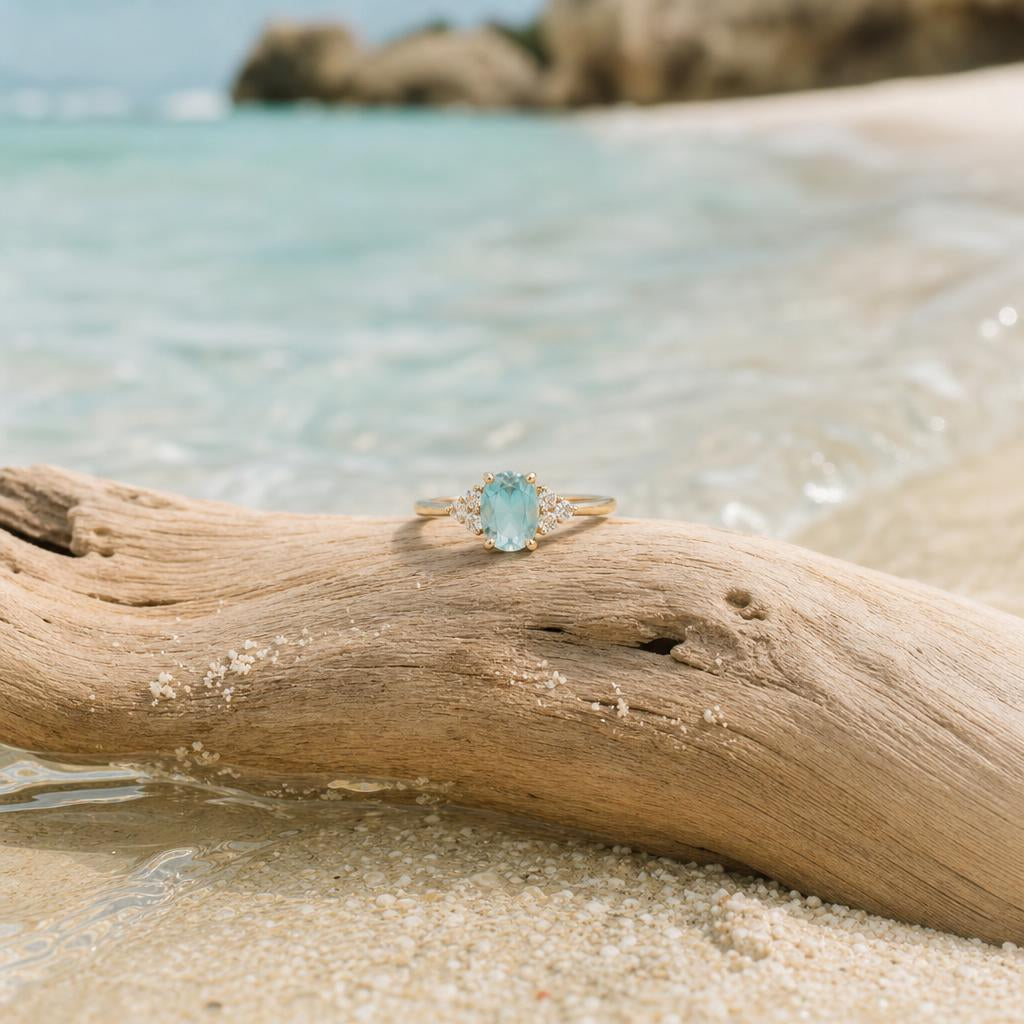
Can You Wear a Ring in the Ocean? The Truth About Scuba Diving, Snorkeling, and Salt Water
You're standing at the edge of the water — Belize, the Maldives, a boat anchored somewhere the color of glass — and your hand goes to your ring the way it always does before you get in. Take it off, or risk it? Most women have made this decision badly at least once, usually by not deciding at all and just hoping.
Here's what's actually true: the ocean doesn't care how much your ring cost, and salt water has no idea which stone is set in it. What matters is what the ring is made of, what's holding the stone in place, and whether losing it would actually ruin your trip. Before we get into the chemistry, here are a few pieces built for exactly this kind of day.


What Actually Happens to a Ring in Salt Water
Start with the chemistry, because it's less dramatic than the warnings make it sound. Does salt water damage jewelry? Sometimes, and the answer depends entirely on what's in the metal. Pure gold and platinum are largely inert — salt doesn't have much to react with. But most fine jewelry isn't pure anything. It's an alloy, meaning the gold or silver is mixed with other metals for strength, and those mixed-in metals are exactly what salt water goes after. Copper-heavy alloys like rose gold corrode fastest. Lower-karat gold pits and dulls. And the soldered joints holding tiny prongs in place are more vulnerable than the metal around them, which is how stones actually go missing — not because the water pried them out, but because months of exposure quietly weakened the setting first.
None of this happens in one swim. It happens over dozens of swims, worn by someone who never rinses the ring afterward. A single snorkeling trip isn't going to corrode anything. A ring worn on every beach vacation for three years, never once rinsed in fresh water, is a different story.
Scuba Diving, Snorkeling, and the Ring You Left On
The real risk underwater was never the salt — it's your finger. Cold water makes fingers shrink, sometimes by more than you'd expect, and a ring that fits perfectly on land can slide loose the moment you're a few feet down. Add fins, a wetsuit you're wrangling on and off, gear bags, and the general chaos of a dive boat, and you have a dozen small moments where a ring can simply leave your hand and no one notices until it's gone. If you've ever asked whether you can wear your ring in the ocean while diving, that's the honest answer: the water won't hurt it nearly as much as losing it will.
Snorkeling carries the same risk without the excuse of needing your hands free for equipment. You're floating, kicking, adjusting a mask strap, occasionally grabbing a rock or a boat ladder — plenty of chances for a slightly loose ring to slip off somewhere you will never see it again.

Solis Ring
A 1.5 carat round center stone with a pavé shoulder — enough sparkle for the boat, casual enough that you're not thinking about it underwater.
Shop Solis Ring →Why Sterling Silver Reacts Differently Than You'd Think
Every Gemiros ring starts with 925 sterling silver, and silver has its own relationship with water that's worth understanding before you pack for a trip. Sterling silver doesn't corrode in salt water the way certain gold alloys do, but it does tarnish — a surface reaction, not damage, caused by exposure to sulfur, chlorine, and minerals. A silver ring tarnishing in a swimming pool is one of the most common things a jeweler hears about, and it's almost always fixable with a soft polishing cloth in under a minute. Rhodium plating, which most Gemiros pieces are finished with, adds another layer of protection and slows tarnish further.
What doesn't change, in fresh water, chlorine, or the ocean, is the stone. The moissanite and simulated diamonds set into every ring aren't going anywhere — they're indistinguishable from a mined diamond to the eye, and they pass diamond testers, wet or dry. Salt water can dull a stone's sparkle temporarily by leaving a residue behind, but a rinse and a soft cloth bring it right back. Nothing about a day in the ocean changes what the ring actually is.
Gold, Rose Gold, and the Salt Water Question
If your ring is one of the gold or rose gold pieces in the collection, the calculus shifts slightly. Wearing gold jewelry in salt water for a single afternoon won't hurt an 18k-plated piece, but rose gold tones — which get their warmth from a higher copper content — are the most reactive of the three metal colors over repeated exposure. That doesn't mean skip rose gold for your trip. It means rinse it in fresh water when you're done, the same five-second habit that keeps any piece looking new far longer than skipping it does.
Worth knowing: The stone was never the weak point. Every simulated diamond and moissanite stone in the Gemiros collection holds up to sun, chlorine, and salt water identically — it's the metal and the setting that need the occasional rinse, not the sparkle.

Beloved Ring
A row of brilliant stones set low against the finger — quietly detailed, nothing that catches on a wetsuit zipper or a fin strap.
Shop Beloved Ring →Swimming With Your Ring, Without Actually Risking It
The smartest version of this doesn't involve leaving your hand bare for two weeks of vacation. It involves owning a ring you're not managing a small crisis over every time you get in the water. That's the entire premise of a travel ring: something that reads as effortlessly as the piece you'd wear anywhere else, so getting in the water becomes a non-decision instead of a daily negotiation with a hotel safe.
This isn't about owning something lesser for the trip. It's about being the woman who already worked out that a ring doesn't need a five-figure price tag to look and photograph exactly like one — she just stopped paying the markup for the story. On a boat, in a cave pool, three days into a honeymoon with no safe in sight, that's not a compromise. It's the more intelligent way to pack.
It also solves the packing problem nobody mentions until they're standing in a hotel room deciding where to hide a ring for two weeks. A travel ring skips that entirely — toss it in a pouch, wear it through security, put it on the moment you land, and never once think about whether the safe in your room is actually secure. That peace of mind does more work than most of what ends up sitting untouched in a jewelry box at home.
A Simple System for Water Days
✦ Pro tip: Rinse any ring in fresh water as soon as you're out of the ocean or pool — before sunscreen, before a towel, before it dries. Salt and chlorine residue does more of its work while sitting on the metal than while you're actually swimming.
Beyond that one habit, the rest is common sense most people skip on vacation: dry the ring completely before putting it back on, keep a soft cloth in your dive bag or beach tote, and give it a proper clean once you're home. None of this requires taking the ring off between every activity — it just means treating the five minutes after you're back on the sand the way you'd treat the five minutes before you got in.
A weekly clean once you're home closes the loop. Warm water, a drop of mild dish soap, and a soft-bristled toothbrush worked gently around the setting is enough to lift anything a quick rinse missed — sunscreen residue and dried salt are the two most common culprits behind a ring that looks duller than it should. Skip anything abrasive or ultrasonic unless you know the setting can handle it, and let the piece air dry completely before it goes back in a travel pouch. It's a five-minute habit, not a project, and it's the difference between a ring that looks freshly bought two years from now and one that quietly stops getting worn.
Quick Takeaways
- A single swim, dive, or snorkel session won't meaningfully damage a ring — repeated exposure without rinsing is what actually causes wear over time
- Cold water and finger shrinkage, not corrosion, are the real reason rings go missing in the ocean
- Sterling silver tarnishes with exposure, but it's a surface reaction that polishes right off — it isn't damage
- Moissanite and simulated diamond stones hold their sparkle in salt water, chlorine, and sun exactly the same
- Rinsing in fresh water immediately after swimming is the single habit that matters most
Frequently Asked Questions
Is it safe to take a ring into the water on vacation?
For a single trip or occasional swim, yes — the bigger risk is losing it to shrinking fingers and waves than any damage the salt water itself causes. Rinse it in fresh water afterward and you're covered.
Will salt water ruin my ring?
Not from one exposure. Ongoing, unrinsed exposure over months or years can corrode certain metal alloys, particularly rose gold and lower-karat gold, but the moissanite and simulated diamond stones themselves are unaffected.
Why did my silver ring turn black after swimming?
That's tarnish, not damage — a surface reaction between sterling silver and chlorine, sulfur, or minerals in the water. A soft polishing cloth or silver-cleaning solution restores the shine in minutes.
What kind of jewelry can you wear in salt water?
Anything you're prepared to rinse afterward, honestly. Rhodium-plated sterling silver and simulated diamond or moissanite stones handle salt water well precisely because there's no delicate coating or porous stone at risk.
Is gold jewelry safe to wear at the beach or on a boat?
Yes, for the length of a trip or a swim. Rose gold and lower-karat gold alloys are the most reactive over repeated, unrinsed exposure, so a quick fresh-water rinse afterward matters more for those tones than for platinum or silver.
Is it safe to swim with your ring on?
Yes, if the fit is snug and you're not relying on a piece you'd be devastated to lose. That's exactly the case for owning a second ring built for exactly this kind of day.
The water was never really the question. It's whether the ring on your hand is one you can wear without a second thought — into the ocean, off a boat, through two weeks of a trip you don't want to spend managing a piece of jewelry. Build that ring into your collection once, and every future beach day gets a lot simpler.


