

The Best Marquise Cut Rings: Elongating Styles Worth Knowing About
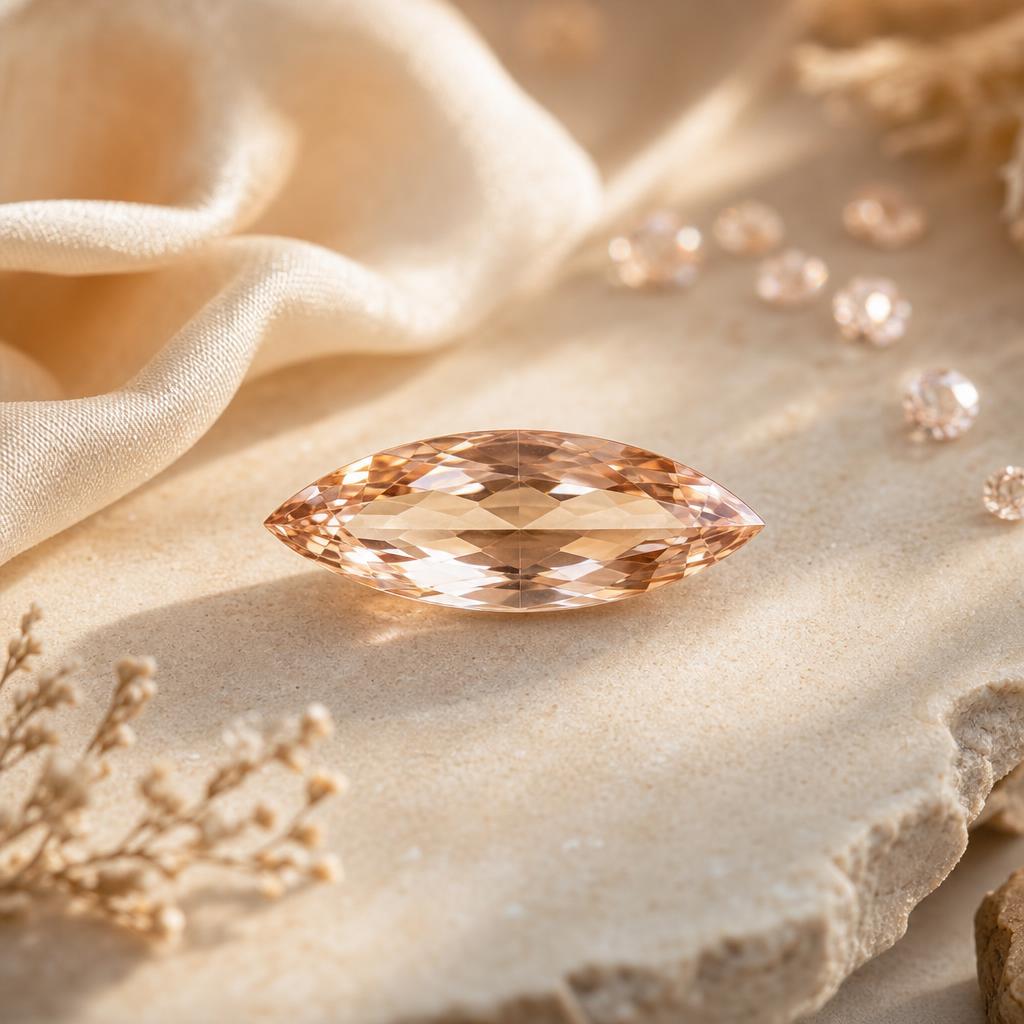
There's a reason the marquise cut keeps resurfacing every few seasons instead of quietly disappearing like other passing trends: nothing else in a jewelry box does quite what it does for the hand. The long, pointed silhouette — wider in the middle, tapering to a sharp point at each end — was reportedly shaped to mimic the curve of a smile, and whatever the origin story, the effect on a finger is genuinely dramatic. A marquise stone makes a hand look longer, a knuckle look smaller, and a ring look bigger than its actual carat weight would suggest.
If you've been circling marquise rings on Pinterest without quite committing, this is your primer: which Gemiros styles actually deliver that elongating effect, how the cut behaves differently depending on the setting around it, and what to know before you buy.


Why the Marquise Cut Reads as "Bigger" Than It Is
Carat for carat, a marquise stone has more surface area facing up than a round or cushion cut of the same weight. Because the cut is elongated rather than compact, the stone spreads across more of the finger, which is exactly why a 1.5-carat marquise can look closer to a 2-carat round from across a room. If you like the idea of a large-looking stone without the weight — literal or visual — sitting heavily on your hand, this is the shape that pulls it off most convincingly.
It's also one of the few cuts where orientation matters almost as much as size. Worn point-to-point along the length of the finger, a marquise stone elongates the whole hand. Worn on an east-west axis — increasingly common in modern settings — it does the opposite, drawing the eye across the finger instead of down it, which can make a shorter finger look wider rather than longer. Most classic settings, including the ones below, run the traditional north-south orientation, so if elongation is the whole point for you, that's the detail worth confirming before you buy anywhere.
Worth knowing: The marquise cut is sometimes called the "navette" cut — French for "little boat" — a nod to its pointed, elongated hull-like shape. It's one of the oldest fancy cuts still in regular production today.
The Victoria Ring: Marquise Done as a Statement Halo
Of the four styles here, the Victoria Ring leans hardest into old-world drama. A marquise center stone sits inside a pavé halo with a distinctly Victorian silhouette — the kind of design that borrows its proportions from antique jewelry rather than contemporary minimalism. It's the pick for someone who wants the elongating effect of the cut paired with maximum sparkle, not a quiet, understated setting.

The Victoria Ring
A marquise center stone wrapped in a pavé halo, built on a silhouette borrowed from Victorian-era jewelry. Set in nickel-free 925 sterling silver.
Shop The Victoria Ring →Because a halo adds visual width around the stone, it slightly softens the pure elongating effect of the marquise shape on its own — but it doesn't cancel it out. What you get instead is a ring that reads as more elongated than a same-size round halo, while still having the extra sparkle and perceived size that a halo setting is known for. It's a genuinely different look than a bare marquise solitaire, and worth trying on before you assume you know which one you'd prefer.
When Marquise Is the Accent, Not the Star
Not every marquise ring needs to put the cut front and center. The Fleur Ring takes the opposite approach: a radiant-cut center stone takes the spotlight, while a floral-inspired halo of alternating marquise and round stones frames it like petals. Here, the marquise stones aren't doing the elongating work of a center stone — they're doing something more subtle, adding movement and a slightly organic, floral shape to the halo itself.

The Fleur Ring
A radiant-cut center stone framed by an alternating halo of marquise and round accents, evoking a blooming flower. Vintage glamour with a soft, feminine edge.
Shop The Fleur Ring →This is worth considering if you love the sharp, pointed geometry of marquise stones but aren't sure you want that shape carrying the entire ring on its own. A design like this lets you have both — a bold, more classically "big" center stone, and the elongating, faceted visual interest of marquise accents doing quieter supporting work around the edges.
Marquise Rings as Stacking Pieces
Marquise stones don't only work as showpiece centers — they're also one of the most flattering shapes for a stacking or eternity band, precisely because the point-to-point orientation of each stone creates a continuous, elongated line down the finger rather than a row of separate circles. The Petal Ring is built entirely around this idea: marquise stones set edge to edge, unfurling down the band like petals rather than sitting as a single showpiece.
Worn on its own, it reads as a quieter, everyday version of the marquise shape. Worn alongside an engagement ring — particularly a round or oval solitaire — it adds a distinctly different silhouette to the stack without fighting for attention, which is part of why marquise eternity bands have become a go-to choice for anyone building a considered stack rather than an accidental one.
✦ Pro tip: If you're stacking a marquise eternity band next to a rounder centerpiece, choose a slightly narrower profile than you'd otherwise pick. The pointed ends of each marquise stone already read as visually busier than a plain round pavé band, so a slimmer width keeps the whole stack looking intentional rather than crowded.
The Petal Ring comes in both sterling silver and a warm rose gold finish, which matters more than it might seem for this particular cut. Because marquise stones already catch the light differently along their length than a round stone does, the warmth of rose gold plating can soften that sparkle into something gentler and more romantic, while the silver version keeps it crisper and cooler-toned. Neither is objectively better — it's really a question of which reads as "you" against your existing jewelry.
Does the Marquise Cut Suit Every Hand?
Almost every hand shape benefits from at least some version of the elongating effect marquise offers, but the degree varies. On longer fingers, a marquise solitaire or halo can occasionally look like it's stretching the finger further than necessary — in those cases, a marquise accent style like the Fleur Ring, or a marquise stacking band like the Petal Ring, tends to look more balanced than a large marquise centerpiece worn alone.
On shorter or wider fingers, the effect works almost entirely in your favor: a marquise center stone, especially one set with a bit of extra visual width like the Victoria Ring's halo, does real work in making the finger look longer and the knuckle look proportionally smaller. If you've found that most engagement ring shapes look "off" on your hand, marquise is one of the more consistently forgiving shapes to try before writing off the idea of a statement ring altogether.
Caring for a Marquise Setting
The two pointed tips at either end of a marquise stone are its most beautiful feature and also its most vulnerable one. Prongs at the points need to be checked periodically to make sure they haven't loosened, since those tips see more incidental contact — desks, doorframes, gym equipment — than the rounded sides of the stone. This isn't unique to Gemiros pieces or to simulated stones specifically; it's simply a structural reality of the shape itself, true of marquise rings at any price point.
In practice, this means treating a marquise ring the way you'd treat any pointed-stone setting: taking it off before workouts, heavy cleaning, or activities where the tips could catch on fabric or hair, and giving it an occasional visual check to make sure nothing has shifted. None of this makes marquise a high-maintenance choice — it just rewards a little more attention than a rounded shape would need.
Quick Takeaways
- Marquise stones read larger than their carat weight because of their elongated shape and greater surface area.
- Orientation matters — point-to-point elongates the finger; east-west widens it.
- A halo setting like the Victoria Ring softens the elongating effect slightly but adds sparkle and perceived size.
- Marquise works beautifully as an accent stone, not just a centerpiece, as seen in the Fleur Ring's floral halo.
- Marquise eternity bands like the Petal Ring make excellent stacking pieces, especially in a slightly narrower profile.
- The pointed tips benefit from a little extra care and periodic checking, regardless of the ring's price point.
Frequently Asked Questions
Does a marquise ring make your finger look longer?
Yes, when worn in the traditional point-to-point orientation. The elongated shape draws the eye down the length of the finger rather than across it, which is the main reason the cut has stayed popular for so long.
Is a marquise cut more fragile than a round cut?
The pointed tips are more exposed than the rounded edge of a brilliant cut, so they warrant a bit more care and occasional prong checks. It isn't a fragile shape overall — it just has two specific points worth paying attention to.
Can a marquise ring work as an everyday ring, not just a special-occasion piece?
Absolutely, especially in an eternity or stacking band format like the Petal Ring, where the marquise shape reads as a design detail rather than a dramatic statement. A large marquise halo is more of a special-occasion showpiece, but a slimmer marquise band holds up well to daily wear.
What finger shapes suit a marquise cut best?
Shorter or wider fingers tend to benefit the most from the elongating effect. Longer fingers can still wear marquise beautifully, but may prefer a marquise accent style or a narrower stacking band over a large solitaire.
However you choose to wear it — as a full statement halo, a supporting accent, or a quiet stacking detail — the marquise cut remains one of the few shapes that does genuinely different visual work depending on the setting around it. That versatility, more than any single ring, is probably the real reason it never quite goes out of style.


