

Backpacking With a Travel Ring: How to Travel Light Without Leaving Your Rings Behind
You've solved the packing cube. You've solved the electronics organizer, the compression bag, the exact toiletry ratio that clears security without a second look. The one thing backpackers still get wrong is the ring on their finger — and it isn't because they didn't think about it. Most packing advice stops at earrings and necklaces and never mentions the piece that's actually attached to your hand.
If you're backpacking — three countries in three weeks, one 40-liter pack, no one packing a case for you — your engagement ring or your everyday stack is either coming with you at real risk, or staying locked in a drawer at home while you travel bare-handed. There's a third option, and it's the one that lets you keep the sparkle without keeping the anxiety. Here's where to start.


Why Backpackers Need a Travel Ring in the First Place
This kind of stand-in ring isn't a downgrade — it's a decision. It's the same logic that has you leaving your passport in the hotel safe and carrying a photocopy in your daypack: the original stays protected, and the stand-in does the actual work of getting you through the day. Your real ring is worth protecting from hostel lockers that don't quite latch, overnight trains, saltwater, sunscreen, and the general chaos of moving between cities every 48 hours. None of that has anything to do with how much you love it.
Backpacking specifically raises the stakes in ways a resort vacation doesn't. You're not tucking valuables into a hotel safe every night — sometimes there isn't one. You're sharing rooms, showers, and sinks with strangers. You're moving fast enough that "I'll deal with it later" isn't really an option. A ring set in 925 sterling silver with moissanite or a lab-created stone gives you the same visual weight and the same sparkle, at a level of risk you can actually live with for six weeks on the road.
How to Pack Jewelry in a Carry-On When You're Living Out of One Bag
Backpackers already know the golden rule: valuables live in the bag that never leaves your body, not the one thrown on top of a bus. The same applies here. Airport security has no quantity limit on the jewelry you carry — you can bring as much as fits in your bag — but the consistent guidance from TSA and airlines alike is to keep it in your carry-on, not checked luggage, where liability limits and lost-bag odds both work against you.
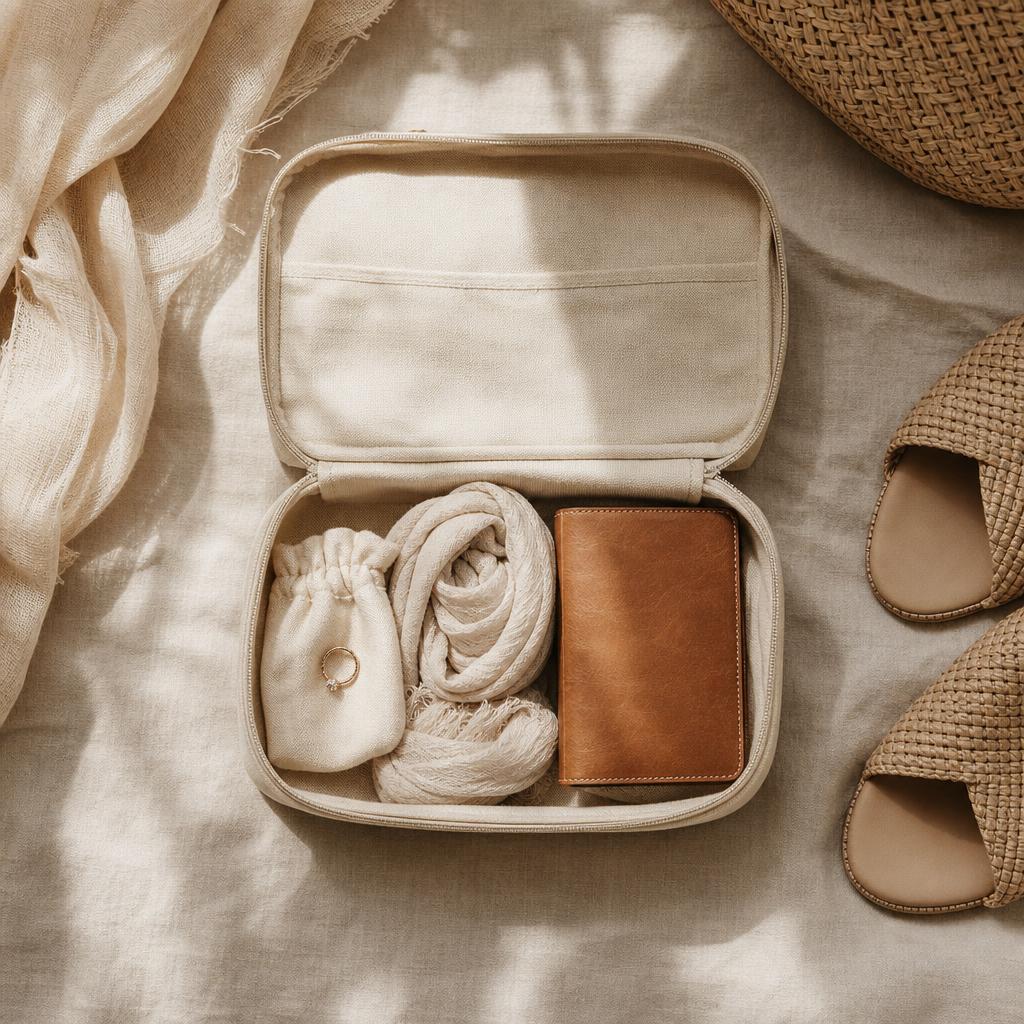
For backpackers specifically, the packing method matters more than the packing container. A single ring doesn't need a padded case taking up space you don't have. Slide it into a small zip pouch inside your toiletry bag, thread it onto a keyring loop clipped inside your daypack, or simply wear it — a ring, unlike a necklace, doesn't tangle, doesn't need a case, and doesn't take up a single cubic inch of pack space if it's already on your hand.
Worth knowing: There's no federal limit on how much jewelry you can carry through airport security or bring on a flight. Small metal pieces like rings rarely trigger a walk-through metal detector on their own — it's larger, denser pieces that tend to get flagged for a second look.
What Actually Makes a Good Travel Engagement Ring for the Road
Not every ring in your jewelry box is built for a backpack. A travel engagement ring for actual backpacking needs to survive humidity, temperature swings, salt water, sunscreen, and the occasional fall onto a hostel bathroom floor — and it needs to do all of that without you thinking about it twice. Look for a low, snag-resistant setting, a band that sits close to the finger, and a stone secured well enough that you forget it's simulated at all.

The Everlasting Ring
A thin, closely set stacking band with almost nothing for a strap, sleeve, or sleeping bag zipper to catch on. Reads as finished on its own or slotted into a stack.
Shop The Everlasting Ring →A thin, closely set stacking band like this one is a smart choice specifically because it has so little for a strap, sleeve, or sleeping bag zipper to catch on. It reads as a finished, intentional ring on its own or slotted into a stack, and it never demands the kind of careful handling your actual engagement ring does.
Bezel Settings and Moissanite: The Durability Choices Backpackers Should Actually Care About
Two decisions do more for how well this kind of ring holds up than anything else: the setting and the stone. A bezel setting wraps a rim of metal fully around the stone instead of holding it up on exposed prongs, which means there's nothing to catch, bend, or snag when you're pulling a rain cover over your pack in a hurry. It's the same design logic that puts bezel settings on watches meant for rough use.
Stone choice matters just as much. Moissanite earns its reputation with backpackers specifically because it's nearly as hard as a diamond, so it shrugs off the scratches that come from being knocked against a padlock or a carabiner clip for six weeks straight. It's indistinguishable from a diamond to the eye and passes diamond testers — nobody you meet on the road, including the well-meaning stranger who insists on inspecting your ring at a hostel bar, will know the difference.

The Leighton Ring
Pairs a round cut center stone with a low pavé halo, keeping the visual impact of a bigger stone without raising the setting off the band.
Shop The Leighton Ring →It's the kind of ring that photographs beautifully at a viewpoint in the mountains and still feels unremarkable to wear through eight hours on a night bus — which, for a backpacking trip, is the entire point.
Choosing the Best Travel Rings for Women Who Actually Move
Most advice in this space is written for a honeymoon or a week at a resort — not for someone changing hostels every three nights with a pack on her back. The best options for women who move constantly share a few traits: they're sized to stay comfortable through swelling, humidity, and temperature changes; they don't require a cleaning cloth or a jewelry box to look good on day 40; and they cost little enough that misplacing one is an inconvenience, not a crisis.
That last point is the real unlock. A woman who backpacks isn't choosing a stand-in ring because she's settling for less — she's making the same calculation she makes with every other item in her pack: what earns its weight, and what doesn't. A ring that looks every bit as sharp as the one she left at home, at a level of risk she's actually comfortable with, is not a compromise. It's the smarter packing decision.
Quick Takeaways
- Keep jewelry in your carry-on, not checked luggage — there's no quantity limit at airport security
- A bezel setting is one of the best upgrades for backpacking durability
- Moissanite is nearly as hard as a diamond and holds up to daily knocks on the road
- Thin stacking bands and low-set solitaires travel better than raised prongs or delicate halos
- Wearing your ring instead of packing it saves space and eliminates the tangling problem entirely
Frequently Asked Questions
What's the point of a travel ring if I'm just backpacking, not getting married?
The same logic applies whether the piece is an engagement ring or a favorite everyday ring: anything sentimental or hard to replace is safer left at home while a durable stand-in takes the risk of six weeks on the road. It lets you keep wearing something you love without worrying about it every time you hand your pack to a bus driver.
How much jewelry can I bring on the airplane?
There's no official limit on how much jewelry you can carry through airport security or bring on a flight. The consistent guidance is simply to keep valuable pieces in your carry-on rather than checked luggage, where they're much harder to recover if a bag goes missing.
Will airport security stop me for wearing a ring?
Almost never. Small metal items like rings rarely set off a walk-through metal detector, and security guidelines don't restrict jewelry in carry-on bags at all. If you're carrying a large amount of jewelry rather than wearing it, keeping it visible near the top of your bag just speeds up screening.
What should I look for in a ring built for backpacking specifically?
Prioritize a low-profile setting that won't catch on straps or bedding, a band that sits flush against the finger, and a stone secured firmly enough that you stop thinking about it. Bezel settings and simple solitaires consistently outperform raised prongs and delicate halos for actual travel durability.
Is a moissanite travel ring durable enough for daily wear while traveling?
Yes — moissanite ranks close to a diamond in hardness, which means it resists the scratches and dulling that come from weeks of pack straps, padlocks, and daily wear. It holds its sparkle under exactly the kind of conditions a backpacking trip produces.
Backpacking asks you to make dozens of small, deliberate trade-offs about what earns a place in your pack. This is just one more of them — and it's one of the easiest to get right. Choose the setting that won't snag, the stone that won't scratch, and wear it without a second thought from the first hostel to the last.


