

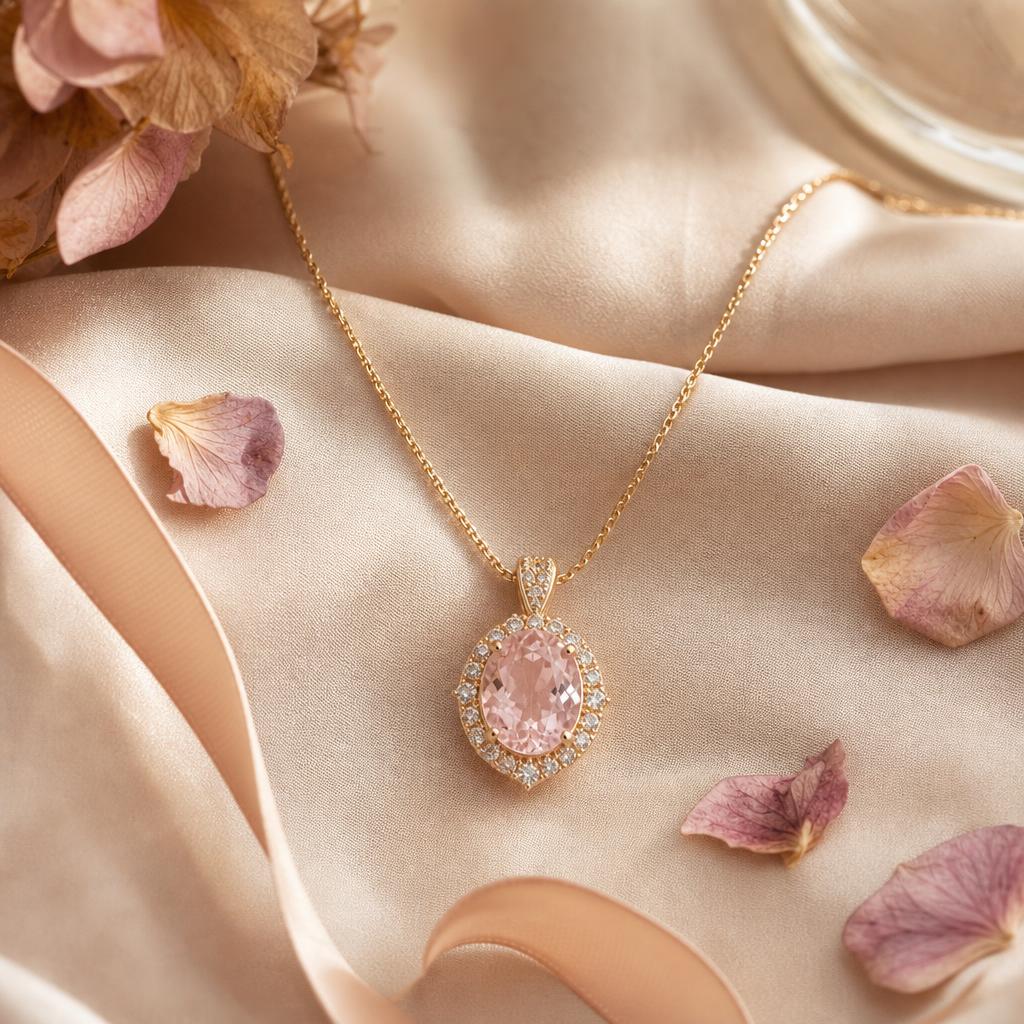
Anniversary Necklace Ideas by Milestone: What Actually Works for Every Year
There's a reason the anniversary necklace tradition has outlasted almost every other gifting convention: it gives you a reason to buy jewelry on a schedule, instead of waiting for permission. Somewhere between the paper of year one and the gold of year fifty, someone decided that love deserved its own periodic table — and whether you're marking the date with a partner or simply keeping score of your own life, that structure is more useful than it sounds.
Most anniversary gift guides just reprint the traditional materials list and call it a day. This one is shorter on ceremony and longer on what actually translates into a necklace you'd wear past the anniversary dinner — plus which milestones genuinely call for something with real sparkle.


The Anniversary Gemstone Tradition, Decoded
The modern anniversary list — paper, cotton, leather, and onward through wood, silver, ruby, and gold — traces back to a mix of Victorian etiquette and mid-century jeweler marketing, not any deeper meaning than "give something that feels appropriate to how long you've made it." Which is exactly why it's worth treating as a loose framework rather than a rulebook. Nobody is checking whether your fifth-anniversary gift was technically wood. What the tradition is actually good for is giving you a starting point when you're standing in front of a jewelry case with no idea what "something special" is supposed to mean this year.
A pendant solves a problem the traditional materials list never quite addresses: most of those materials — cotton, tin, willow — aren't things anyone actually wants sitting in a drawer. It does what the tradition was reaching for in the first place. It marks the year, it gets worn, and unlike a crystal bowl or a set of monogrammed towels, nobody has ever regretted receiving one.
The Early Years: First Through Tenth
The first decade of any relationship — or any chapter you're marking for yourself — tends to call for something you'll actually reach for on an ordinary Tuesday, not a piece that only comes out for photographs. This is where a lot of anniversary jewelry for her goes wrong: it leans so hard into "meaningful" that the result is something with more sentiment than sparkle, worn twice and then retired to a jewelry box.
A heart-cut pendant does the sentimental work without the greeting-card literalness — it reads as a deliberate design choice, not a Hallmark aisle impulse buy. For a first or second anniversary especially, something with genuine presence tends to age better than something purely symbolic; a decade from now, you want to still like wearing it, not just remember what it once represented.
| Year | Traditional Material | What Actually Works in a Necklace |
|---|---|---|
| 1st | Paper / Gold | A delicate solitaire pendant — first sparkle, kept simple |
| 2nd | Cotton / Garnet | A warm-toned stone in a clean setting |
| 3rd | Leather / Pearl | A single-stone pendant with real presence |
| 5th | Wood / Sapphire | A halo setting, for a bit more visible sparkle |
| 10th | Tin / Diamond | Where a genuine statement piece starts to make sense |
| 15th | Crystal / Ruby | A ruby pendant — rich color, still wearable daily |
| 20th | China / Emerald | A more architectural, considered silhouette |
| 25th | Silver | The classic milestone — a piece meant to last decades |
| 30th | Pearl | Understated, quietly confident designs |
| 40th | Ruby | A cushion or halo ruby pendant, worn as a statement |
| 50th | Gold | Warm-toned metal, the anniversary's own golden hour |
The Middle Years: Eleventh Through Twentieth
This stretch of anniversaries doesn't get nearly the attention that the 25th or 50th does, and that's a genuine gap — a decade-plus in is exactly when a lot of women start upgrading their everyday jewelry rather than saving it for occasions. If the earlier pieces in a collection were more delicate, this is often where a slightly bigger stone or a more distinctive setting earns its place, without tipping into something that only works for evening wear.

The North Star Moissanite Necklace
A starburst pendant built around a single radiant moissanite — the kind of design that reads as "we found our way here" without ever having to spell it out. Genuinely wearable daily, which is more than most sentimental jewelry can claim.
Shop the North Star Necklace →Moissanite earns its place here specifically because it catches light differently than a straightforward simulated diamond does — more colorful flashes, a slightly different fire — which makes it a natural fit for a milestone that's meant to feel distinct from the ones before it. It isn't a downgrade or a compromise on the way to "real" sparkle; it's simply a different kind of brilliant, indistinguishable from a diamond to the naked eye and every bit as capable of carrying a big year.
The Big Anniversaries: Twenty-Fifth Through Fiftieth
The quarter-century mark and beyond are where the traditional gift list actually earns its reputation — silver, ruby, and gold are genuinely jewelry-grade materials, not consolation prizes dressed up as symbolism. This is also where the gap between "technically followed the tradition" and "gave something she'll actually treasure" gets widest, because these are the years people tend to overthink the most.
The 40th anniversary specifically calls for ruby, and ruby jewelry for 40th anniversary occasions tends to get treated as an either/or: spend a fortune on a natural stone, or settle for something that reads as costume-grade at a party-favor price point. That's a false choice. A cushion-cut lab-grown ruby in a considered setting delivers the same vivid, saturated red — the color rubies are actually prized for — without either extreme. The color does the talking; nobody is going to ask for a certificate of authenticity at dinner.

The Solène Necklace
A row of round-cut stones set along a fine chain — the kind of piece that reads as "quality" rather than "look at me." A strong pick for a 25th or 30th anniversary, where restraint is often the more confident choice than a single oversized stone.
Shop the Solène Necklace →For the 50th, gold tone tends to matter more than stone size — the metal itself is the symbol, so a warmer setting reads as more "on theme" than a cooler one, even if the center stone is the real star of the piece.
How to Actually Choose (Beyond the Chart)
None of this is a rulebook, and treating it like one is how people end up buying a piece of pottery for their ninth anniversary because a chart told them to. The traditional materials list is a prompt, not a requirement — the actual goal is a necklace that gets worn, not one that technically checks a box.
If you're the one being celebrated, the more useful filter isn't "what does this year traditionally call for" — it's "what would I actually reach for on a Tuesday." If you're shopping anniversary jewelry for wife by year and you genuinely don't know her taste well enough to guess, the traditional gemstone list is a legitimate fallback; it at least narrows the field to something specific instead of "she likes jewelry, I guess." But whenever you do know her style, her preference beats the calendar every time.
One more thing worth saying plainly: buying yourself an anniversary necklace — for a relationship milestone, a personal one, or no stated occasion at all — isn't a lesser version of receiving one. The piece does the same job either way. Nobody examining the necklace on your neck is going to ask who bought it.
Quick Takeaways
- The traditional materials list is a loose framework, not a rulebook — treat it as a starting point, not a requirement.
- Early years (1st–10th) favor wearable, everyday pieces over purely symbolic ones.
- The 40th anniversary calls for ruby; a lab-grown stone delivers the same color without the extremes of cost or compromise.
- Moissanite is its own kind of brilliance, not a downgrade — it catches light differently, not less.
- Buying the piece for yourself counts exactly as much as receiving it.
Frequently Asked Questions
Is a necklace a good anniversary gift?
Yes — arguably one of the safest jewelry categories to give, since it doesn't require knowing a ring size and works across a much wider range of styles than a ring or bracelet. A pendant necklace in particular tends to suit more necklines and more daily-wear situations than most other jewelry categories.
What's the traditional gift for each anniversary year?
The early years run through everyday materials — paper, cotton, leather, wood — before shifting into genuine jewelry territory around the tenth year (diamond), fifteenth (ruby), twenty-fifth (silver), and fiftieth (gold). The table above breaks down what each year translates to in an actual necklace.
What jewelry represents the 40th wedding anniversary?
Ruby. It's one of the more specific entries on the traditional list — most jewelers and etiquette guides agree on it — which makes a ruby pendant one of the more reliably "correct" milestone gifts you can give.
What's the best jewelry to give for an anniversary — by year, or by taste?
By taste, when you have enough information to go on. The traditional-materials chart is most useful as a fallback when you're shopping for someone whose everyday style you don't know well — it narrows a wide field down to something concrete rather than leaving you guessing entirely.
Whichever year you're marking, the anniversary necklace tradition works best treated as inspiration rather than instruction — a reason to buy something beautiful on a schedule, not a set of rules about what "counts." The stone matters less than whether it's something you'll actually want on your neck next year, and the year after that.


