

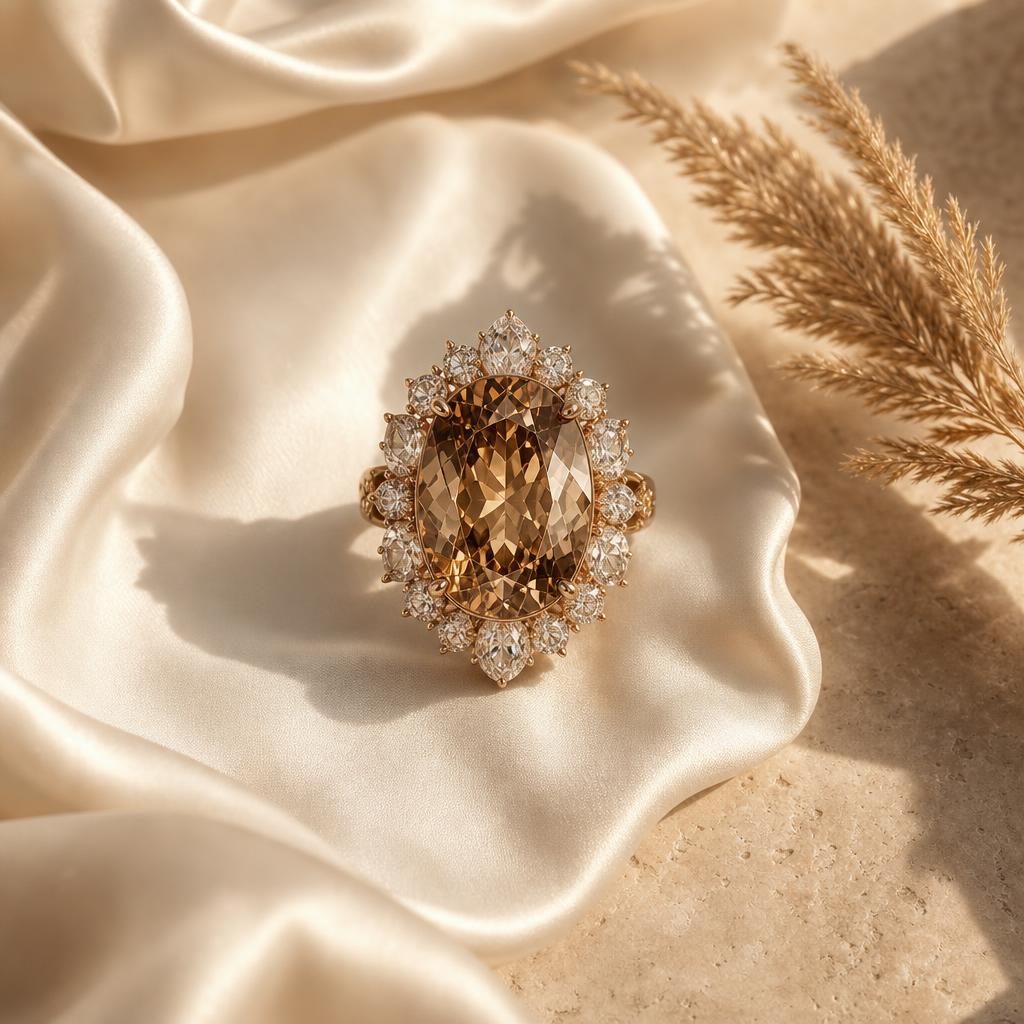
Statement Rings: How One Dramatic Cut Can Carry Your Entire Look
A statement ring doesn't ask permission. It sits at the center of your hand and dares the rest of your jewelry box to compete — and it wins every time. If you've been circling the idea of one dramatic ring instead of five quiet ones, this is the guide that actually gets specific about it.
Before we get into settings, carats, and which finger actually earns the spotlight, here are four Gemiros pieces built for exactly this kind of presence.


What Actually Makes a Ring a Statement Ring
Ask five people what makes a ring a showstopper and you'll get five different answers — big stone, bold band, "I know it when I see it." Here's the version that actually holds up: this kind of ring is built to be the focal point of your hand, not a supporting player in a stack. It's larger in scale than an everyday band, it's designed to be seen from across a room, and it doesn't need three other rings around it to look finished. Cocktail rings fall under this umbrella, but the category is bigger than that single silhouette — a wide sculptural band or a dramatic three-stone design earns the title just as easily as a domed cluster ring does.
What it isn't: apologetic. A bold, oversized ring that gets talked into a smaller stone, a quieter setting, or a "more sensible" size has missed the point entirely. The whole premise is scale on purpose.
Reading the Room — When (and How) to Wear One
The most common question about wearing a piece this bold has nothing to do with carats — it's about the right hand. Convention says the right hand is fair game for anything bold, since the left tends to carry engagement and wedding rings. Beyond that, there's no rulebook. Diamond statement rings and their sculptural-band counterparts alike work at dinner, at your desk, and at the grocery store, provided you stop treating them like a special-occasion piece that only comes out for weddings and galas.
The single biggest styling mistake is competition — wearing a big ring on the same hand as three other busy pieces. Let it stand alone, or pair it with one thin band at most. Everything else should go quiet so the ring can do its job.

The Empress Ring
A 3.5-carat elongated oval center stone flanked by two tapered baguette side stones — the kind of three-stone architecture that reads as intentional from ten feet away, not accidental.
Shop The Empress Ring →Which Setting Reads the Biggest
Not every large stone reads the same size on the hand — the setting does a surprising amount of the work. A hidden halo tucks a ring of pavé stones beneath the outer edge of the center stone, adding visual width and sparkle without technically changing the carat weight. A three-stone design, like a center stone flanked by tapered baguettes, extends the ring along the finger rather than out from it, which reads as elongating rather than simply large. A plain solitaire, by contrast, puts all the attention on the cut itself — no halo, no side stones, just scale and clarity doing the talking.
| Setting | What It Does | Best For |
|---|---|---|
| Hidden halo | Adds width and sparkle beneath the center stone without inflating the visible carat | Maximum presence without an oversized silhouette |
| Three-stone | Extends the ring lengthwise along the finger with tapered side stones | Shorter fingers, or drama that also elongates |
| Solitaire | Puts the full weight of the design on one cut, unassisted | Clarity and scale with zero visual noise |
None of these settings is objectively "the" correct choice — each one solves a slightly different problem, which is exactly why there's room in a single collection for a hidden halo, a three-stone silhouette, and a plain solitaire to all qualify as bold at the same time.
Silver, Gold, or Something Bolder — Choosing Your Metal
Silver statement rings tend to photograph the coolest and read the most modern — the platinum-plated 925 sterling silver base throws light differently than warmer tones, which matters when the entire point of the piece is catching attention. Rose gold softens a large stone, which is worth considering if you want drama without severity. Gold leans warmer and works especially well against deeper skin tones.
None of this is about which metal is "correct." It's about which one makes the stone do the most work. A cushion cut in a hidden halo setting, for instance, already reads larger than its actual carat weight — pair that with the right metal tone and the effect compounds.
Worth knowing: A large center stone doesn't have to mean a fragile one. Every Gemiros ring is set in 925 sterling silver and finished with a moissanite or simulated diamond center stone that's indistinguishable from a mined diamond to the eye — and passes diamond testers. No one across the table is going to know the difference, including a jeweler.
The Confidence Math
Here's the part that trips people up: the belief that a ring has to cost thousands to command a room. It doesn't. The Ophelia, for example, is built to read like a stone that would run $15,000 or higher at a traditional jewelry store — the scale, the hidden halo, the way the oval cut catches light are all doing exactly what a mined-diamond version would do. The difference is what you paid to get there, not what the ring looks like on your hand.
This is the actual argument for unique statement rings over the traditional jewelry-store version: you're not settling for less drama at a lower price. You're refusing to pay a markup that was never about the ring in the first place.

The Stella Ring
A round-cut solitaire that trades minimalist restraint for scale — proof that a single stone, sized right, needs nothing else to make the point.
Shop The Stella Ring →How to Wear One Without Overdoing It
Chunky statement rings can overwhelm a small hand if you let the wrong details pile up. A few things that actually change the outcome: keep your nails a single clean color rather than a busy design, skip the matching bracelet on the same wrist as your dominant hand, and let sleeves stay simple when the ring is doing the talking. None of this is about shrinking the ring down — it's about clearing space around it.
✦ Pro tip: If you're new to wearing one, start by wearing it alone for a week before you add anything else to that hand. You'll learn fast whether you want company around it or whether it genuinely doesn't need any.
Daily wear is also less fragile than people assume. A hidden halo or pavé setting takes the edge off a large stone visually while keeping the actual structure secure enough for a desk job, errands, and everything in between — this isn't a ring you have to reserve for one night a year.
Quick Takeaways
- A bold, oversized ring is defined by scale and focal presence, not by any one specific setting or cut.
- The right hand is the conventional choice, but there's no rule against wearing one anywhere you like.
- Let it stand alone or pair it with a single thin band — competing pieces dilute the effect.
- Metal tone changes how the stone reads: silver leans cool and modern, gold and rose gold soften and warm the look.
- Scale doesn't require a mined-diamond price tag to look the part.
Frequently Asked Questions
What is a statement ring, exactly?
It's a bold, larger-scale ring designed to be the visual centerpiece of your hand rather than one piece among several. It's typically defined by size and presence — a dramatic center stone, a sculptural band, or a multi-stone design — rather than by any single cut or setting.
Which finger should you wear one on?
There's no formal rule, but the right hand is the conventional choice, since the left is typically reserved for engagement and wedding rings. Beyond that, wear it wherever it sits most comfortably and visibly for you.
What's the difference between a cocktail ring and a bold statement piece?
Every cocktail ring counts as a bold statement piece, but not every large-scale ring is technically a cocktail ring. Cocktail rings specifically feature a large, prominent center stone or cluster built for evening wear, while the broader category also covers wide sculptural bands and multi-stone designs that aren't built around one dominant stone.
How do you choose the right one for your hand?
Start with proportion: a longer stone shape like oval or radiant tends to elongate shorter fingers, while a rounder cushion or round cut suits a longer hand well. From there, it comes down to how much visual weight you actually want — a hidden halo setting adds scale without adding bulk, which is worth considering if you're new to wearing one.
Can you wear a big, bold ring every day, or is it a special-occasion piece only?
Daily wear is entirely realistic. A secure setting — hidden halo, pavé, or a well-built prong solitaire — holds up to normal wear the same way any everyday ring would. The idea that a piece like this has to be saved for special nights is more habit than necessity.
The version of you who's been eyeing a ring like this for months and talking herself out of it because it feels "like a lot" — she's not wrong that it's a lot. That's the entire point. Choose the scale on purpose, wear it like it's not a big deal, and let the ring do exactly what it was built to do.


