

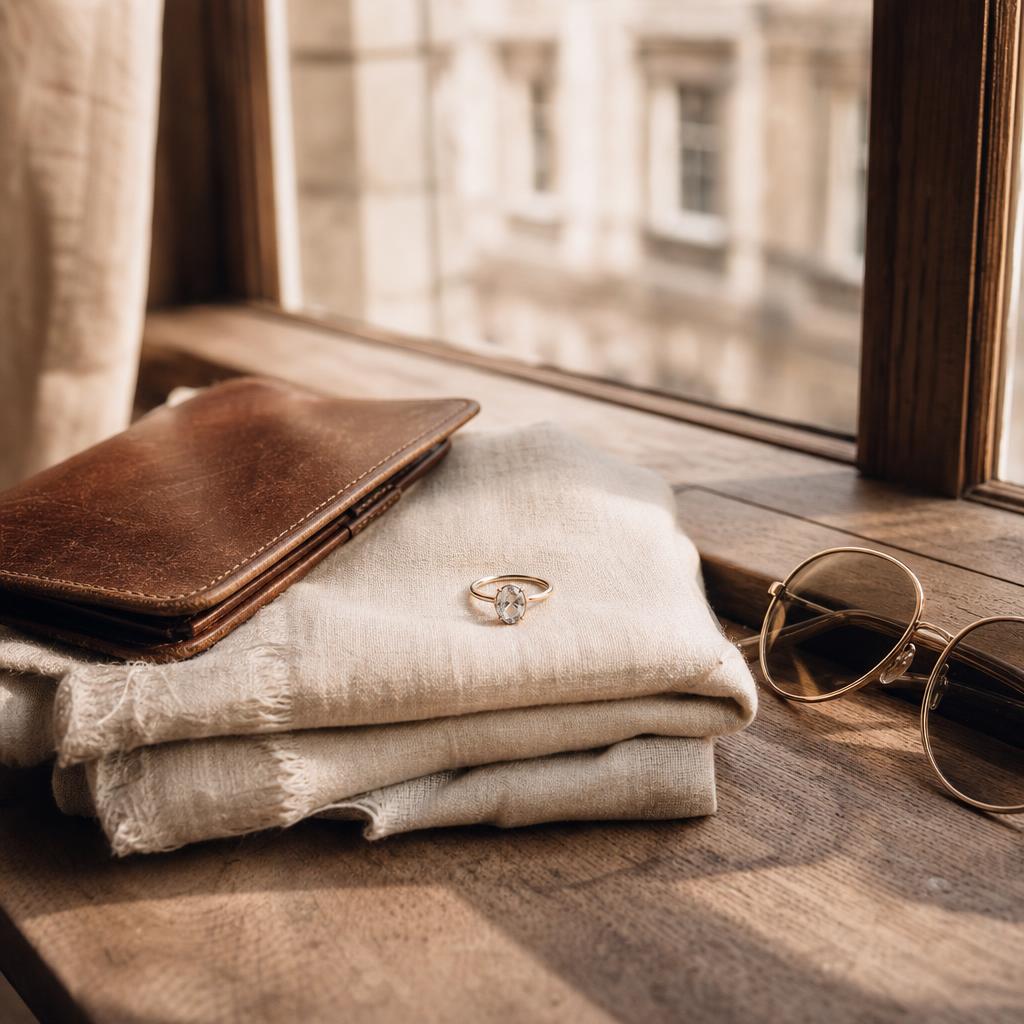
Solo Travel Rings: How to Dress Your Hands When You're Traveling Alone
You already know how to pack for a trip alone. What's harder to plan for is the ring on your hand — because when you're traveling by yourself, jewelry stops being just an accessory decision. It becomes a visibility decision.
That's the entire logic behind travel rings: pieces built to look exactly like the real thing, without asking you to gamble your engagement ring, your grandmother's ring, or a five-figure insurance claim on an unfamiliar city. Here's how to choose one, and what to actually do with it once you're on the ground.


Why solo travelers reach for a travel ring in the first place
Traveling alone changes the math on everything you wear, not just what you carry. A ring is small, easy to have noticed, and — if it's the one you actually got engaged in — genuinely expensive to lose. It solves a specific problem: it lets you wear something beautiful every day of a trip, including the days you're navigating an unfamiliar train platform by yourself, without the low hum of "what if" running in the background.
This isn't about hiding who you are or dressing down for a week. It's about separating two things that never actually needed to be linked: how put-together you look, and how much financial risk you're carrying on one finger. A 925 sterling silver setting with a moissanite or simulated diamond center is indistinguishable from a diamond to the eye and passes diamond testers — the only thing that changes is what happens if it goes missing.
What actually makes a ring "travel-smart"
Not every ring in your jewelry box is built for a week of trains, taxis, and hotel bathroom sinks. The best ones share a few specific qualities, and it's worth knowing what to look for before you decide what goes in the bag.
A setting that won't snag or loosen
Bezel settings — where a rim of metal wraps fully around the stone instead of relying on prongs — are the most travel-durable setting style there is. There's no raised edge to catch on a scarf, a seatbelt, or a bag strap, and nothing for a long trip's worth of friction to work loose. If you're choosing one ring to survive two weeks of constant movement, start here.
A silhouette that reads as "hers," not "flashy"
Situational awareness isn't about looking cheap — it's about not broadcasting value to a room full of strangers who don't know you. A clean solitaire or a slim stacking band does the same emotional job as a large statement piece, in that you still feel entirely like yourself, while asking a lot less of the space around you.

Eternity Ring
A slim, pavé half-eternity band built to be worn alone or layered — the kind of piece that reads as an intentional everyday collection rather than a single obvious target.
Shop Eternity Ring →Thin bands like this one are also the easiest thing in your suitcase to double up. Stack it with a second slim band and it reads as a considered, everyday collection — not one expensive, easy-to-spot piece.
The situational-awareness part nobody talks about
Most travel jewelry advice stops at "buy something that looks real." That's incomplete. The actual skill is knowing when a ring is doing you a favor and when it's working against you, and it changes by context, not just by country. A wide, sparkling statement ring in a quiet countryside town reads completely differently than the same ring on a crowded overnight train or in a busy market where you're the only one paying attention to your bag.
None of this means dulling yourself down. It means matching the ring to the room. Save the boldest travel engagement ring in your collection for the dinner reservation and the museum, and lean on something quieter — a bezel, a thin band, a low-set solitaire — for transit days, long layovers, and anywhere you're moving through a crowd with a bag on your shoulder and your attention split three ways.
Worth knowing: the same habits that keep jewelry secure in a hotel room apply on the road — a ring left on a bathroom sink is the single most common way travelers actually lose one, not theft.
When you still want the sparkle
None of this is an argument for boring jewelry. A travel wedding ring can still catch light across a dinner table — it just does it through craftsmanship instead of size. A hidden halo, for instance, tucks a second ring of stones underneath the center stone, adding dimension and brilliance without adding visible bulk.

Aura Ring
A radiant-cut center stone with a hidden halo tucked beneath it — extra fire and dimension for the dinner-out days, in a silhouette that still reads clean from across the room.
Shop Aura Ring →Packing, wearing, and actually using it well
A piece like this only does its job if you treat it like real jewelry, not an afterthought thrown in a side pocket. A few habits make the difference between a ring that survives a trip looking new and one that comes home scratched, tangled, or gone.
✦ Pro tip: Pack it in a small, zippered pouch inside your carry-on rather than a checked bag, and put it on before you leave your room each morning rather than deciding "later." Rings that travel loose in a tote are the ones that don't make it home.
If you're building out a fuller collection to rotate through a longer trip, it's worth thinking about the whole capsule rather than a single ring — the same logic that applies to your hands applies to your ears and neck, and having a complete, coordinated set means you're never digging through a jewelry box deciding what's "safe enough" to wear that day.
The habits that actually keep it safe
A lot of travel jewelry advice focuses entirely on the ring itself and skips the boring, practical part: security habits. The goal isn't paranoia — it's a short list of things you do automatically, the same way you check for your passport before you leave a room.
Start with where the ring lives when it's not on your hand. A hotel room safe, when there is one, beats a nightstand or a bathroom counter every time, and the habit matters more than the hardware. Airport security is rarely the actual risk — a ring moves through a metal detector the same as a watch or a belt buckle, with no special handling required. The bigger risk is almost always domestic: a sink, a nightstand, a pocket that doesn't zip.
If you're the kind of traveler whose trips blur into each other — long stretches away, one city into the next — it's worth building toward a small, considered collection rather than restocking your jewelry box every time you leave. The same goes for anyone whose "trip" is really a string of work meetings in a different city: durability matters more than drama when a ring has to survive back-to-back days with no time to think about it.
One more honest note on materials: between the two most common simulated stones, moissanite tends to hold its brilliance slightly better than cubic zirconia over months of consistent wear, which is worth knowing if you're choosing a piece meant to survive more than one trip.
The trips where this actually matters most
Situational awareness isn't a constant, low-grade worry — it's a skill you apply selectively, in specific moments. Transit hubs, overnight buses, crowded markets, and solo dinners in cities you don't know well are the times a quieter ring earns its keep. A weekend at a quiet resort, a wine region, or a friend's wedding is exactly when you reach for the one with more presence.
Long flights deserve their own mention here too. Cabin pressure and hours of sitting still change how a ring fits mid-flight in ways most people don't expect, which is one more reason a lot of experienced solo travelers keep this ring on a slightly looser fit than their everyday size, and size their real ring for daily life instead.
Quick Takeaways
- Choose bezel settings or low-profile solitaires for constant-movement travel days — nothing to snag, nothing to loosen
- Save your boldest ring for controlled settings: dinners, museums, quiet towns — not crowded transit
- Pack it in a zippered pouch in your carry-on, and put it on the moment you leave your room
- 925 sterling silver with moissanite or a simulated diamond passes diamond testers and reads exactly like the real thing — the risk profile is what actually changes
- Build a small, coordinated capsule rather than choosing pieces one at a time
Frequently asked questions
What's the actual point of a travel ring?
It lets you keep wearing a beautiful ring every day of a trip without carrying the financial and emotional weight of your real one. The look stays identical — the stakes if it's lost or damaged don't.
Is this actually a good idea for solo trips specifically?
Yes, particularly for solo travel, where there's no second person watching your bag or your hands in a crowd. It removes one specific source of risk without asking you to leave your jewelry drawer empty.
What is a travel wedding ring, exactly?
It's a ring — usually 925 sterling silver set with moissanite or a lab-created stone — made to look identical to your wedding or engagement ring, worn specifically while traveling so the original piece stays at home.
Will a ring like this set off airport security or get flagged going through customs?
No. Rings pass through security screening the same way any small metal item does, and simulated stones carry none of the customs declaration requirements that mined diamonds sometimes do.
When should I wear it instead of my real ring?
Anywhere your attention is split — transit hubs, overnight travel, crowded markets, hostels, solo dinners in an unfamiliar city. Save your real ring for controlled settings where you're not managing a bag, a route, and a room full of strangers at the same time.
The point was never to travel with less. It's to travel with exactly as much as you want, minus the anxiety that usually comes attached to it. A well-chosen piece like this — bezel-set, low-profile, unmistakably beautiful — does that quietly, trip after trip, whether you're gone for a weekend or three months.


