

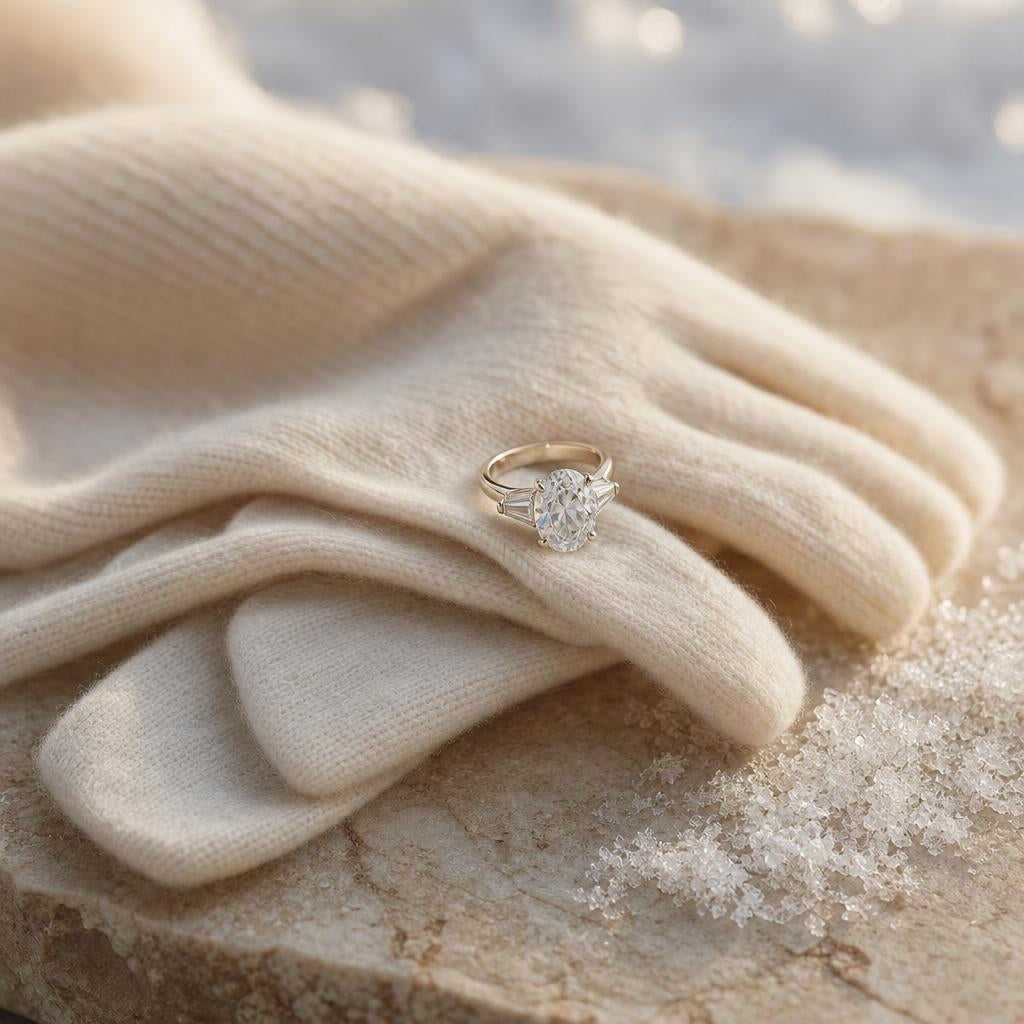
Ski Trip Jewelry: Gloves, Cold Metal, and the Travel Ring Rule
There's a particular kind of panic that hits somewhere around the third day of a ski trip: your hands are freezing inside your gloves, your fingers have swollen from the cold and the altitude, and you can feel your ring — the one that actually means something — pressing against fabric it was never designed to survive. You didn't think about this when you packed. Most people don't, until they're standing at the base of a lift wondering if they should have left it at home.
The good news is that the fix isn't complicated. It just requires knowing what cold metal actually does to your hands, what a glove does to a setting, and why so many women who travel often — not just to ski, but generally — have quietly started keeping a second ring in rotation for exactly this reason.


Why Rings and Ski Gloves Don't Actually Get Along
A ring is designed to sit against skin, in open air, at roughly your own body temperature. None of that holds on a mountain. Ski gloves are built to be pulled on and off dozens of times a day, and a raised setting — a prong, a halo, anything that sits above the band — is exactly the kind of thing a tight glove liner catches on. Pull a glove off too fast over a halo setting and you can shift a stone, bend a prong, or in the worst case, pull the ring clean off your hand into the snow. It happens more often than people expect, and it's rarely noticed until you're back at the lodge.
Then there's fit. Cold constricts blood vessels, which usually makes fingers feel smaller — but altitude, dehydration, and hours in stiff gloves can do the opposite and cause swelling, especially by the afternoon. A ring that fit perfectly at breakfast can feel uncomfortably tight by the third run, and a tight ring under a glove is both uncomfortable and, if you needed to remove it quickly for any reason, a genuine problem.
The Travel Ring Rule for a Ski Trip
This is where a travel ring earns its place. The idea is simple: instead of exposing the ring you actually love to a week of gloves, lift chairs, and hotel bathroom counters, you wear a close stand-in — same silhouette, same sparkle, low enough stakes that losing a stone in the snow wouldn't ruin your week. Gemiros was built around exactly this logic. The Gemiros ring on your hand isn't a placeholder that looks the part — it's 925 sterling silver set with a simulated diamond that passes a diamond tester, styled identically to what you'd wear at home.
For skiing specifically, the smartest choice for the mountain isn't your most detailed piece — it's your lowest-profile one. A bezel setting, like the Cherish Ring, wraps each stone in a protective rim of metal instead of leaving it exposed on prongs, which means there's nothing for a glove liner to catch on. A flush pavé band, like the Eternity or Forever Ring, sits close enough to the finger that it moves with a glove instead of against it. None of these styles ask you to sacrifice sparkle for practicality — they just put the practicality first, which is exactly what a mountain demands.
✦ Pro tip: Choose your ski-trip ring by running a hand, closed, into a glove the way you actually would on the mountain. If anything catches or drags, it will catch on the slopes too — swap it for something flatter before you pack.
What Cold Metal Actually Does to Your Hand
Metal conducts heat away from skin far faster than air does, which is why a ring can feel shockingly cold within seconds of stepping outside — sometimes cold enough to be genuinely uncomfortable against bare skin under a thin glove liner. It isn't dangerous in the way frostbite on exposed skin is, but it is a real source of discomfort that most people don't connect to the ring itself until they've already been annoyed by it for an hour. Sterling silver and platinum-plated pieces warm up quickly once gloved, but that first contact point matters, especially on a chairlift with the wind moving.
The practical fix isn't complicated: keep rings under a glove liner rather than against bare skin in open air, and give a cold ring a minute to acclimate indoors before you decide whether it still fits comfortably. If a ring has felt tight and cold at the same time on a previous trip, that's usually swelling and temperature working against each other — not a sizing problem you need to solve permanently.

Stella Ring
A four-prong solitaire built for the evenings after skiing, not the slopes themselves — après-ski dinners, lodge fireplaces, and the kind of low light a 2-carat simulated diamond was made to catch.
Shop Stella Ring →That's the other piece of the ski-trip jewelry puzzle worth planning for: the day itself and the evening after it are two different occasions. A low-profile bezel or pavé band handles the slopes; a solitaire with real presence handles dinner. Packing one ring that tries to do both usually means it does neither particularly well.
Packing and Protecting Your Ring for the Slopes
Whatever you decide to wear on the mountain, the ring you're not wearing needs a plan too. Hotel and rental-condo safes exist for exactly this — use one, every day, without exception, rather than leaving anything in a jacket pocket or a ski bag that gets handed to valet parking or left in a gondola locker. If your accommodation doesn't have an in-room safe, the front desk safe is worth the extra ten minutes; a chairlift, a rental locker, and a crowded lodge lost-and-found are not places you want to be searching on your last day.

Solis Ring
A 1.5-carat round center stone on a pavé band — polished enough for the lodge, simple enough to wear the whole trip if you'd rather not switch rings twice a day.
Shop Solis Ring →A small case or a zippered pouch inside your carry-on does the same job for the flight there and back — never checked luggage, which gets lost at a measurably higher rate than carry-ons and is completely out of your control once it disappears down the belt. If you're flying with a genuinely valuable piece at all, keep it on your body or in a bag that never leaves your sight, and treat the ring the way you'd treat any other piece of good travel jewelry: worn or secured, never loose in a bag.
Worth knowing: A travel engagement ring solves a slightly different problem than a ski-specific low-profile band — it's built for the general risk of losing or damaging your real ring anywhere on a trip, not specifically for gloves and cold metal. Plenty of women pack both: one for the trip generally, and a flatter, bezel-set piece for the actual slopes.
Rings, Security Lines, and the Rest of the Logistics
Metal detectors at airports and resort security checkpoints are calibrated for far larger objects than a ring — a single band, even a substantial one, essentially never triggers additional screening on its own. You can wear rings through airport security without a second thought. The considerations that actually matter are the ones already covered here: gloves, cold, swelling, and where the ring lives when it isn't on your hand.
If you're choosing between several options in your jewelry box for the trip, the best travel rings for a ski week share three things: a setting low enough that a glove won't catch it, a band close enough to the finger that swelling won't turn it into an emergency, and a look you're genuinely happy to wear in every photo at the top of the run. You don't have to choose between practical and beautiful. That's the entire point of building a ring specifically for it.
Quick Takeaways
- Bezel and flush-pavé settings survive gloves better than raised prongs or halos — nothing for a liner to catch on.
- Cold makes rings feel tight and uncomfortable even without real swelling; give a ring a minute to warm up indoors before judging the fit.
- Keep your real ring in a safe every single day of the trip, not just overnight — and never in checked luggage.
- Pack one low-profile ring for the slopes and, if you want more sparkle, one solitaire for the evenings — they're solving different problems.
- A ring will not trigger extra airport security screening on its own.
Frequently Asked Questions
What's the actual point of wearing one instead of your real ring?
It lets you keep the look and the sparkle you're used to without exposing the ring that matters most to gloves, cold, altitude swelling, and the general chaos of a shared lodge. If it's lost or scratched on the mountain, it's a much smaller loss than the alternative.
Should I wear my engagement ring while skiing?
Most people don't, and for good reason — a raised setting is more likely to catch on a glove liner or loosen from repeated on-and-off wear. A low-profile bezel or pavé band gets you the same look with far less risk on the slopes themselves.
Will a ring set off airport or resort metal detectors?
No. Standard rings, even substantial ones, are far below the threshold that triggers additional screening. You can wear yours through security without needing to remove it.
What is a travel engagement ring, and do I need one for skiing specifically?
A travel engagement ring is a close stand-in for your real ring, built to absorb the general risks of travel — loss, theft, damage — rather than one specific hazard. For skiing, you want that same idea narrowed down further: something low-profile enough to survive a glove, not just a trip.
How do I know if a ring will fit under a ski glove?
Try it. Put the ring on and pull your actual glove on and off the way you would on the mountain. If the setting drags, snags, or makes the glove noticeably harder to remove, it's not the right choice for the slopes — save it for the lodge instead.
A ski trip asks a lot of your hands — cold, gloves, swelling, a dozen small collisions with poles and rental gear you didn't plan for. Your jewelry shouldn't have to survive all of that just to look like you. Wear something built for the mountain, keep the piece you love in the safe, and let the trip be about the skiing.


