

Rose Gold vs Yellow Gold vs White Gold: Which Metal Tone Suits Your Skin Tone
The question of which metal tone suits your skin is one of the first things women get stuck on when choosing a ring — and also one of the easiest to overthink. The conventional advice tends to be oversimplified, and the actual answer is more useful than most guides let on.
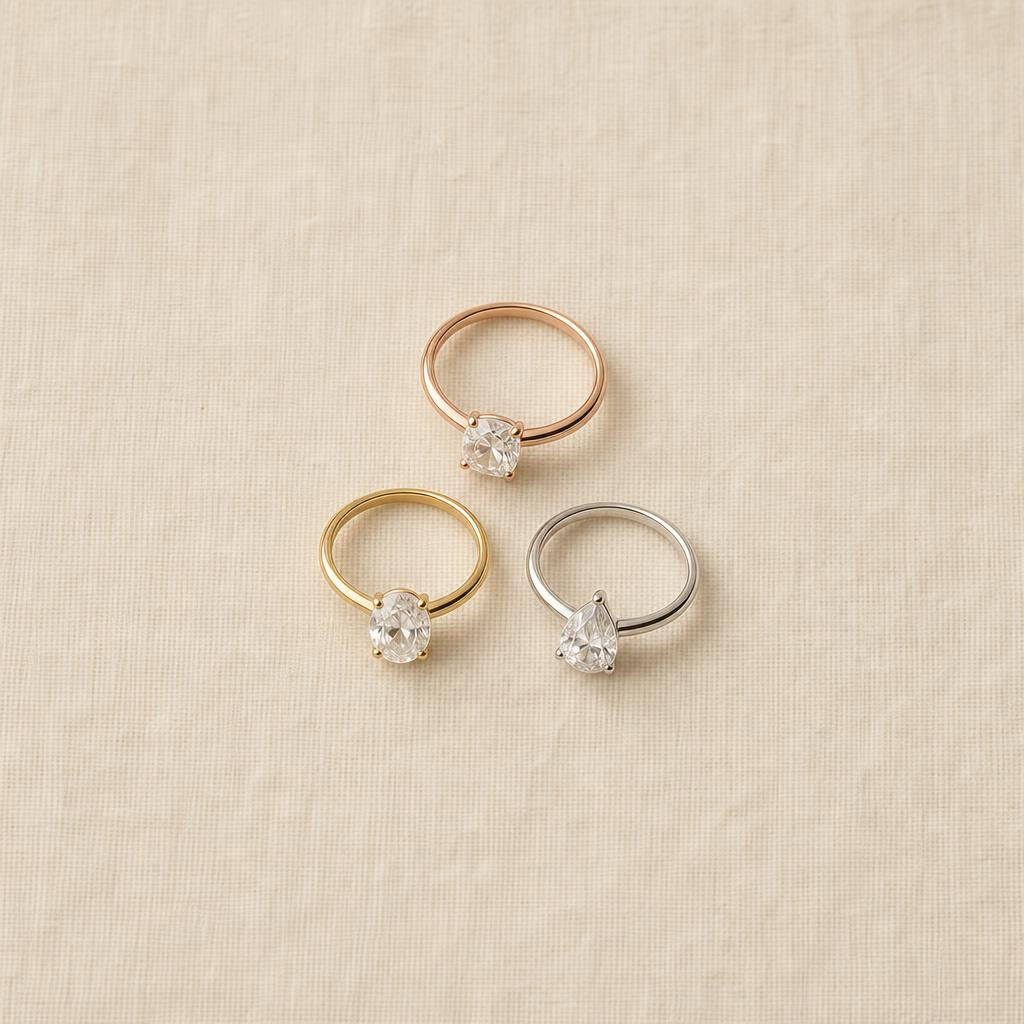
Before we get into the guide, here are four rings from across the Gemiros collection — rose gold, yellow gold, and silver tones side by side. It's easier to read the differences visually before we discuss why they sit differently on different complexions.


What "rose gold," "yellow gold," and "white gold" actually mean
For simulated diamond rings, these terms refer to the plating or finish on the band — not solid precious metal all the way through. Rose gold gets its warm blush-pink tone from a copper-tinted alloy finish. Yellow gold uses a traditional warm-toned gold plating. White gold (or silver-toned, as it often appears in listings) reads cool and bright, and is the most neutral of the three.
This matters because the tone of your band is one of the two most important factors that determines how a ring reads against your hand. The other is the cut and size of the stone — but the metal is what creates the immediate visual relationship between the ring and your skin.
What most guides get wrong is treating this as a simple "warm skin = warm metal" rule. In practice, there are three variables worth understanding: your skin's undertone (warm, cool, or neutral), your skin's depth (how deep or light your complexion reads in natural light), and your personal style preference. All three factor into the decision — and none of them disqualifies any metal tone outright.
How to read your skin's undertone
Skin undertones fall broadly into three categories: warm (golden, peachy, olive), cool (pink, beige, with blue or rosy tones), and neutral (a mix of both, and harder to place).
The most reliable way to check: look at the veins on the inner side of your wrist in natural daylight. If they appear green, your undertone is warm. If they read blue or purple, you're cool-toned. If you genuinely can't decide — you see both — you're likely neutral, which is the most common undertone and, for our purposes here, the easiest to work with.
A quick secondary check: think about whether silver or gold jewellery tends to suit you more. If gold has always looked right on your skin, you likely lean warm. If silver reads as brighter and cleaner, you lean cool. If both have worked equally well, that's neutral — which means almost any metal tone will suit you.
Worth knowing: Skin depth matters too, particularly for how strongly the undertone rules apply. Women with deeper complexions often find that all three metal tones work beautifully — the contrast between a deep complexion and any metallic finish tends to read well, and the warm/cool effect is less pronounced at greater depth. The undertone guidance matters most for medium and lighter skin tones, where the difference is more visible at close range.
Rose gold — who it flatters, and what it says about a ring
Rose gold is the most polarising of the three metal tones, and also, paradoxically, the most forgiving across a wide range of complexions.
Its blush-pink warmth means it sits closest to skin rather than contrasting strongly with it. For women with warm undertones — golden, peachy, or olive skin — rose gold tends to look beautifully integrated: the metal echoes the warmth already in your complexion rather than pulling against it. For neutral undertones, it's equally wearable. The effect is softer on lighter complexions, where the ring almost seems to grow from the hand, and more defined on medium-toned skin where the blush reads against deeper colouring.
The one combination worth thinking carefully about: cool, pink-toned skin on the lighter side. There, the copper warmth in rose gold can occasionally create a slight visual clash with the pink tones in your complexion. That said, the contrast can also look deliberately editorial in a bolder setting — it's not a disqualifier, just worth trying against your skin before committing.
Stylistically, rose gold reads romantic and feminine. It pairs particularly naturally with oval, pear, and cushion cuts. And at this point, it's a classic rather than a trend — rose gold has been a significant part of the jewellery palette for over a decade and shows no sign of retreating.

The Maxima Ring — Rose Gold
A 3.5-carat cushion-cut centre stone in a dramatic hidden halo setting with a pavé rose gold band. The stone does most of the work here — which is exactly the right approach when you want rose gold to feel significant rather than just warm.
Shop The Maxima →Yellow gold — the tone that has had the most interesting comeback
Yellow gold spent a long time being positioned as traditional, even dated. That characterisation has quietly and thoroughly reversed. The return to vintage-inspired settings, the rise of the clean-girl aesthetic, and a broad cultural move toward warm jewellery tones have made yellow gold the most fashionable metal choice in circulation right now.
From a skin tone perspective, yellow gold flatters warm and deep complexions particularly well. On olive and golden skin, it looks rich and intentional — there's a warmth-matching at work that creates a cohesive look across the whole hand. On deeper skin tones, yellow gold is arguably at its absolute best: the contrast is high enough to make the ring stand out while keeping everything harmonious rather than stark.
On cooler, lighter complexions, yellow gold is less automatically flattering — but "less automatic" doesn't mean it doesn't work. On those complexions it often creates an interesting contrast that reads deliberately styled rather than traditional, particularly in ornate settings. The key is giving the eye somewhere to go beyond the band: a generous pavé detail, a decorative vintage-inspired mount, or a stone with significant surface coverage all help yellow gold read as refined rather than bold.

The Evangeline Ring — Gold
A radiant-cut simulated diamond with a detailed pavé band in an 18k gold finish. The angular cut and the ornate band work together to make this read well across complexions — the detail draws the eye to the ring as a whole, so the warmth of the gold reads as intentional rather than incidental.
Shop The Evangeline →White and silver tones — the genuinely versatile option
White gold and silver-toned rings get described as "versatile" so often that the word has lost meaning. But in this case it genuinely holds: cool, neutral metal tones work across a wider range of complexions than either rose or yellow gold, and they pair with more ring styles without competing with them.
For cool-toned, lighter skin, white and silver tones are particularly effective. The ring reads as a crisp, defined piece rather than merging into skin warmth — the contrast is doing useful work, making the stone look larger and brighter. For neutral undertones, this is usually the safest starting point if you're genuinely unsure about which direction to go.
For warm undertones, white and silver can occasionally make the hand look slightly washed out at very close range — this is where the conventional warm/cool rule has the most actual merit. But the effect depends heavily on the setting. Dramatic halo rings, pear cuts with significant stone coverage, and pavé-detailed bands all tend to read beautifully regardless of undertone, because the stone commands more attention than the band itself.
White and silver tones are also the most practical choice if you wear a lot of silver jewellery elsewhere. Layering metal tones deliberately across multiple pieces can look considered; doing it accidentally tends to look less intentional. If your ears and wrists are already in silver territory, matching your ring to the rest creates a cohesive look without effort.

The Leighton Ring
A round-cut centre stone within a soft cushion-shaped halo on a delicate silver-toned pavé band. The stone shape and halo together mean this reads well on essentially any hand — and the silver tone keeps it looking clean and contemporary rather than ornate.
Shop The Leighton →Which tone should you actually choose?
The most honest answer: choose the one that feels right when you hold it against your wrist in natural light. Undertone rules are starting points, not verdicts — the women who look best in their rings are almost always the ones who chose what resonated with them, not what a chart confirmed was technically correct.
If you're genuinely torn between two tones, think about your wider jewellery wardrobe. If everything you already own and reach for is in a warm gold palette, there's probably a reason for that. If you default to silver and white tones, your instincts about what suits you are likely already calibrated. Trust them.
✦ Quick shortcut: Hold two pieces of jewellery in different metal tones against the inside of your wrist, not the top of your hand. The inner wrist is where skin undertone shows most clearly in natural light — this is the most reliable quick comparison you can do before buying.
A useful way to think about the style dimension: rose gold is the most romantically distinctive — it has a defined mood. Yellow gold is the most of-the-moment without being trend-dependent. White and silver is the most timeless — the one most likely to look exactly as right in ten years as it does today. None of those is a wrong answer. They're just different things, and the right one is whichever you'll still want to reach for without thinking about it.
Quick Takeaways
- Rose gold flatters warm and neutral undertones — reads romantic and feminine; pairs naturally with oval, pear, and cushion cuts
- Yellow gold suits warm, olive, and deep complexions especially well — and is the most on-trend choice right now
- White and silver tones are the most versatile across complexions — particularly effective for cool undertones and for matching existing silver jewellery
- On deeper complexions, all three tones can work beautifully — focus on setting style and personal preference
- Undertone rules are guides, not rules — the metal you keep being drawn to is usually the right answer
Frequently asked questions
I have warm undertones but I love the look of white gold — should I avoid it?
Not at all. Undertone matching is guidance, not prescription. White and silver tones can look beautiful on warm-toned skin, particularly in dramatic settings where a large stone or halo draws the eye rather than letting the band do all the work. If you love how it looks against your hand, that matters more than the rule.
Is rose gold going out of fashion?
No. Rose gold has been a major presence in fine and simulated diamond jewellery for well over a decade — it has moved from being a trend to being a permanent part of the palette. Choosing it now doesn't make you late to anything. At this point it reads as classic rather than fashionable, which is actually the better place to land.
Can I stack rings in different metal tones?
Yes, and it can look very good when it's deliberate. Rose gold and yellow gold together read cohesively because they share warmth. Yellow gold and white/silver creates more contrast, which can look editorial when the pieces are chosen with intention. What tends to look less considered is accidentally ending up in mixed metals because you added rings without thinking about how they relate to each other.
Does the metal tone affect how big the stone looks?
Slightly. White and silver tones tend to make the stone look crisper and a touch larger, because the cool contrast between the bright metal and the stone is high. Rose and yellow gold create a warmer, more integrated effect that can make the ring feel softer as a whole. Neither is better — it depends on the look you're after.
If you're still genuinely undecided after all of this, the most useful next step is to browse the Gemiros collection filtered by each metal tone in turn. Seeing a ring you already love in a different tone often makes the decision faster and clearer than any amount of reading about undertones. Your reaction tends to be immediate — and that immediacy is usually telling you something.


