

Pear Shaped Rings: Which Styles Elongate, Which Flatter, and What to Look For Before You Buy
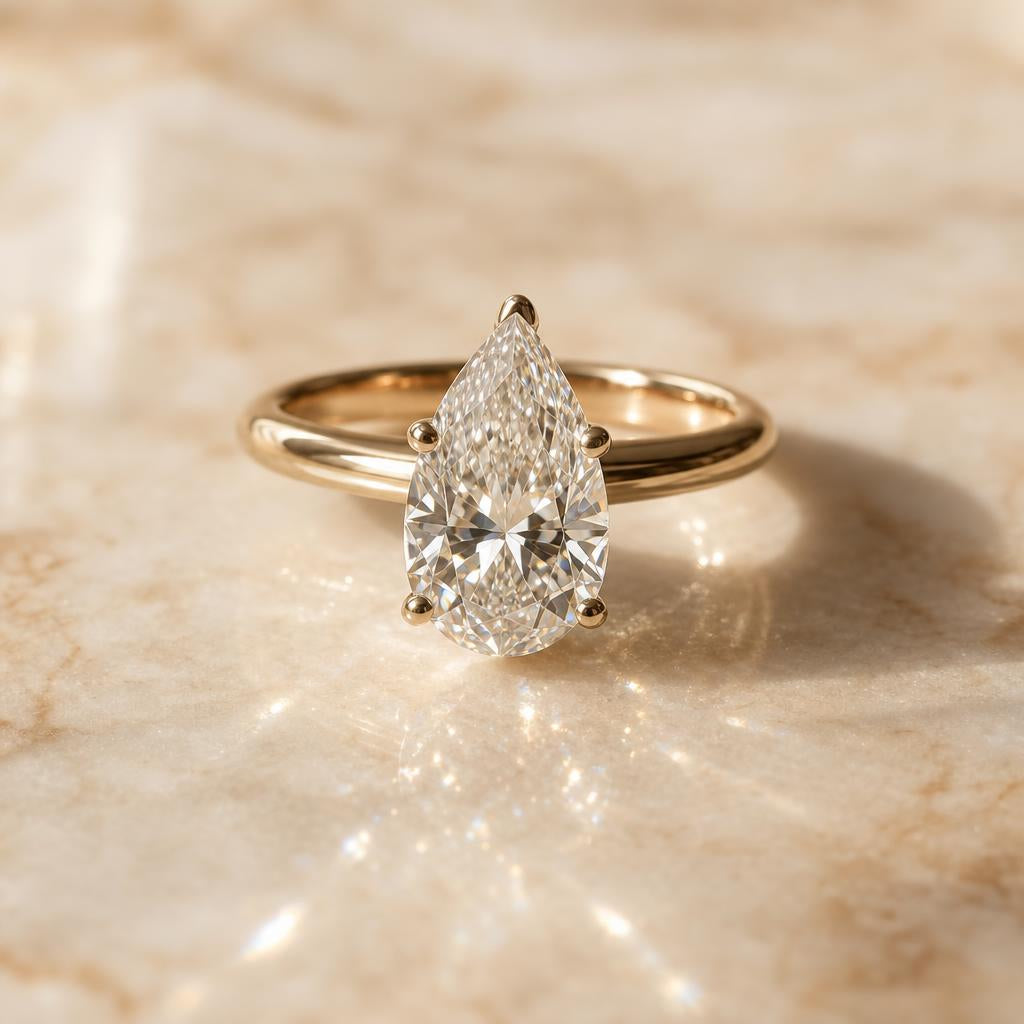
The pear cut is one of those shapes that divides people — until they see it in person. Then it makes sense immediately. That asymmetric teardrop, wider at the base and narrowing to a point, manages to look both dramatic and delicate at the same time. It's the shape that photographers reach for and the one that makes a hand look longer, narrower, and impossibly elegant in every photograph.
Whether you're drawn to a classic halo, a stripped-back solitaire, or something in between, the pear shape gives you more working options than almost any other cut. This guide explains what it actually does for different hand types, which settings bring out its best qualities, and the few things worth checking before you commit to one.


What actually makes the pear cut distinctive
The pear is a hybrid cut — part round brilliant at the base, part marquise at the point. That combination means it has the brilliance of a round stone (the same 58 facets, the same fire) while the shape itself creates a strong visual line that pulls the eye along the finger. It's why the pear reads as elongating: your eye follows the point naturally, which makes the hand look longer and the finger look narrower than it is.
This elongating effect is more pronounced than with most other shapes. An oval can do something similar, but the pear's asymmetry adds directional energy that the oval doesn't have. It moves. It has intention. That's a style statement in itself — and it's why pear cuts work so well for women who want something that reads as distinctive without being unconventional.
Worth knowing: Like marquise and oval cuts, pears can develop a "bow-tie" — a dark shadow across the middle of the stone caused by how light reflects through certain facet configurations. In photographs, a well-cut stone will show even brightness across its face. If you notice a prominent dark band through the centre, that's the bow-tie effect. Well-cut simulated diamond pear stones are specifically crafted to minimise this.
North-south or east-west — the direction changes everything
Most pear rings are set north-south: the point faces toward your fingernail, the rounded base sits toward your hand. This is the classic orientation. It maximises the elongating effect and sits the way people expect a pear to sit. For most wearers and most settings, it's the right choice.
East-west orientation turns the stone sideways, so the point faces across the finger rather than up it. The look is completely different — modern, sculptural, unexpected. Where north-south feels romantic and elegant, east-west feels architectural and confident. It's a ring that breaks with convention without announcing itself too loudly.

The Ondine Ring
A 2.0 carat pear-cut stone set horizontally across the finger — a fluid, modern silhouette that reads differently from every angle. The east-west orientation gives this ring its personality: unconventional in the best possible way, and beautifully minimal.
Shop The Ondine Ring →Which settings suit the pear shape best
The pear is versatile in the sense that several settings work well with it — but each creates a genuinely distinct result, so it's worth understanding what you're choosing between.
Halo settings
A halo of smaller stones around the pear is the most popular choice, and for good reason. It amplifies the visual size of the centre stone, adds sparkle at the edges, and softens the transition from stone to band. It also provides some protection at the tip — the point of a pear is where it's most vulnerable, and a well-fitted halo can sit close to it without adding bulk. The overall look is romantic and confident: full of light, full of intention.

The Isabella Ring — Rose Gold
A graceful teardrop centre stone wrapped in a shimmering pavé halo, set in warm rose gold. The combination of the pear's elongating shape with the halo's brightness is particularly flattering, and the rose gold brings a softness that silver doesn't quite replicate.
Shop The Isabella Ring — Rose Gold →Hidden halo settings
The hidden halo is exactly what it sounds like: a ring of small stones set just beneath the main stone, where they're invisible from above but visible from the side. The effect is that the ring looks like a clean, simple setting at a distance, but reveals an extra layer of sparkle when the light catches it at an angle. It's a more sophisticated, less overtly romantic look than an exposed halo — excellent if you want real presence without visual fullness.

The Paris Ring — Gold
A 3-carat pear centre stone with a hidden halo of pavé stones set in warm gold. From above, this reads as a substantial, confident solitaire. From the side, there's a whole world of extra light. The gold setting adds warmth that silver doesn't — and the scale of the stone makes this a genuine statement piece.
Shop The Paris Ring — Gold →Three-stone and side stone settings
A pear centre stone flanked by side stones adds a narrative dimension that halos don't have. The proportions matter here: smaller side stones — round, marquise, or tapered baguette — let the pear lead without competition. Larger or more complex side stones can overpower it. The Juliette is an unusual example: it uses heart-shaped side stones, which creates a playful tension between the romanticism of the hearts and the drama of the pear. It's a ring that wears its personality openly, and it works because both elements are confident without fighting each other.
Which hand types the pear shape works for
The short answer is most of them — but it's particularly well-suited to hands that benefit from elongation.
✦ For shorter or wider fingers: A pear in a north-south orientation is one of the most effective lengthening shapes you can wear. The tapering point draws the eye upward, making the finger read as longer than it is. A medium to larger stone size amplifies this without looking costume-like, because the narrow point always reads as delicate regardless of carat weight.
For longer, slimmer fingers, the pear is more a matter of aesthetic preference than strategy — almost any cut looks flattering on a narrow finger. If you have long fingers and want the pear to feel balanced rather than dramatic, an east-west orientation reduces the elongating effect and creates a more horizontal visual anchor instead.
For wider nail beds or fuller fingers, a setting that lifts the stone slightly off the finger can help — a higher profile draws attention up and away from width. The pear's natural focal point at the tip does some of this work already, directing the eye toward the top of the hand.
Metal tones: what suits the pear shape
The pear shape works with every metal tone, but each creates a different emotional register.
Silver and white gold make the stone look bright and icy — clean, modern, maximally brilliant. If fire and sparkle are the point, white settings let the stone's facets do all the work without any warmth softening the effect.
Rose gold adds a layer of warmth and romance that changes the tone of the whole ring. The same pear cut stone reads softer and more feminine in rose gold than it does in silver. If your style leans romantic rather than architectural, this is often the more natural fit.
Yellow gold gives a pear ring a different kind of authority — it reads as confident and considered rather than dazzling. Yellow gold has been having a sustained moment across jewellery generally, and on a pear cut in particular, the contrast between a warm gold setting and a brilliant white stone is one of the more striking combinations you can put on your hand.
A few things to check before you buy
The pear's point is its most distinctive feature and also the part that requires a little attention when choosing.
- Prong placement at the tip: The point should always have a prong or wrap protecting it. A prong at the tip holds the stone securely and protects the most vulnerable part of the shape. Look for this in product images — a setting where the tip is completely exposed without protection is worth a second look.
- Length-to-width ratio: Pear stones range from long and narrow (more elongating, more dramatic) to shorter and wider (rounder, softer in character). There's no objectively better ratio — it's personal. Most commercially available pear rings land around 1.5:1 to 1.75:1, which most people find the most balanced.
- Scale relative to your hand: A very small pear stone can look a little lost because the shape itself is what creates the statement. Most people find a pear works best at 1.5 carats and above — the silhouette needs scale to read clearly. Simulated diamond pear rings make this straightforward: you can choose a 2, 3, or 4-carat stone without cost being a barrier.
- Orientation stays put: Some pear rings can rotate on the finger if the setting allows it. Rings with a more substantial band or a larger base tend to stay in place more naturally — if consistent orientation matters to you, check the band width and how the stone is seated.
Quick Takeaways
- The pear cut elongates fingers more than almost any other shape — the tapering point draws the eye upward and makes the hand look longer
- North-south is classic and flattering; east-west is modern and unexpected — both are valid, just very different in character
- Halo settings add presence and brightness; hidden halos add side-on sparkle with a cleaner profile from above; three-stone settings add personality
- Rose gold softens the pear; yellow gold adds warmth and confidence; silver and white gold maximise brilliance
- Always check that the stone's tip has a protective prong — it's the most vulnerable part of the shape
- Scale matters: a pear reads most clearly and most elegantly at 1.5 carats and above
Frequently asked questions
Which way should a pear ring face — point up or point down?
This is entirely personal preference, not a rule. Traditionally the point faces toward the fingernail — north-south, point up — because it maximises the elongating effect. Some people wear it the other way, with the rounded end up, and this is perfectly fine. The only option with a meaningfully different visual character is east-west, which turns the stone sideways entirely and changes the look of the ring significantly.
Does the pear shape suit short fingers?
Yes — particularly well. The pear is one of the most flattering shapes for shorter or wider fingers because the tapering point creates a natural lengthening illusion. A north-south orientation amplifies this more than east-west does. If making your fingers look longer is a priority, the pear and the oval are the two shapes most reliably able to achieve it.
Are pear shaped engagement rings still popular?
Yes, and in a way that feels sustained rather than trend-driven. The pear went through a peak moment a few years ago — partly driven by high-profile celebrity rings — but it's held on because it offers something genuinely different to the round and oval: more personality, more directional drama, without crossing into truly unconventional territory. It's unlikely to date in the way a very on-trend setting might.
Is a pear shaped ring a good travel ring?
Yes — provided the setting protects the stone's point with a secure prong, pear rings travel just as well as any other shape. The tip is the one vulnerability, but a well-made setting addresses this. If you're choosing a pear specifically to wear while travelling, check that the setting has clear prong coverage at the tip and that the band is robust enough to handle daily activity without shifting.
The pear cut earned its reputation for a reason. It's one of those shapes that actually looks better in person than it does in photographs — and that quality is worth paying attention to.


