

How to Pack Jewelry for Air Travel: Smart Ways to Protect Your Rings Without a Case
You didn't forget to buy a jewelry case. You just don't own one — and the morning of a 6am flight is not the moment to go looking for it. Here's the part nobody tells you: you don't actually need one. Once you know how to pack jewelry for air travel using things you already own, a few smart, low-tech tricks will get your rings through security, a crowded carry-on, and a week of hotel nightstands without a single scratch.
Before the how, it helps to start with the what: some rings are simply built to survive a suitcase better than others. Bezel-set and channel-set stacking bands have nothing raised to catch on fabric, bend, or work loose in transit, which makes them the easiest pieces to pack loose — case or no case.


Why You Don't Actually Need a Travel Jewelry Case
The travel jewelry case industry wants you to believe packing rings is a specialized problem that needs a specialized product. It isn't. A ring is a small, solid loop of metal — it doesn't need padded velvet slots or a monogrammed leather roll to survive a five-day trip. It needs to not roll around loose, not get sat on, and not tangle with anything that has a clasp. That's it.
Once you separate "organized" from "protected," the whole problem gets smaller. You don't need a case. You need a system — and most of it is already sitting in a kitchen drawer or a bathroom cabinet. Ask ten frequent flyers how to travel with jewelry and most of them will describe some version of a pill organizer or a repurposed pouch, not a purpose-bought case. The people who travel the most tend to be the least precious about the container.
How to Pack Jewelry for Air Travel Without a Case
Here's the actual method, ring by ring, no purchase required — every option below relies on a container you likely already own:
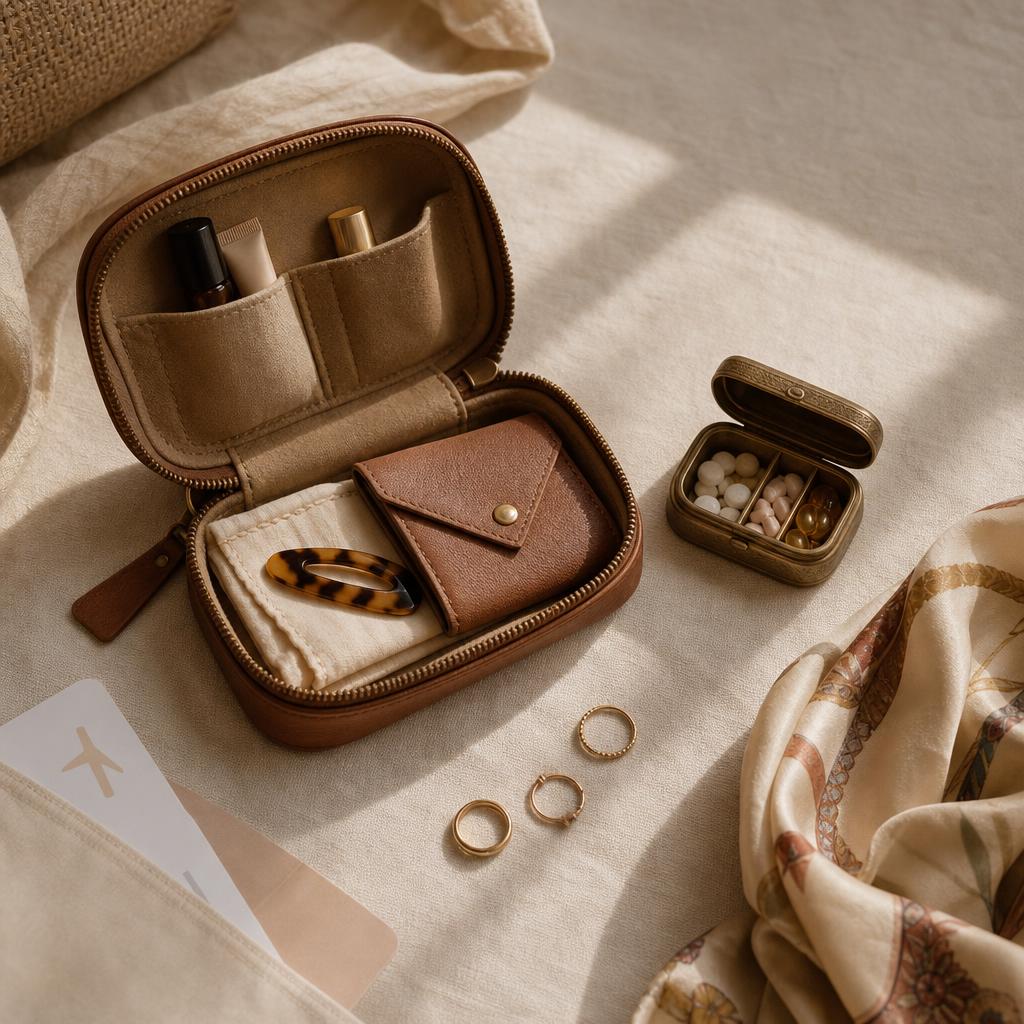
- A travel-size pill organizer. The seven-day kind with individual snap lids is, unofficially, the best ring case ever made. Each compartment holds one or two rings without contact, the lid clicks shut so nothing shifts, and it's flat enough to slide into any bag pocket.
- A contact lens case. Smaller trips, fewer rings — a lens case does the same job in miniature. Two rings, two sides, zero movement.
- A small zip-top bag with the air pressed out. Unglamorous, completely effective. Lay rings flat, press the bag nearly flat before sealing, and tuck it inside a sock or a rolled-up scarf so it isn't bouncing around loose in your carry-on.
- An old sunglasses case. Hard-shell, already padded, already taking up space in your bag anyway. Repurposing it means one less thing to pack.
✦ Pro tip: Whatever container you choose, keep your rings in your carry-on, not your checked bag. It's the one rule every jewelry-packing guide agrees on, and it's the one that actually matters.
The Ring-Specific Trick: Thread, Don't Toss
If you're only bringing two or three rings and want to skip containers altogether, thread them onto a spare hair tie or a shoelace and knot the ends. It keeps the set together as one unit, stops individual rings from sliding to the bottom of a bag, and takes about ten seconds. It's not elegant. It works.

Cherish Ring
A rubbed-edge bezel setting with nothing raised to snag on fabric, straps, or the inside of a pocket — one of the easiest styles to pack loose and forget about until you land.
Shop Cherish Ring →What Actually Survives Being Packed Loose
Not every ring travels equally well, and it has nothing to do with price or how it looks in a photo. It comes down to construction. A tall prong setting with a raised stone is the ring most likely to snag a sweater or catch on the zipper of a toiletry bag. A bezel, a channel set, or a flush pavé band has nowhere for fabric to grab, which means it survives a loosely packed bag — literally tossed in with your socks — without incident.
This is also why a dedicated travel ring makes the whole question easier. Instead of deciding which pieces from your everyday collection are safe to risk, you bring one or two low-profile stacking bands built to be handled roughly, and leave the rest at home.

Amore Ring
A polished sterling silver stacking band with a low, even profile — the kind of piece that goes on before a flight and doesn't need a second thought until you're home.
Shop Amore Ring →Long Flights and Ring Fit
There's a detail most packing guides skip entirely: a ring that fits perfectly at home can feel snug by hour six of a long-haul flight. Cabin pressure and hours of sitting still cause mild fluid retention in the hands, and a ring that was comfortable at takeoff can feel noticeably tighter by landing. It's not damage, and it's temporary — but it's worth knowing before you panic mid-flight over a band that suddenly won't budge.
The easiest fix is prevention: if you know you swell on long flights, slip the ring off during the flight itself and keep it in your pocket organizer rather than fighting with it later. For rings you plan to wear the entire trip, a slightly looser fit than your everyday size is worth considering for travel pieces specifically.
Packing Jewelry for Travel When You're Stacking Multiple Rings
A stack behaves differently than a single ring. Left loose in a bag, thin bands can slide together and leave faint surface marks on each other — not damage, just the kind of dulling that comes from metal-on-metal contact over a long flight. The fix is simple: keep the stack threaded together on a hair tie, or give each band its own slot in a pill organizer rather than letting them pile into one compartment. Two minutes of separation before you zip the bag closed is the difference between a stack that looks the same on day one and day seven.
If you're building a travel collection from scratch, low-profile stacking bands are worth prioritizing over statement pieces — they're the ones that actually earn their spot in a carry-on trip after trip.
Airport Security and What to Actually Expect
Rings rarely cause problems at security. Standard sterling silver bands, even stacked two or three deep, typically pass through a metal detector without a second look — you can keep them on your hand through screening in almost every case. It's chunkier, heavier pieces — thick cuffs, statement collars — that occasionally trigger a manual check, not the kind of low-profile band described above. If you're asked to remove jewelry at any point, having it already contained in a pill organizer or zip bag means it takes seconds, not a frantic search through a purse.
The Part After Landing: Hotel Rooms and Day Bags
Getting your rings through the airport is only half the job. Once you're at the hotel, the same low-effort system keeps working: leave the pill organizer or zip bag in the room safe when you're out for the day rather than carrying every piece with you, and do a quick visual count each morning and each night — same way you'd check for a phone or a passport. It takes five seconds and it's the single biggest habit that separates travelers who lose jewelry from those who don't.
If you're the type who travels often enough that this is a recurring question rather than a one-off trip, it's worth building a small, dedicated travel collection — a couple of low-profile stacking bands you designate specifically for the road, rather than deciding case by case which everyday pieces are safe to risk each time you pack.
Quick Takeaways
- A pill organizer, contact lens case, or pressed-flat zip bag protects rings as well as any dedicated travel case.
- Bezel-set and channel-set bands survive loose packing better than tall prong settings.
- Keep rings in your carry-on, never checked luggage.
- Separate stacked bands so thin metal doesn't rub against thin metal for an entire flight.
- Low-profile stacking bands are typically the least likely to trigger extra screening at security.
Frequently Asked Questions
Is it safe to pack rings in a ziplock bag?
Yes. A small zip-top bag protects rings from moisture and keeps them contained, as long as you press the air out flat and tuck the bag inside something soft — a rolled sock or scarf works well — so it isn't rattling around loose against harder items in your carry-on.
Does airport security let you wear rings through the metal detector?
In most cases, yes. Standard rings, including stacked bands, generally pass through screening without needing to be removed. Bulkier statement pieces are more likely to prompt a manual check, so it's worth keeping those contained and easy to hand over if asked.
What's the best way to pack rings when you don't own a travel case?
A travel-size pill organizer is the closest thing to a purpose-built ring case without actually being one — individual compartments, a snap-shut lid, and a flat profile that fits in any bag pocket. A contact lens case or a pressed-flat zip bag both work nearly as well for smaller trips.
How do you keep stacked rings from scratching each other in a suitcase?
Give each band its own space rather than letting them pile together loose. Threading a stack onto a hair tie or spare shoelace keeps the set together as one unit while stopping bare metal from rubbing against bare metal for an entire flight.
The honest version of this guide is one sentence long: you already own everything you need to pack a ring safely. A jewelry case is convenient, not required — the real jewelry packing hacks are just habits, not products. What actually protects your rings in transit is keeping them contained, keeping them close, and choosing pieces built to be handled a little roughly in the first place — which, it turns out, describes most of the rings worth traveling with anyway.


