

How to Choose a Ring That Flatters Your Hand: A Guide by Finger Shape, Length, and Width
The ring on your finger is a frame for your hand, and the shape you choose changes everything. Get the proportions right and your fingers look longer, the stone looks bigger, and the whole effect is effortless. This guide cuts through the guesswork — no two hands are the same, but every hand type has a range of shapes that naturally flatters it.
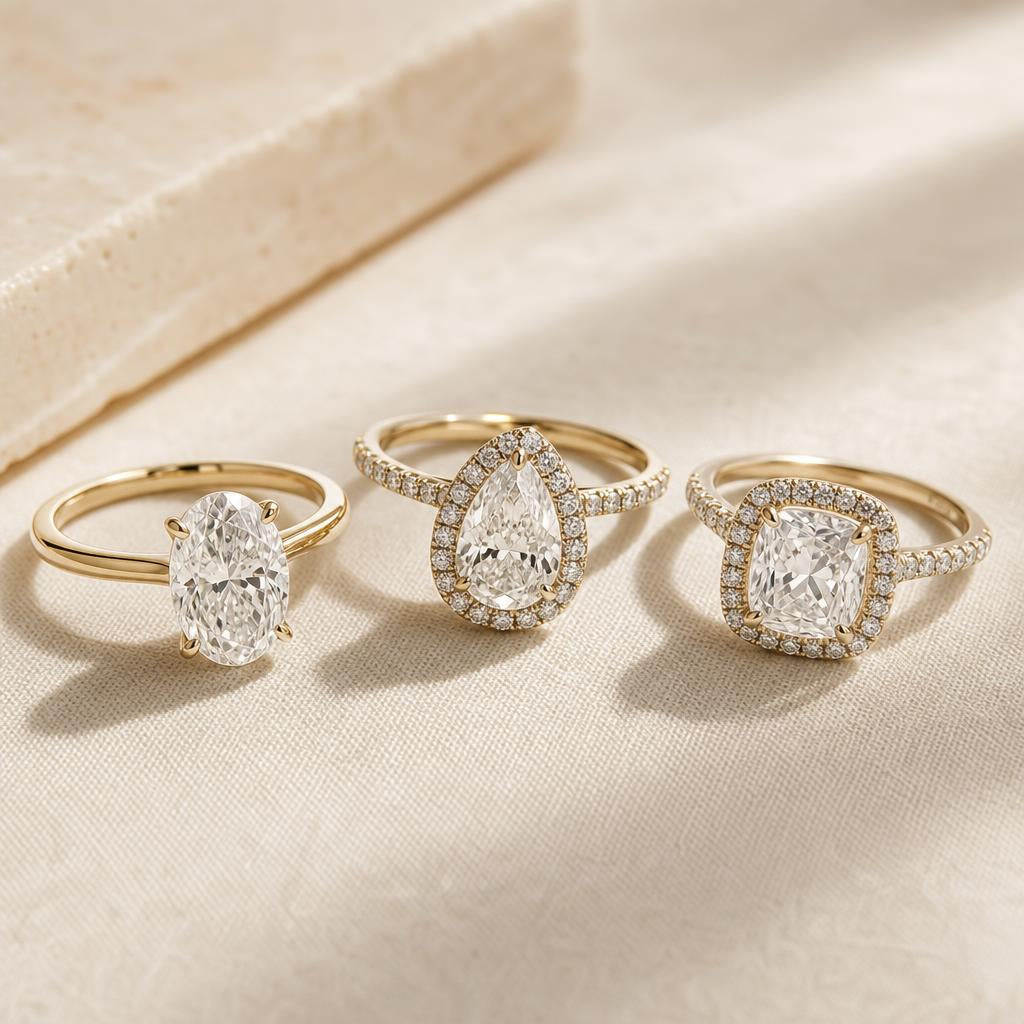
Whether you're shopping for an engagement ring, a travel ring, or something beautiful to wear every day, knowing which cuts, settings, and band widths work with your proportions will help you choose with confidence. Here are some of the Gemiros styles that illustrate each type best.


Start here: how to read your own hand
Before you fall for any particular cut, take thirty seconds to look at your hand honestly. A few simple observations tell you everything you need to know — and no ruler required.
Finger length. Hold your hand flat, palm down. Long fingers extend comfortably past the midpoint of your palm. Short or petite fingers tend to look proportionate when fully extended but can appear stubby when bent. Most people fall somewhere in between.
Finger width. Are your fingers slender, with visible taper toward the tip? Or do they have a more uniform, fuller width throughout? Neither is better — they simply call for different shapes.
Knuckle size. Larger knuckles relative to your base finger size affect both fit and proportion. If this describes you, a slightly wider band can be more comfortable and can help balance the overall look beautifully.
Palm scale. A petite hand calls for a different stone scale than a larger hand. A 1.5ct stone that reads as delicate on large hands can look quite substantial on smaller ones — and both outcomes can be exactly right.
Worth knowing: These are starting points, not rules. Some of the most striking ring-and-hand combinations deliberately break every principle listed here. Use flattery as a shortlist tool, but always let your instinct make the final call.
Long, slender fingers: shapes that celebrate what you have
If your fingers are naturally long and slim, you have the most flexibility of any hand type. Almost every cut looks at home on you — but certain shapes are particularly spectacular.
Oval is arguably the most natural match for long, slender fingers. Its elongated silhouette follows your natural finger line without adding unnecessary bulk at the sides, and the curved edges read as softer and more romantic than a similarly-sized round brilliant. A clean solitaire setting lets the stone float without interruption.
Emerald cut thrives here too. Step-cut facets create long, glassy, mirror-like reflections rather than fire, which gives the stone a cool, architectural glamour — unhurried and very editorial. If the sparkle-for-sparkle's-sake aesthetic isn't your thing, emerald often feels right in a way that round never quite does.
Round solitaire in a minimal setting also sits beautifully on long fingers. A clean four-prong setting lets the stone appear to float above the band without visually widening the finger at all.
One thing worth noting: very wide pavé bands and very wide cushion cuts can make slender fingers look unexpectedly broad. If you love a cushion, look for a narrower-shank setting rather than a full-width pavé band.

The Odette Ring
A 3.5-carat oval simulated diamond in a clean solitaire setting — the most universally flattering shape in the collection. The elongated oval silhouette adds length to any finger type, and the minimal setting lets the stone do all the talking. Available in silver and gold.
Shop The Odette Ring →Short or petite fingers: the cuts that create length
Shorter fingers benefit most from shapes that draw the eye vertically — up and down the finger rather than across it. Several cuts deliver this elongating optical effect exceptionally well.
Pear is the single most elongating shape available. The tapered tip points toward the fingernail and visually extends the finger in a way no other cut quite matches. A pear in a hidden halo setting — where the surrounding stones sit lower so the central stone appears to float directly on the band — maximises this effect while keeping the profile low and snag-free for everyday wear.
Oval again — because oval works for almost every hand type. On petite fingers, the elongated orientation creates a noticeable visual extension of length, especially against a round of similar carat weight placed side by side.
Marquise is the most dramatic elongator in the collection. The pointed tips at both ends create the longest visual line of any cut shape. On a shorter finger the effect can be genuinely striking, and there's a romantic, vintage quality to marquise that suits a wide range of aesthetics — it doesn't read as showy in the way a full cushion halo might.
One thing to consider: a round brilliant in a very full double halo can read as slightly wide on petite fingers if the halo extends beyond the natural width of the finger. A slimmer pavé band and a moderate stone size usually correct this completely.

The Victoria Ring
A 3-carat marquise simulated diamond with a full pavé halo and pavé band. The pointed silhouette creates maximum visual length on the finger — one of the most flattering options for shorter or petite hands, wrapped in a Victorian-era romance that photographs beautifully.
Shop The Victoria Ring →Wide or fuller hands: statement shapes that balance proportion
There is a persistent myth that wider fingers should only wear small, delicate rings. The opposite is more often true. A delicate solitaire on a wider hand can look accidentally undersized — while a bold, generous stone sits with exactly the authority a fuller hand can carry.
Cushion cut is a natural match for fuller fingers. Its soft, rounded corners and generous footprint sit wide and low on the finger, creating a sense of natural balance rather than a stone that looks too small for the canvas beneath it.
Round with a halo is another reliable choice. The halo adds diameter and scale without adding height, and the result reads as deliberately bold rather than unexpectedly small. The Belle does this well — a round brilliant with a full halo and pavé band that wears naturally on most hand widths.
Radiant cut with side stones or a halo also works beautifully on fuller hands. The structured rectangular silhouette adds definition, while pavé detailing gives the ring visual interest that suits a wider canvas well.
A note on band width: fuller fingers wear a slightly wider band naturally well. A very thin shank can look disconnected from the finger — the stone appears unmoored, floating without context. A pavé or half-eternity band adds the proportion and visual anchoring that completes the look.

The Maxima Ring
A 3.5-carat cushion simulated diamond with a layered hidden halo and full pavé band. The cushion's soft, rounded shape creates natural balance on average to fuller hands — generous and majestic without ever tipping into too-much. Available in silver and rose gold.
Shop The Maxima Ring →Average hands: the freedom of the middle ground
If your fingers are average in both length and width — neither particularly slender nor wide, neither long nor short — you have the most genuine freedom of all. Most cuts look proportionate on average hands, which means you can lead with aesthetic preference rather than corrective strategy.
- Size matters more than shape: on an average hand, a stone in the 1.5–3ct range reads well with most cuts. Below 1ct the ring reads as intentionally minimal; above 3.5ct you're making a deliberate statement — both are valid, depending on what you want the ring to say.
- Setting height changes the whole character: a high solitaire setting raises the stone on tall prongs for a more dramatic, engagement-forward look. A low bezel or hidden halo sits flush with the finger and reads as more everyday-wearable — and is considerably more travel-friendly.
- Round and oval are the safe bets: not because they're boring, but because they genuinely suit average hands without requiring any shape correction. They're classics for a reason.

The Stella Ring
A round simulated diamond in a clean four-prong solitaire setting — the purest version of the classic engagement ring silhouette and one of the most universally wearable shapes available. The minimal setting lets the stone hold the spotlight. Available in silver and rose gold.
Shop The Stella Ring →Band width: the detail that changes everything
People focus intensely on the stone shape and often overlook the shank — but band width affects the overall proportion of a ring almost as much as the cut itself.
Thin, delicate shanks make stones look larger and more prominent. They're wonderful on slender fingers, where the barely-there effect feels effortlessly elegant. On wider fingers they can look out of proportion — the stone appears to float, disconnected from the hand below it.
Substantial pavé shanks — where the band is set with small stones across at least part of its width — add visual weight that suits fuller and average hands beautifully. They also make the ring sparkle from every angle rather than only when the centre stone catches direct light, which is why pavé bands photograph so reliably well.
Split shanks offer a useful middle ground. By dividing the band into two strands before reaching the setting, they add visual width without adding physical mass — a delicate-but-substantial quality that works across a range of hand types.
✦ Travel ring tip: if you're wearing a Gemiros ring in place of your real engagement ring on trips, a low-profile hidden halo or bezel setting catches far less on activewear, seatbelts, and hotel linens than a tall solitaire prong. You get the elegance without the snagging.
The metal question
The metal tone — silver, yellow gold, or rose gold — subtly changes how the stone reads against your skin and how the ring photographs overall.
Cool skin tones with pink or bluish undertones are generally flattered by white-metal settings (sterling silver or white gold-plated), which keep the look bright and clean. Warm skin tones — golden, olive, or deeper complexions — often look beautiful in yellow gold or rose gold, which echoes the warmth in the skin and creates a cohesive, glowing effect. Rose gold is particularly versatile: it works across more skin tones than yellow gold does, and its soft blush warmth photographs beautifully in natural and artificial light alike.
That said, most people who care about jewellery own both metal tones and wear them by mood, outfit, or season. There is genuinely no wrong answer.
Quick Takeaways
- Long, slender fingers: oval, emerald cut, or round solitaire — avoid very wide bands
- Short or petite fingers: pear, marquise, or oval — pointed tips elongate dramatically
- Wide or fuller hands: cushion, radiant, or round halo — scale up with confidence
- Average hands: almost any shape works — let aesthetic preference lead
- Thin shanks make stones look larger; pavé shanks suit fuller fingers and photograph beautifully
- Oval is the single most universally flattering cut — it genuinely works for every hand type
Frequently asked questions
What ring shape is most universally flattering?
Oval is consistently the most flattering cut across different hand types. Its elongated silhouette adds visual length to shorter fingers, mirrors the natural line of long fingers, and sits proportionately on average hands. It also faces up larger than a round stone of the same carat weight, making it excellent value for visible sparkle.
Does carat size affect how a ring looks on my hand?
Yes — but carat weight and visible stone size aren't the same thing. A 3.5ct oval simulated diamond faces up considerably larger than a 3.5ct round of the same weight, because the oval's elongated shape has a bigger surface area. Setting style matters too: a halo adds visible diameter without adding carat weight, while a bezel setting can make the same stone appear slightly smaller by encasing part of the girdle.
I have larger knuckles — does that change what I should wear?
For fit, yes. Rings that taper at the base can be harder to size when your knuckle is larger than your base finger. A consistent-width band is generally easier to wear comfortably. For aesthetics, prominent knuckles often suit a bolder, more substantial ring — a delicate solitaire on a strong hand can occasionally look at odds. Lean into the scale; let the ring match the hand.
Should I choose based on my hand or on what I love?
Lead with what you love, and use flattery principles to shortlist rather than decide. If you're drawn to a round halo but have shorter fingers, the result will still be beautiful — it just won't add the visual length that an oval or pear would. Most people aren't studying your finger proportions. They're noticing the ring, and thinking it's gorgeous.
The right ring is the one you reach for every morning without thinking about it. Whether that's a delicate oval that disappears quietly into your everyday look, or a cushion halo that announces itself from across the room — the only qualification is that it feels completely like yours.


