

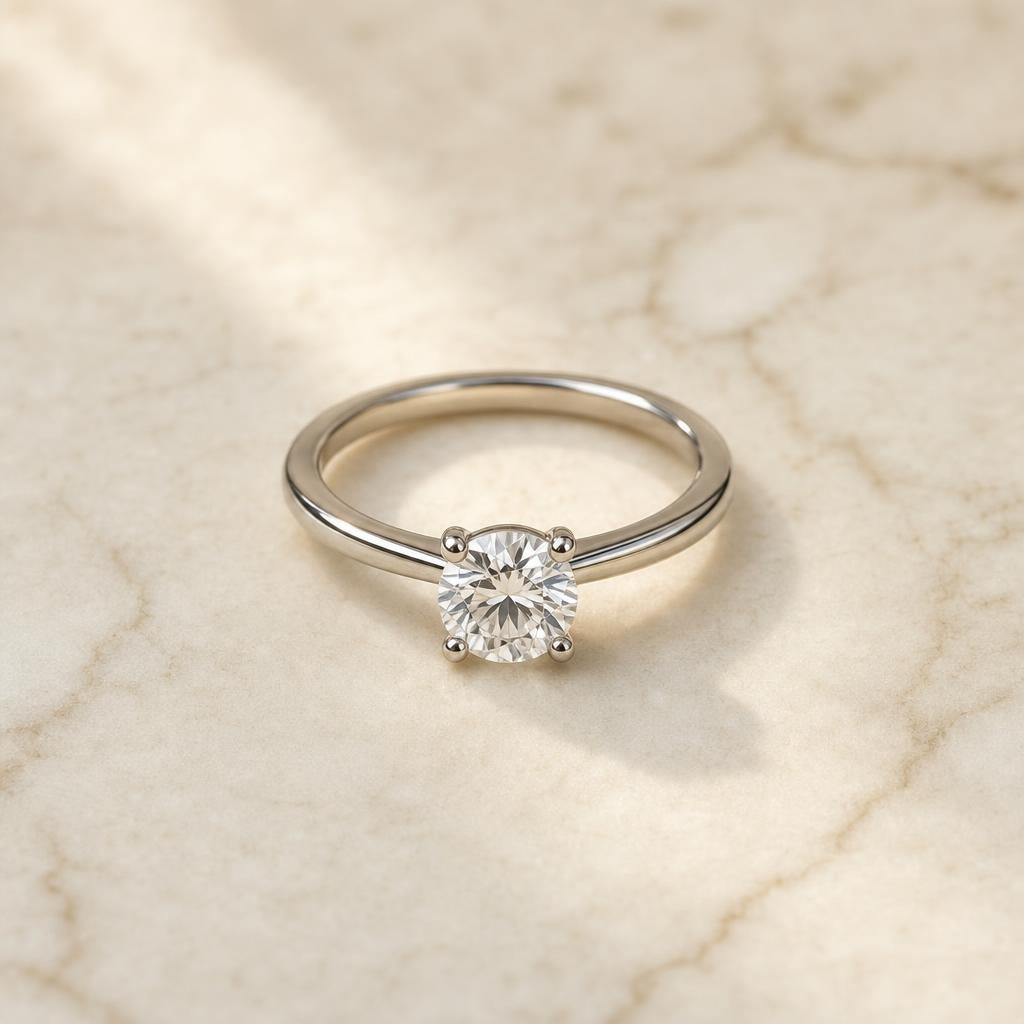
For the Woman Who Doesn't Want a Statement Ring: Understated Styles That Wear Beautifully Every Day
There’s a woman who walks into a room and you notice her ring — not because it announces itself, but because of the way it sits. Clean lines. A single stone. A band that carries nothing extra. She chose that ring deliberately, and it reads as such.
Understated doesn’t mean modest in the apologetic sense. It means precise. It means knowing exactly what you want and not needing it to be louder than that. If you’ve been looking for a ring that feels like an extension of how you dress rather than a departure from it, these are the styles worth knowing about.


Why understated is actually harder to pull off
A bold ring forgives a lot. The size, the halo, the layers of pavé — they carry the visual weight so the design itself doesn’t need to be particularly refined. An understated ring does the opposite. It has nowhere to hide. A slim band with a single stone demands the stone be beautifully cut, the proportions exactly right, the metal clean and consistent.
This is why women who wear simple rings often think harder about what they’re buying than those chasing maximum sparkle. They know that with fewer elements, every element matters more.
The good news is that what looks most expensive on the hand tends to be exactly this: a stone with excellent light performance, a slim or lightly detailed band, a setting that doesn’t overcrowd. The hallmarks of understatement are also the hallmarks of quality.
The stone shapes that do the work quietly
Not every stone shape reads as understated. A large cushion in a double halo is many things, but quiet isn’t one of them. If you’re after a ring that wears beautifully without demanding attention, these are the cuts worth focusing on.
Round brilliant
The round brilliant is the most classic solitaire choice for a reason — it scatters light in every direction, making even a modest carat weight look alive. In a simple four-prong setting on a slim band, it reads as clean and confident rather than flashy. It also photographs beautifully, layers easily with a wedding band, and has no orientation on the finger — whichever way the ring sits, it looks right.
Oval
Oval is the elongated answer to round — it creates the same bright sparkle but covers more of the finger, which has a slimming effect on the hand and makes even smaller stones feel present without being imposing. On a thin band with minimal setting detail, an oval solitaire is possibly the purest version of understated elegance you can buy.
Emerald cut
Emerald cuts are the stone shape most associated with quiet luxury, and for good reason. The long, flat table and step-cut facets create a hall-of-mirrors effect — not the disco-ball brightness of a round, but a slower, deeper glow. They’re architectural. They look like they belong on someone who doesn’t need to explain themselves. On a clean, unadorned band, an emerald cut is quietly extraordinary.
Asscher cut
The asscher is the emerald cut’s square cousin — same step-cut facets, same reflective depth, but in a compact, symmetrical shape that suits shorter fingers particularly well. Its art deco origins give it an edge that a plain solitaire sometimes lacks, but the geometry keeps it clean rather than ornate.

The Échelon Ring
A 1.25-carat asscher-cut simulated diamond in a clean four-prong setting. The step-cut facets produce a deep, reflective glow rather than an explosive sparkle — architectural and composed, the kind of ring that reads as considered rather than chosen for impact.
Shop The Échelon Ring →Settings that step back so the stone can lead
Beyond the stone shape, the setting plays an enormous role in how loud or quiet a ring reads. A few settings stand out for their ability to let the stone do the talking.
Four-prong solitaire: The most classic setting in existence. Four thin metal prongs cradle the stone and hold it aloft, leaving maximum light through the sides of the stone. The band beneath it is slim and unobtrusive. Nothing about this setting asks for attention beyond the stone itself.
Bezel setting: A thin rim of metal encircles the stone entirely, holding it flat and flush to the band. The result is clean, modern, and — importantly — very wearable every day. Bezel settings are loved for daily wear because there are no prongs to snag on fabric, no raised profile to catch on things. They also have an unexpected elegance: the stone looks almost like it was poured into the ring rather than added to it.
Six-prong solitaire: The six-prong variant holds the stone a little more securely than four prongs and carries a vintage connotation. Still minimal, still clean, but with a slightly more traditional feel that suits some women better than the sharper, more contemporary four-prong.
Worth knowing: Bezel and four-prong settings are the most practical choices for daily wear — low profile, no opportunity to catch on fabric, and they hold their clean look far longer than settings with many small accent stones or fine pavé details.
The ring that was made for every day

The Solis Ring
A 1.5-carat round brilliant center stone elevated by a slim band with fine pavé detail — enough texture to give the ring presence, without anything that competes with the stone. It wears as easily with a blazer on Monday as it does with a linen shirt at the weekend.
Shop The Solis Ring →Metal tone: it matters more when there’s nothing to distract
In a ring where every element is stripped back, metal tone becomes one of the loudest remaining decisions. The difference between a round solitaire in silver-tone and the same stone in yellow gold is pronounced — they’re almost different aesthetics entirely.
Silver and white gold tones lean cool and contemporary. They disappear behind the stone, keeping visual focus on the cut and light play. They work particularly well with step-cut stones — emerald and asscher — because they don’t add warmth that might compete with the stone’s icy, reflective quality.
Yellow gold adds warmth and leans romantic. An oval or round solitaire in yellow gold has a very different register than the same ring in white metal: softer, warmer, slightly vintage in the best way. It also photographs differently, picking up warm ambient light in a way that cool metals don’t.
Rose gold sits between the two — warm but softer than yellow, with an inherently gentle quality that suits oval and round cuts particularly well. On a very simple solitaire, rose gold adds warmth without adding a competing design element.
✦ A useful rule: If you wear mostly cool-toned jewellery — silver earrings, white metal watches — a silver-tone ring will integrate seamlessly into what you already own. If you lean towards warm metals elsewhere, yellow or rose gold will feel more cohesive.
How to stack without losing the quiet
One of the most common questions about understated rings is whether they can be stacked — and the answer is yes, with a little thought.
The key with a minimal main ring is to keep anything around it similarly restrained. A slim plain band on either side creates a set that still reads as clean. A thin pavé band adds a line of sparkle without adding visual volume. What tends to go wrong is adding something too wide, too embellished, or too architecturally different — the quiet ring gets swallowed by its neighbours and loses the quality that made it appealing in the first place.
Bezel eternity bands work particularly well alongside solitaires because the rounded stone faces sit flat, adding light without adding height. A full eternity in fine pavé does the same. What to avoid: anything that sits higher than the solitaire, or anything with structural detail that draws a competing visual story on the finger.
If stacking isn’t your approach, that’s equally valid. A single ring worn intentionally is its own statement — just a quieter one.
Quick Takeaways
- Understated rings ask more of the stone and setting — with fewer elements, every element matters more
- Round brilliant, oval, emerald cut, and asscher are the most wearable stone shapes for a quiet, everyday aesthetic
- Four-prong and bezel settings do the most with the least — clean, low-profile, practical for daily wear
- Metal tone becomes a bigger decision on a minimal ring — silver-tone reads cool, yellow gold reads warm and slightly vintage
- Stacking works if you keep companion pieces restrained: slim plain bands or a flat bezel eternity sit best alongside a solitaire
Questions worth asking
Can an understated ring still look expensive?
Yes — often more so than a heavily embellished ring at the same price. When the design is simple, the quality of the stone and the precision of the setting are immediately visible. A well-cut stone in a clean setting can look exceptionally refined precisely because nothing else is competing for attention.
Will a minimalist ring look too small on my hand?
That depends more on carat weight and stone shape than the setting. An oval or emerald cut solitaire in the 1.5–3.5ct range has a long footprint on the finger that reads as intentional rather than small. Round solitaires at 1ct and above sit well on most hands. Bezel eternity bands, because they wrap the whole finger, also create a confident impression regardless of individual stone size.
What’s the most practical understated ring for daily wear?
A bezel setting wins on practicality for genuine daily wear — no prongs to catch on anything, a flat profile that doesn’t get knocked, and a clean look that doesn’t age. For a solitaire worn daily, a four-prong setting in a low-profile position is the next best choice. Both sit comfortably under gloves and won’t pull on fabric.
Is a solitaire ring versatile enough for different occasions?
It’s the most versatile ring you can own. A solitaire works at a job interview, a dinner party, a day at the beach, and a formal event without ever looking out of place. Its simplicity is exactly what makes it adaptable — it doesn’t belong to one context, so it works across all of them.
The woman who doesn’t want a statement ring isn’t playing it safe. She’s made a different kind of choice — one that takes more confidence, not less. The ring that wears beautifully every day isn’t the one that announces itself; it’s the one that holds its quality quietly, in every light, in every room, until you’ve worn it long enough to wonder how you dressed without it.


